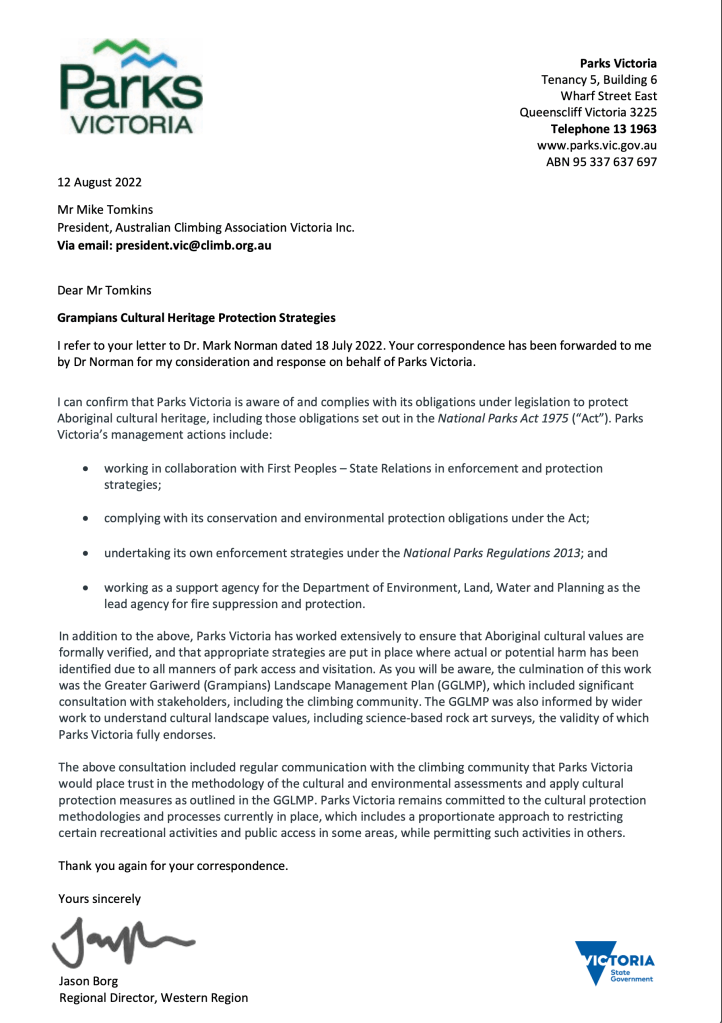
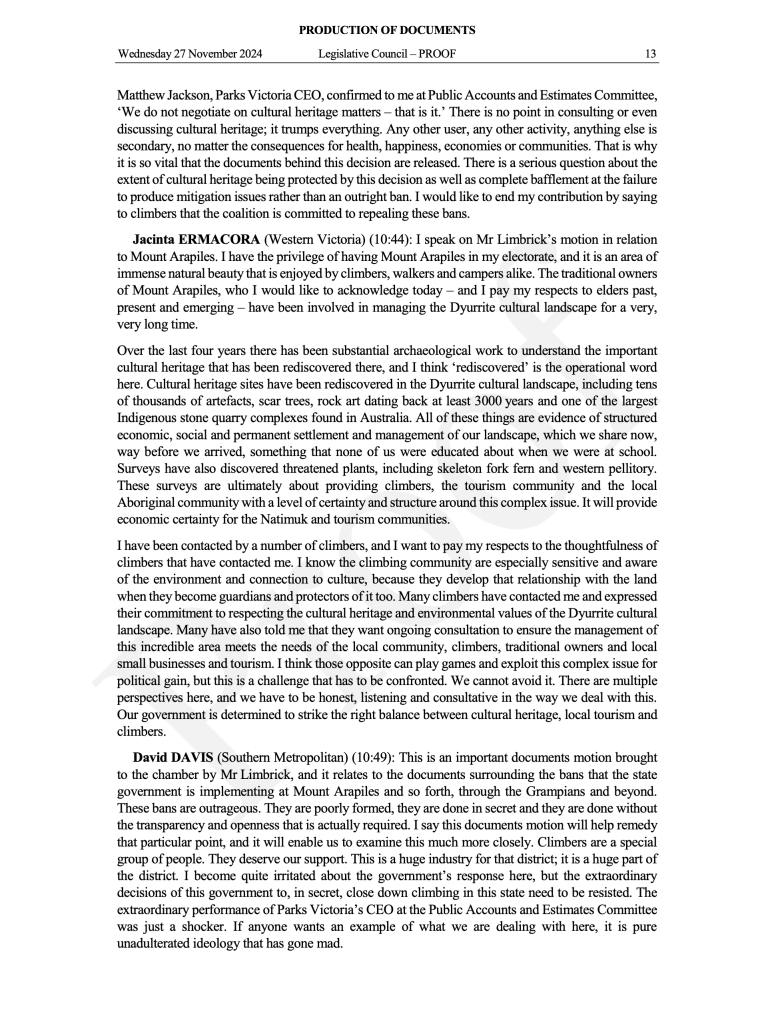
- Parks Victoria release three internal documents that were used to create the Arapiles’ climbing bans. A Decision Framework, an Environmental Survey Assessment Data Summary and a Targeted Threatened Flora Survey.
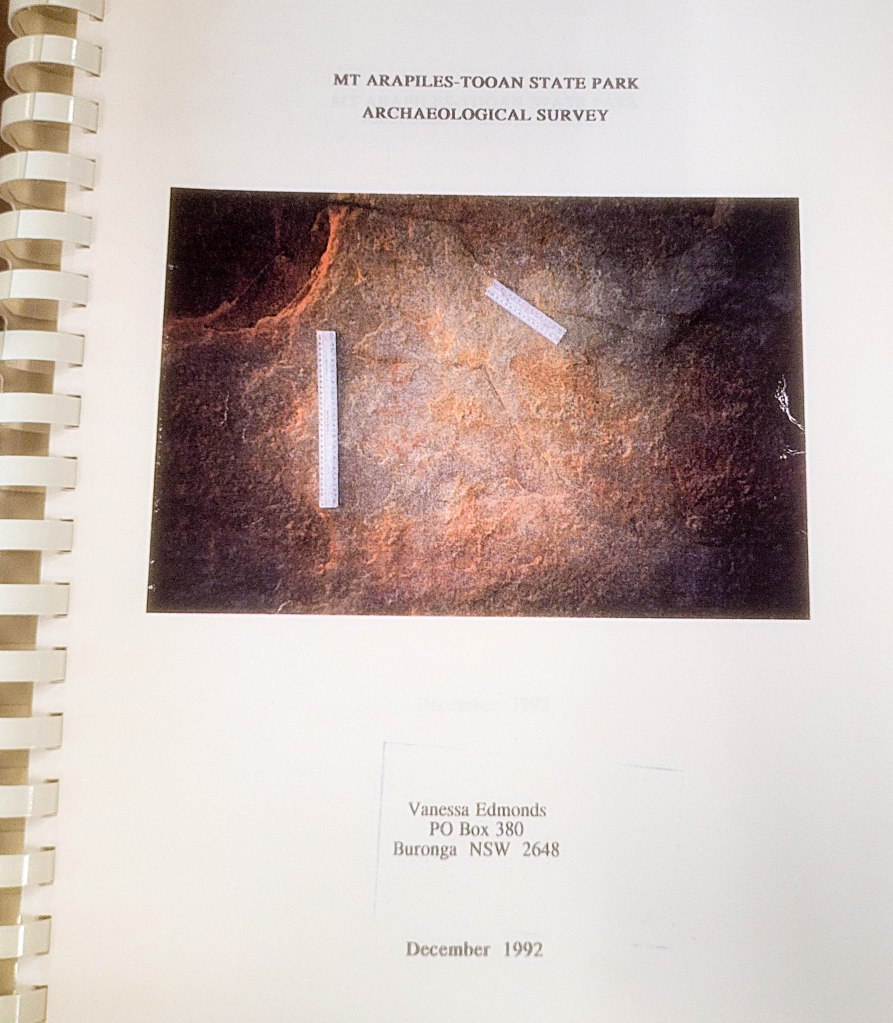
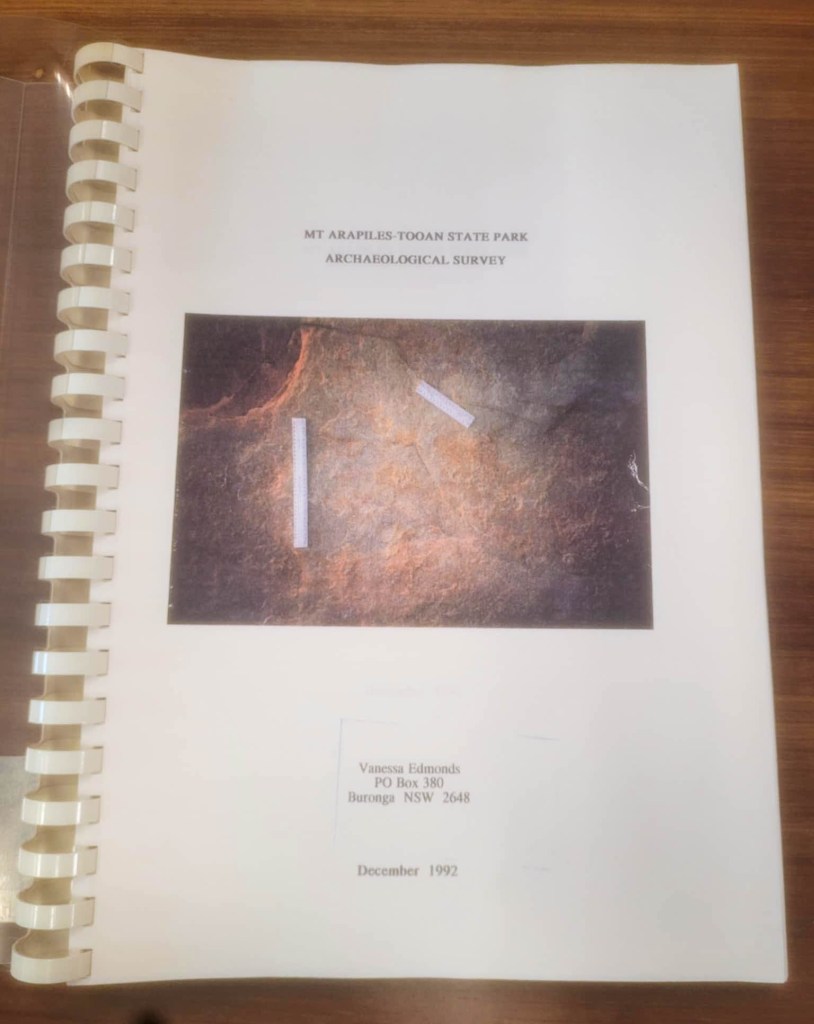
- The all important 4th document – the Cultural Heritage survey – remains blocked from the general public’s access.
- Documents confirm that climbing historical usage and positive influence on the regional community was not considered into decision making around climbing bans.
- Resourcing and budget restraints to “manage” climbing areas will mean climbing bans occur automatically
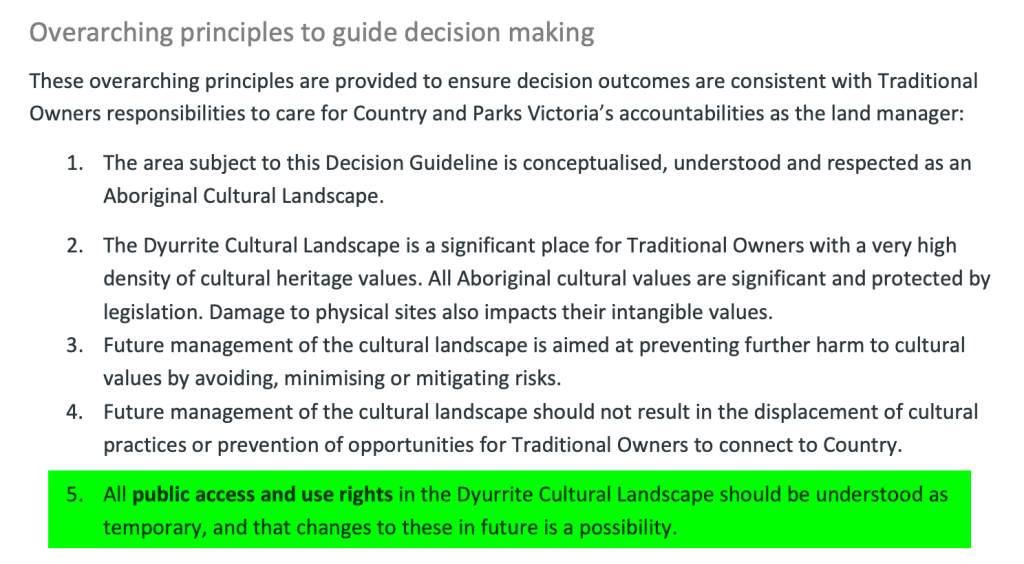
- All public access and use rights at Arapiles should be understood as “temporary” according to documents
- Any new climbing development is labeled as “colonialism” by Traditional Owners and is not acceptable.
- All climbing to be banned if “near” tangible and intangible cultural heritage. No definition of “near” is given.
- The sounds climbers make are defined as unacceptable to Traditional Owners use of the area and a reason given to ban specific climbing areas. Shhhhh.
- No other user group is targeted with such draconian surveys and restrictions.
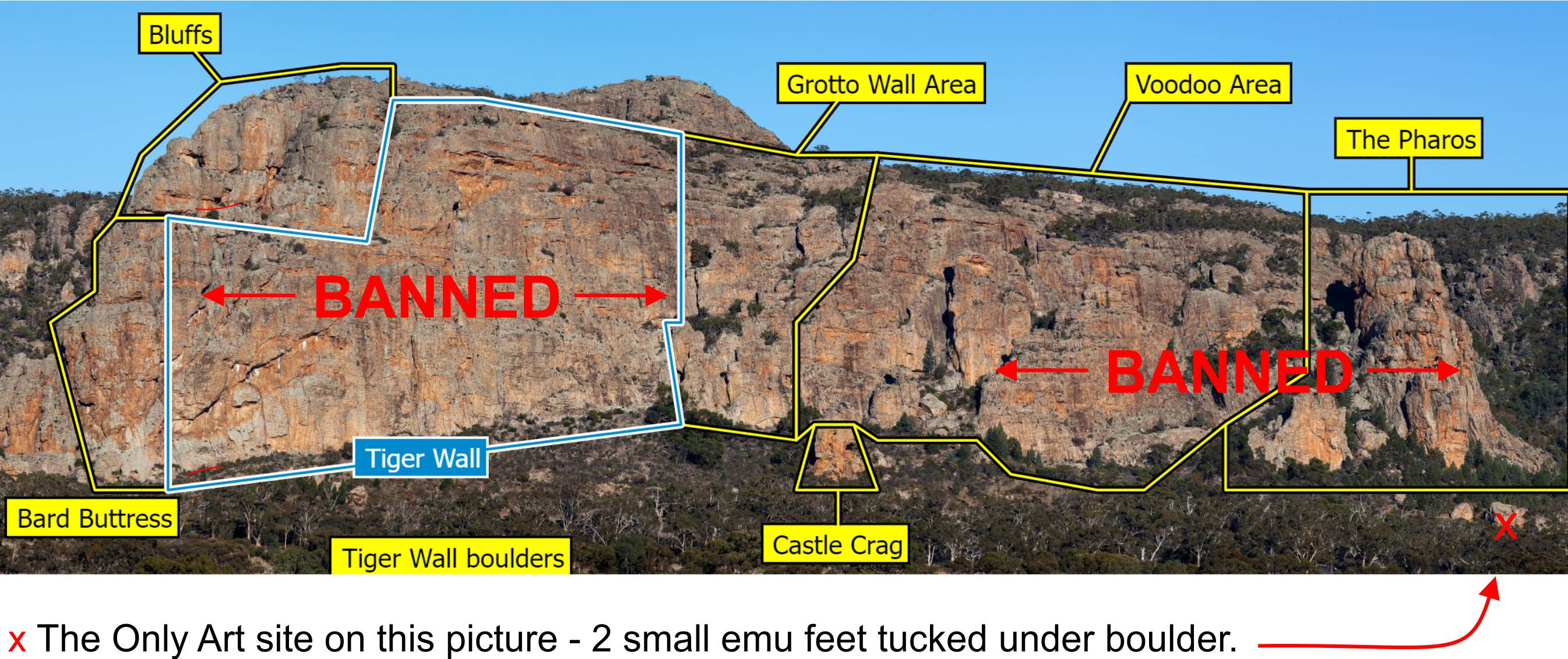
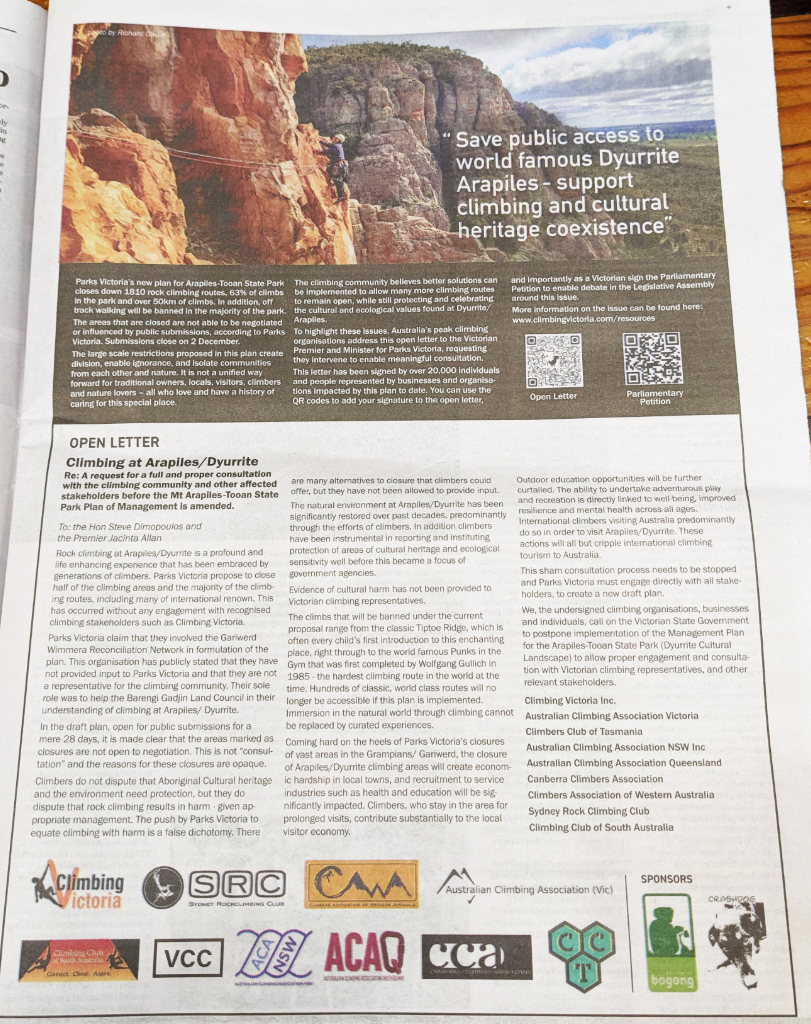
- You have until February 14th to submit a response to Park Victoria’s plan to close more than half of the climbing at Arapiles. Please make sure you send in your submission – your voice counts. We have momentum for change but need the community’s support to get this over the line.
The release of three key documents by Parks Victoria in the last couple of days has shone new light on the “decolonisation” mindset within the organization when it comes to the climbing community’s use of Arapiles.
Decisions decisions – how to ban climbing.
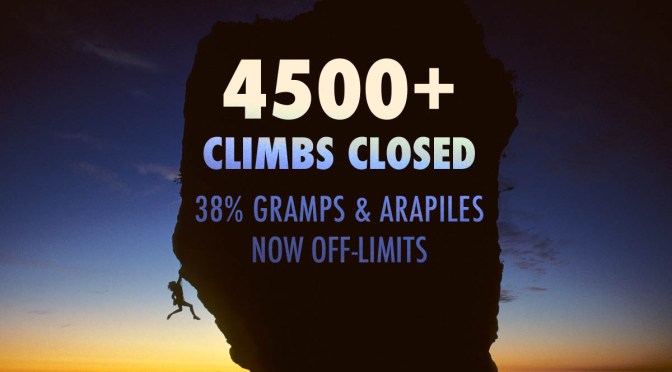
For this article we are going to focus mostly on the 2021 Decision Framework as this document best explains how we got to the situation where Parks Victoria has ended up with a proposal to ban more than 60% of the rock climbing at Arapiles (thousands of climbs) and put the regional Wimmera community of Natimuk into financial jeopardy. At only 10 pages it’s not a particularly long document and worth downloading and reading. We will delve into the flora and environmental surveys in future articles.
The Decision Framework document is labeled mysteriously “sensitive” – presumably because the contents didn’t align with what PV and the Labor Allen government wanted to project to the public (remember the win-win press release they issued – Climbing and cultural wonder of Dyurrite secured – yere that didn’t end well did it?). Why did it take until now for it to be released – 4 years after it was written? It was never shown to Climbing Victoria or other climbing organizations that had regular meetings with Parks Victoria specifically about concerns with upcoming Arapiles climbing bans.
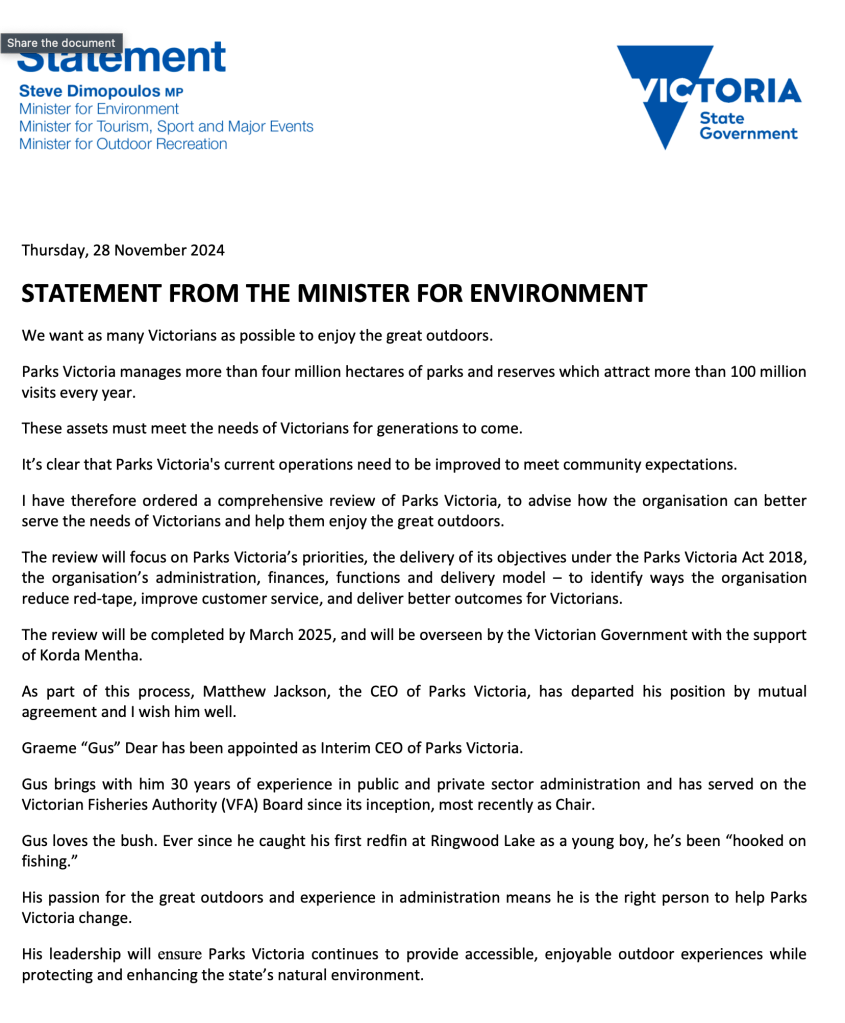
The fact they waited until now to quietly release it shows the government was either embarrassed by its contents (it hasn’t aged well in the political climate) or was deceitful in hiding it knowing full well the implications it would have on the communities response to the proposed plan. With Park Victoria’s CEO and board fired, temporary management and budget cuts the the release of these documents could either be a cry for help from within or a reluctant FOI release after persistent attempts by various members of the climber community to get hold of them. There is only a couple of weeks before submissions close at Engage Victoria. Let’s rip this document to shreds shall we?

It’s all about rock-climbing stupid
Although the Decision Framework document is titled with the generic sounding “Dyurrite Cultural Landscape Decision Framework: principles and process” it singles out rock climbing as the problem that needs to be cured. There is no mention of other user groups such as walkers, general tourists, cyclists, high-liners etc who could easily have a similar minor impact on the ecology and cultural heritage of the area.
The objective briefed to the Flora survey also “targeted” rock climbers – with the summary of that document clearing stating…
“The objective of the current assessment was to undertake targeted surveys for threatened plants, focusing on areas used for rock climbing activities. [snip] The conservation and statutory risk to threatened species has been assessed with a focus on potential impacts from rock climbing activities.”
This means that the study only targeted high use climbing and walking areas (except one small area of low use climbing).
The Flora report would have more reliable data if a comparison had been made for rare and threatened plants in the acres of rock where climbers do not frequent (“low use” or “no use”).
But regardless, the report itself states:
‘There was no clear pattern between the level of rock-climbing use and the distribution of threatened plants.’
and
“The cause and effect implied is not able to be determined with the few observations made, and the correlation may be coincidental.”
The report is a good snapshot of what is located in climbing areas, but it cannot be used to assess the impacts of any potentially threatening process (including rockclimbing). Your tax paying dollars at work.
Decision makers
Back to the Decision Framework and who is responsible for brewing up trouble…
“Parks Victoria and Barengi Gadjin Land Council are working together to undertake a project in 2020-21 to assess and evaluate defined rock climbing areas in Mount Arapiles-Tooan State Park. The assessment of cultural and natural values within these areas will provide an evidence base to inform decisions regarding future climbing opportunities. This document establishes the framework for how these decisions will be made.” – p.1
That makes it crystal clear BGLC is working directly with Parks Victoria on how to close rock climbing areas. Don’t get distracted by calls that they merely “assessed” the area and someone higher up in State land made the bans. The very methodology on how to ban climbing was cooked by these two organizations in this document without input from the climbing community or anyone in Natimuk or the Horsham LGA. This is how they operate – oversight not required. The document routinely refers to Traditional Owners who we can only assume is BGLC – it is doubtful they asked anyone else as there has been alleged confusion amongst outsiders of BGLC in the local Aboriginal community on these climbing bans. The document clearly states that climbing access will only be allowed at each area with the approval of Traditional Owners (p.4).

Precautionary approach
“The future regulation of rock climbing is proposed to be based on an approach of ‘designated climbing areas’. Climbing would be prohibited across the park except within Designated Climbing Areas in accordance with specified conditions. The approach is consistent with the overarching and management principles and provides a precautionary regime based on the evidence of values and risk.” – p.1
More commonly known as ban first, ask questions later. This is the same system they introduced into the Grampians in 2021 and likely to be coming to every climbing area in Victoria soon. Unless Parks Victoria can drum up resources to “assess” and “manage” an area in detail they will ban the public’s access to it. This is the future of National Parks in the State. They fear what they don’t know. It’s also really simplifies their work.
“Under the proposed management approach of designated climbing areas, the setting aside of discrete specific areas to exclude climbing would become redundant. Instead, climbing would be prohibited broadly across the park via set-aside determinations, except within a designated climbing area and in accordance with specified conditions.” – p.9
All public access and use rights should be understood as “temporary”
It says it right there on page 4. No one should be under any illusion otherwise. This is what the “land managers” tell us. Public access to public land is being eroded – with the very existence of “public” land changing to ownership by Corporations with their own internal agendas. Read our previous article here about that.
Tangible or Intangible – it’s all banned automatically
On page 5 we get some solid information on what triggers a climbing area ban because of Aboriginal cultural heritage. There is a bit to unpack here.
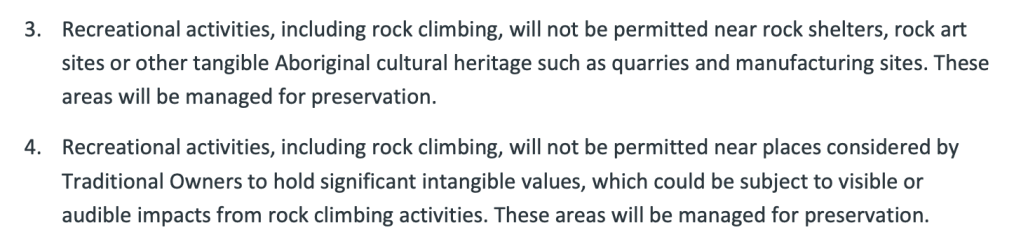
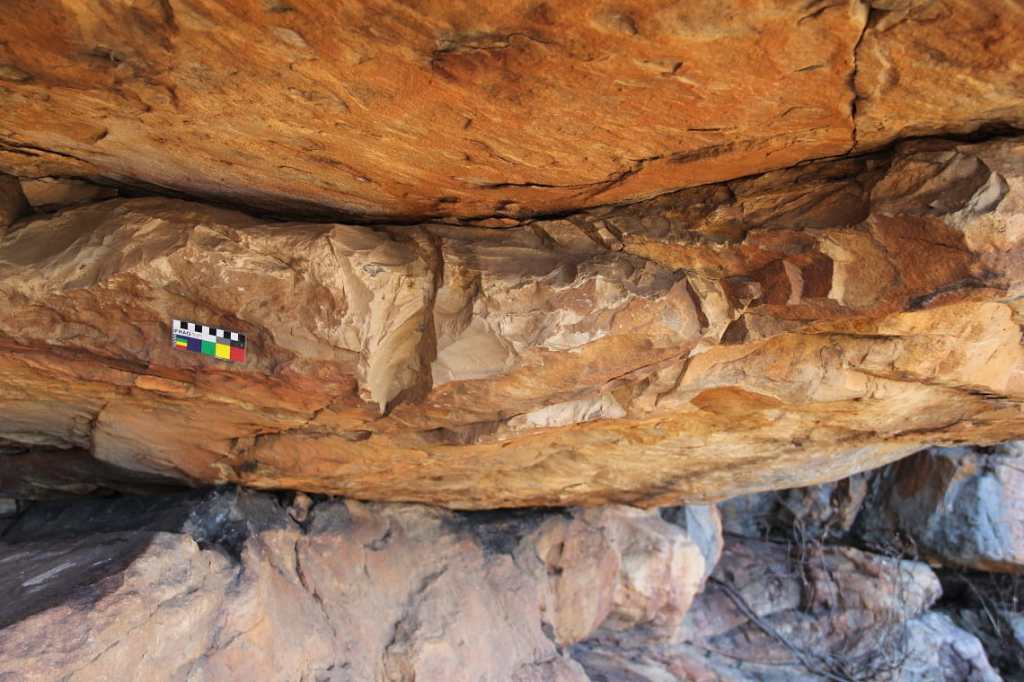
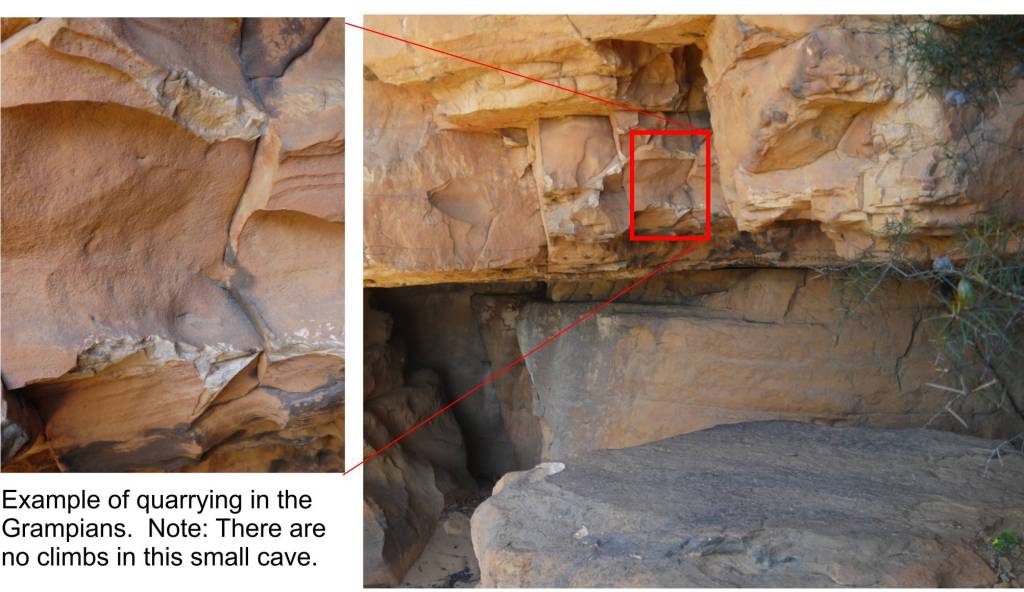
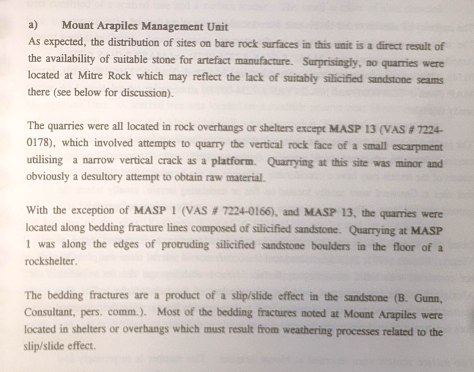
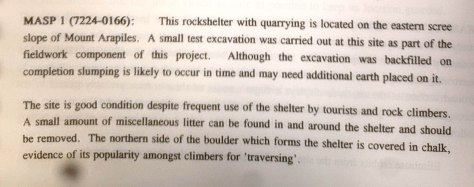
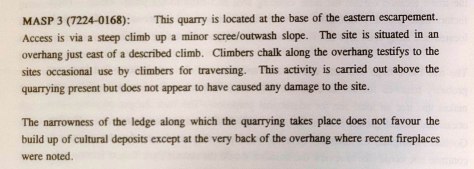
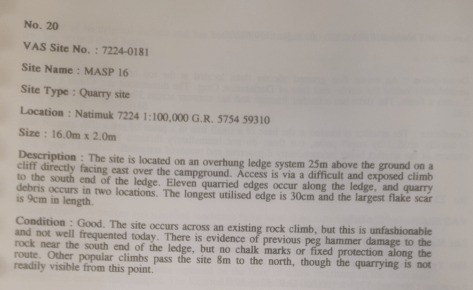
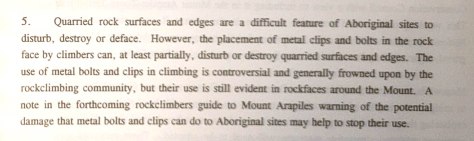
Now this appears to quash all hope on climbing being allowed near stone tool manufacturing sites – we covered this dilemma in detail in our article “We Need to Talk about Quarrying“. But there is some hope – as the definition of “near” is not made in the document. If it was defined as one or two metres then that would open up the majority of climbing at Arapiles. But if they want to put wider exclusion zones in excess of ten metres they would shelve the majority of rock climbing in the park – which appears to be what they have done. Does this same exclusion apply to potential cultural “tourists” – it would be hard for any tourist to appreciate a chipped rock edge or extremely faded rock art if they are being told to stay 10m away? Double standards of course apply – standard PV policy.
Defining Intangible
The document helpfully defines what Intangible Cultural Heritage is according to Parks Victoria and BGLC.
“Intangible cultural heritage including stories, the beliefs and experiences of Traditional Owners and their position within the broader cultural landscape, and cultural knowledge of the landscape from ecological, chemical and cosmological perspectives.” – p.5
Chemical? No idea what that is about. There is no information given on what climbing areas are to be closed because of this intangible heritage. The climbing community may be losing the very best climbing areas in Australia over concerns around “cosmological perspectives” and we would never know.
Quiet! Climber’s noise offends and creates bans
“Recreational activities, including rock climbing, will not be permitted near places considered by Traditional Owners to hold significant intangible values, which could be subject to visible or audible impacts from rock climbing activities.” – p.5
We have all heard the occasional power scream from climbers at crags. When you are pushing yourself through maximum physical and mental barriers this is often the result. Sometimes it’s annoying sure – but does it warrant banning access because of it? Or maybe the tinkle of a bunch of swinging hexes is the offensive part?
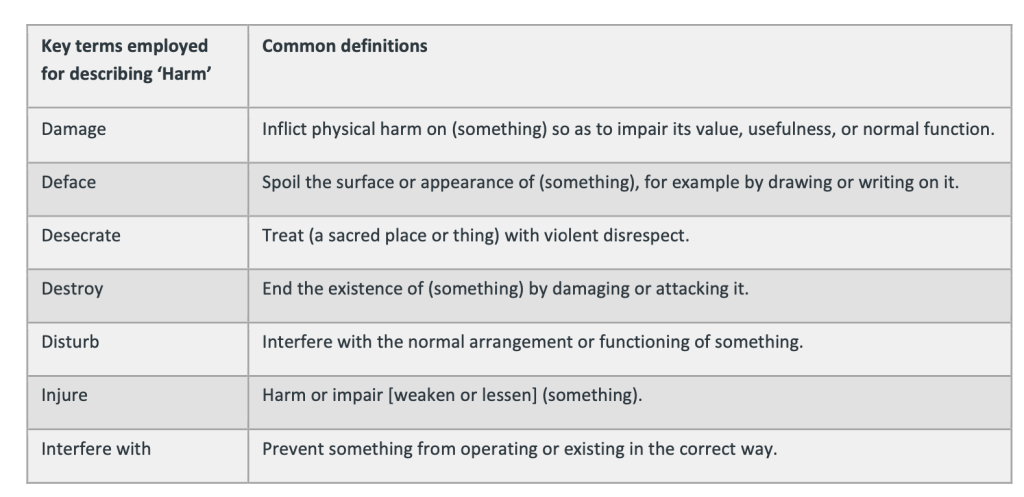
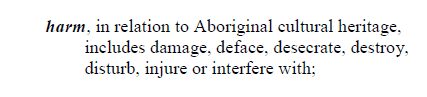
Looking at the definition of harm to Aboriginal cultural heritage helpfully included on page 10 it is hard to imagine how climbers making noise fits into any of these categories.
We think climbers everywhere should be aware of other users of the parks we visit and make sure that our actions don’t distract from others enjoyment. If that means toning down the screaming – and leaving portable music at home – sure. That doesn’t “sound” hard to achieve if our very access to public land is at stake. We have no reference if this “audible” concern has closed any specific climbing site at Arapiles.
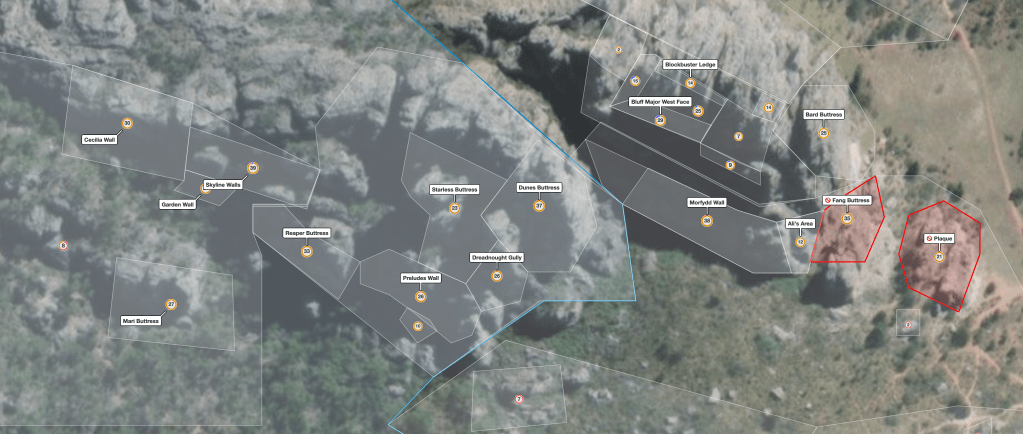
Mapping
A little snippet down the bottom of page 5 is interesting –
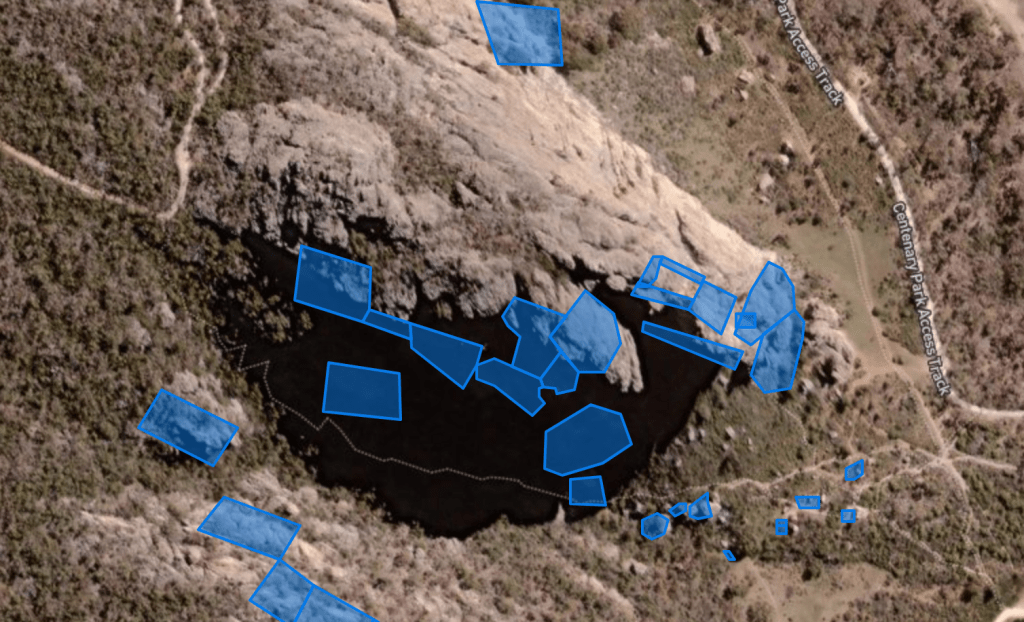
“The existing climbing area polygons (Sourced from Mentz, S. & Tempest, G 2016 Arapiles selected climbs, Open Spaces Publishing, Natimuk) currently represent the most practical boundaries for achieving these objectives as they comprise the best available data and were the units used for recent systematic values assessments. Their use as proxy settings will also significantly reduce the size of buffer zones that were adopted for the 2019 Special Protection Areas. It is expected that in future, the management units will be re-configured to better align with Aboriginal cultural values, places and landscape features in line with Traditional Owner expectations.” – p.5
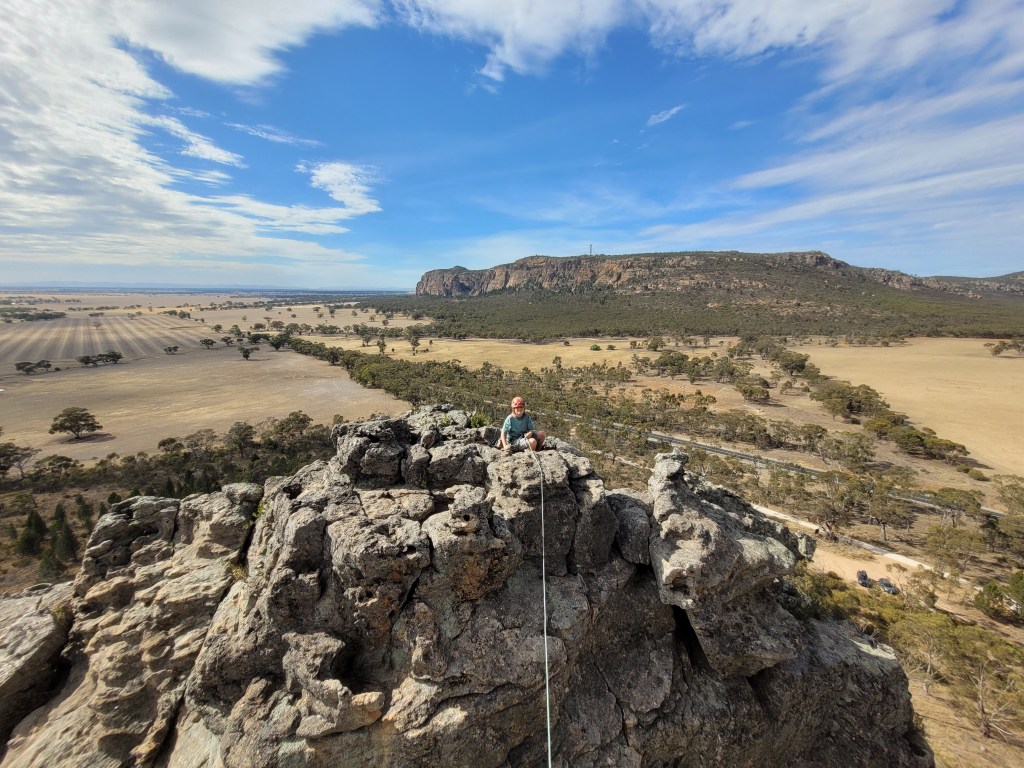
Not sure what that means exactly – but it appears sometime between 2021 and now they switched to using thecrag.com for mapping. It is unclear what they mean by the management units being switched to better align with Traditional Owner expectations. This seems to confirm that any “final” decision is not final at all and PV and BGLC can change it on a whim if required. Of course if climbers ask for changes that will be impossible but.. yere. We saw that in the Grampians where the popular beginner area the Mountain Lion was deemed a designated climbing area in the formal signed off management plan – then this status was almost immediately revoked upon the instructions of the Traditional Owner groups in charge. Nothing is as permanent as change.
If it’s all too hard to deal with – then it’s banned
Remember how Parks Victoria funding has been cut, staff reduced and the whole organization is likely to be homogenized back into the State government ministers control? That may not be a good thing if they really want to stick to the rules they have made for themselves with this document.
“Where the land manager does not have the resources to actively manage a site or implement agreed mitigation measures where values are present, the site will be closed to rock climbing until such time that these management actions can be implemented. Resources will be actively sought to support implementation.” p.6
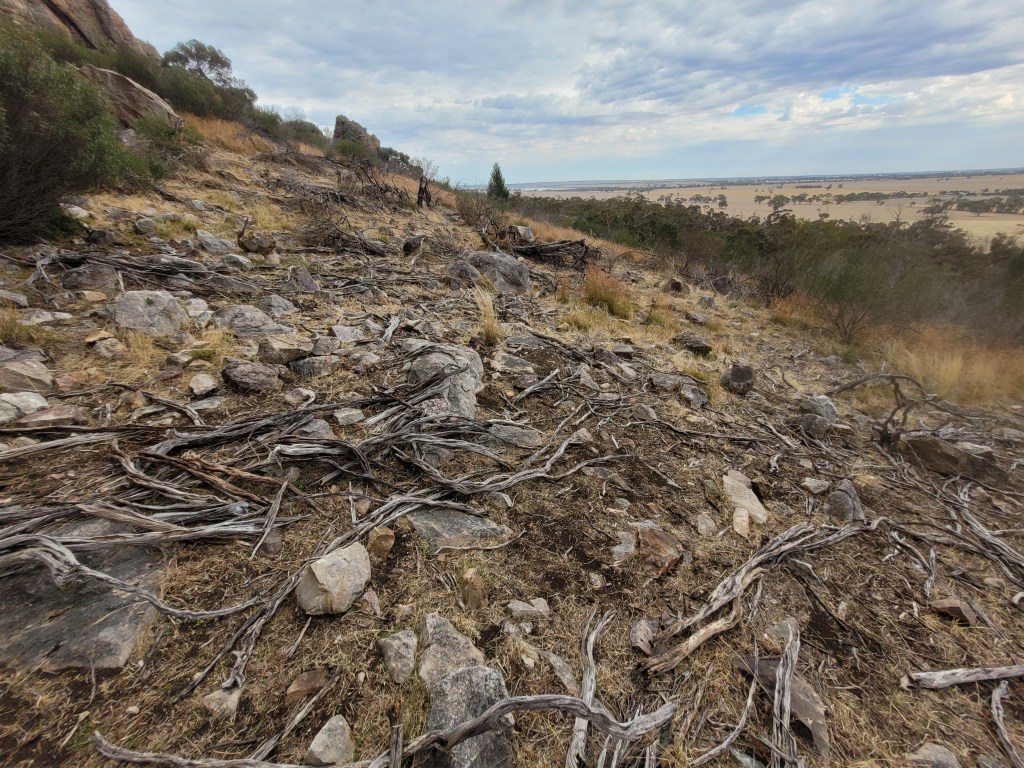
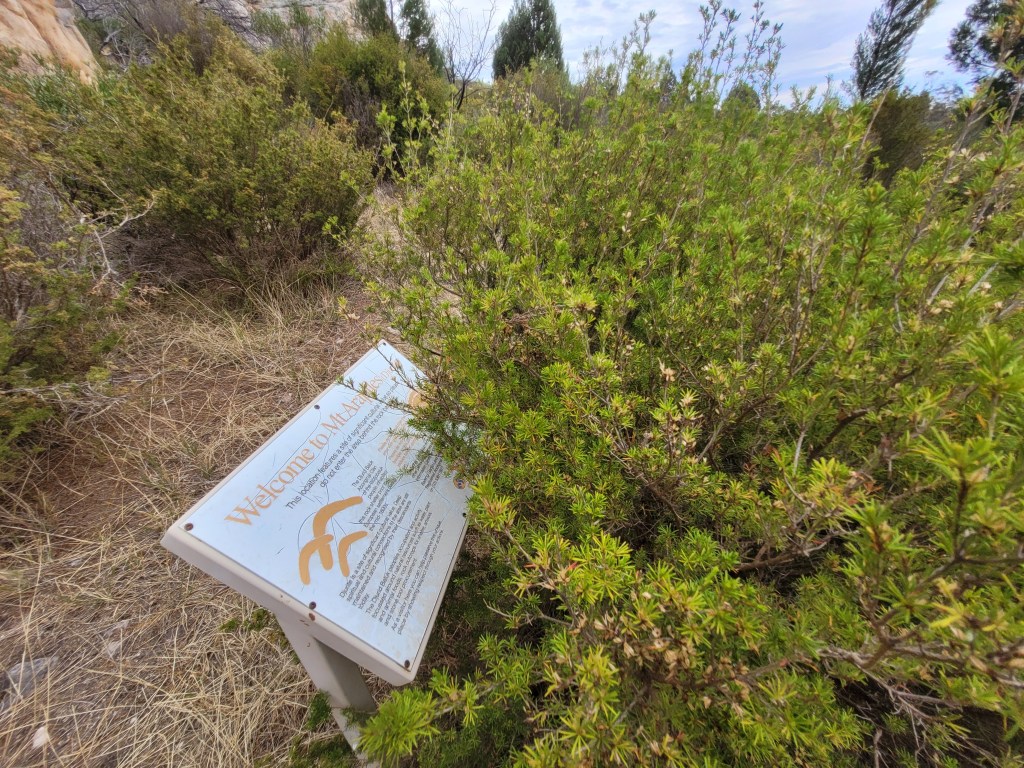
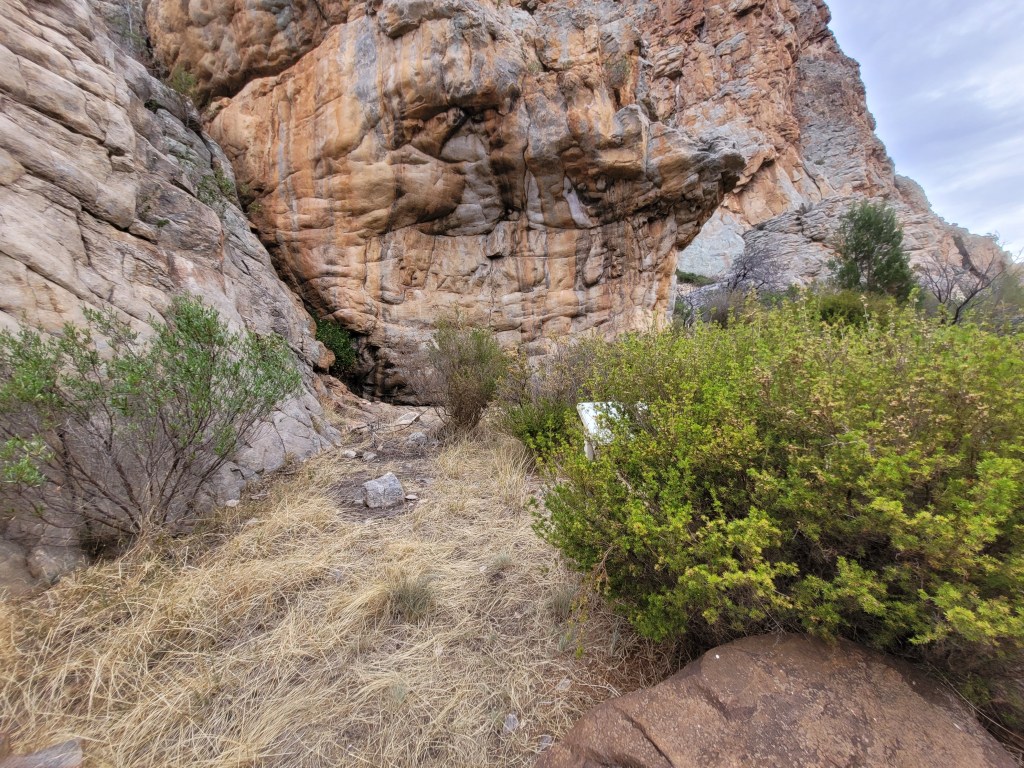
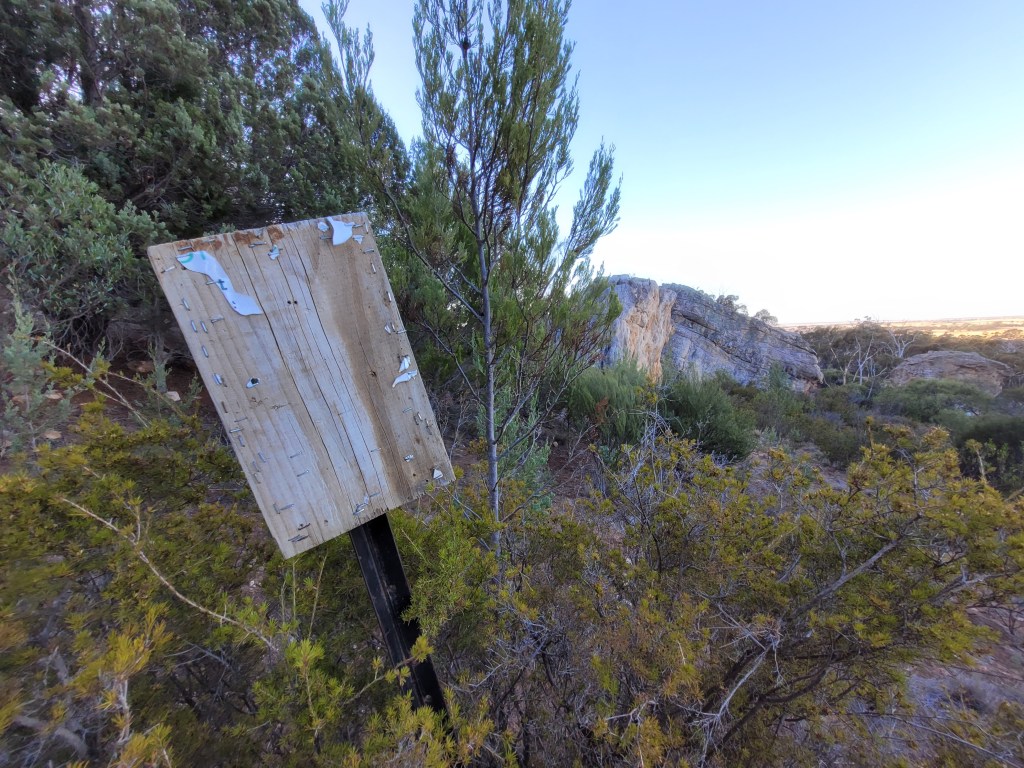
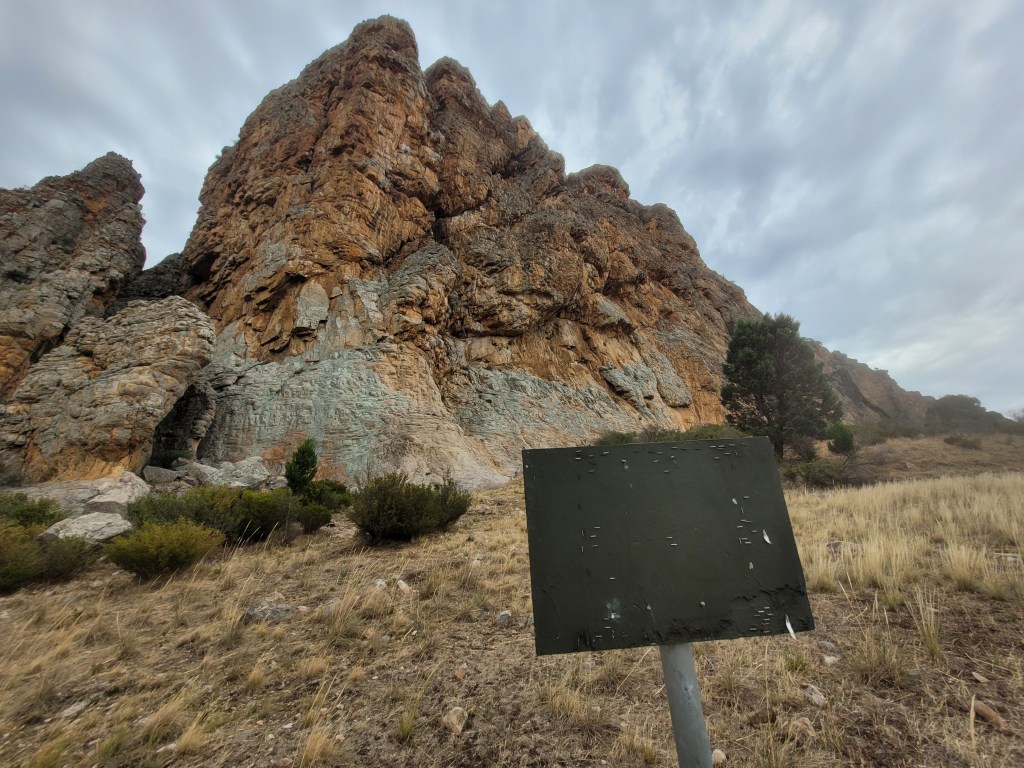
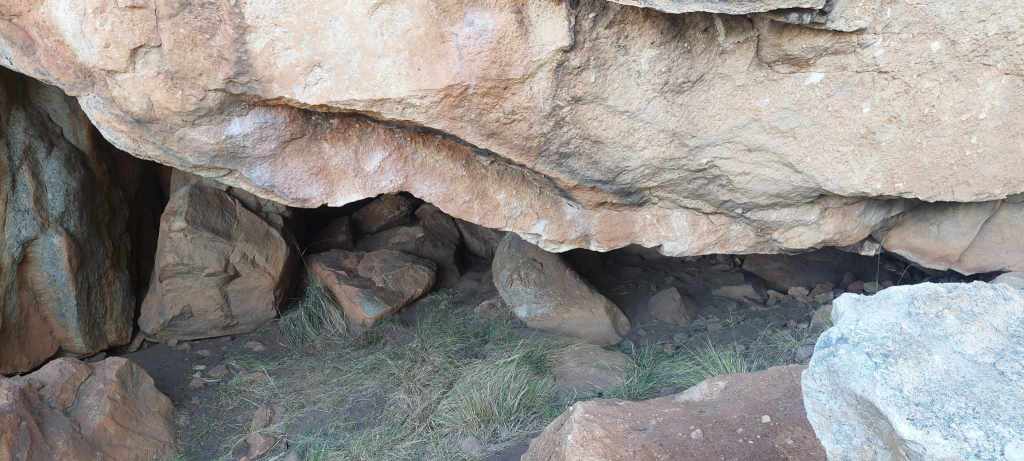
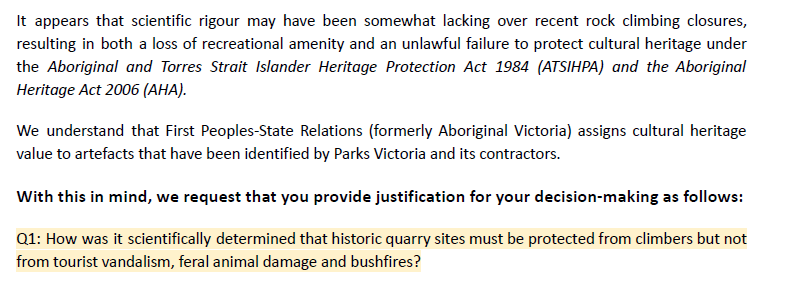
Without a significant funding upgrade – that includes more staff than one lone ranger visit every couple of days – they have no hope of “managing” the climbing at Arapiles in the way they propose. Even if they decide to go the full legal threat of “set asides” there appears to be no one around to enforce them. A recent visit to Arapiles by our contributors saw many examples of missing signs and overgrown vegetation obscuring known Aboriginal art sites – and being a legit fire hazard for those sites. They even saw clear evidence of a fox or feral cats living directly under one of the most significant quarry sites featured in recent mainstream news reports. If they can’t manage the smaller bans now – what is the plan for when they quadruple them? If the Grampians is any example it’s likely they just give up quickly and move onto areas that require major management like pest species eradication and bush fire control. Where is the “joint manager” BGLC who is charged with looking after these sites?
Climbing history and importance is not factored into “decision making”
What is missing in this document is critical. We all know this by now but it’s good (bad?) to see it so clearly in this document. There is no mention of researching or defining the value and contribution that the proposed closed climbing areas may have to the wider community. No “values” placed on specific routes, walls, rock formations. No mention of historical value of rock climbing to many thousands of people over many decades. Climbing is defined as a nuisance not something with a rich heritage of its own.
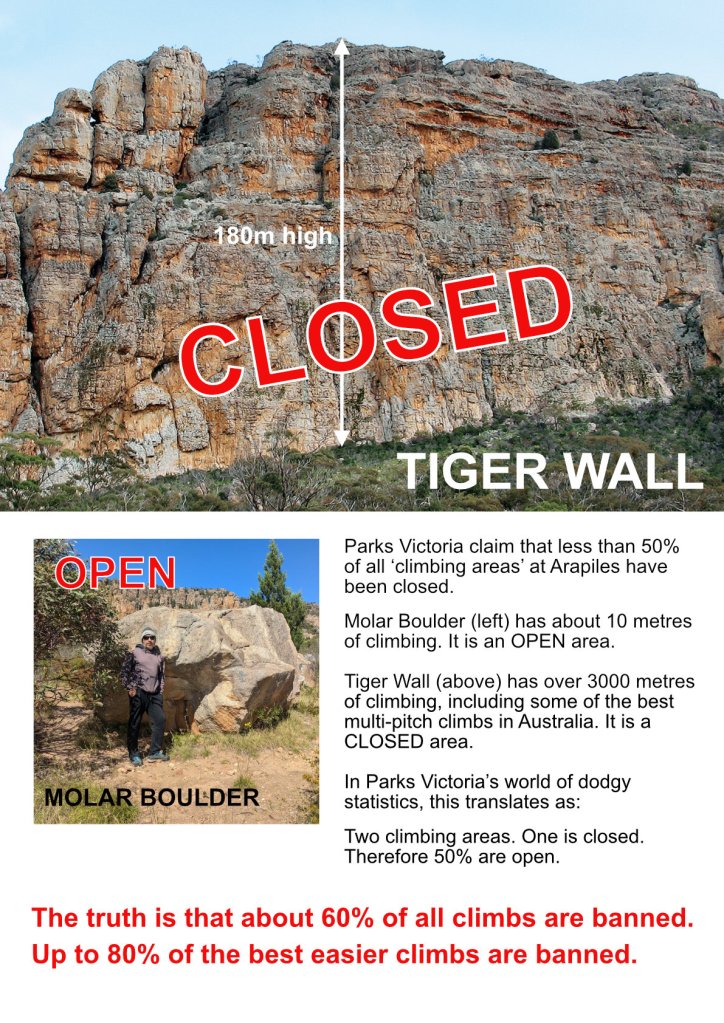
This is the proof that the importance of Arapiles to the international community was entirely disregarded by all land managers when making “decisions” on what is banned and what remains opened (less than half).
Also there is no mention of how this decision would impact the wider region economically, socially and health. We now hear of important professionals leaving the region in anticipation of the imminent bans.
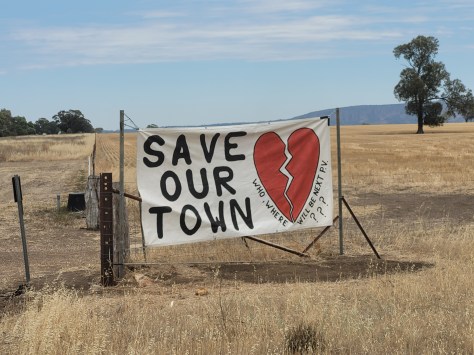
PV and BGLC were so focused on the rock in front of them they didn’t see the “forest” of climbers and the wider community around them. It is clear they just knocked off access to climbing areas one by one but didn’t consider the wider ramifications of the end result – the closure of more than half of the internationally significant climbing areas at Arapiles. By the time they finished the report and put it together using their “framework” it was probably to late – they had dug themselves a big hole and couldn’t back out of it. Even some members of GWRN were shocked by the end result.
Flexibility
We all know if it was the government that was building a new walking track, road, hotel there would be acceptance that some harm may occur for the larger benefit to the community. Everything is a balance and tradable. When Parks Victoria chops a new track through the bush they know they are not “protecting” the environment but giving recreational users better access to the park. This does not seem to apply to rock climbing.
The document hints at some flexibility such as “seasonal closures” – but these don’t appear to have made it into the final plan.
“Seasonal rotations based on management capacity and landscape impact/recovery and ability to undertake cultural practices will be considered in the decision making process and implemented, if appropriate.” p.6
There will be no further growth in rock climbing – that’s “colonialism”.
That is Park Victoria’s words not ours – as clearly spelt out in their Decision Framework document on p.5
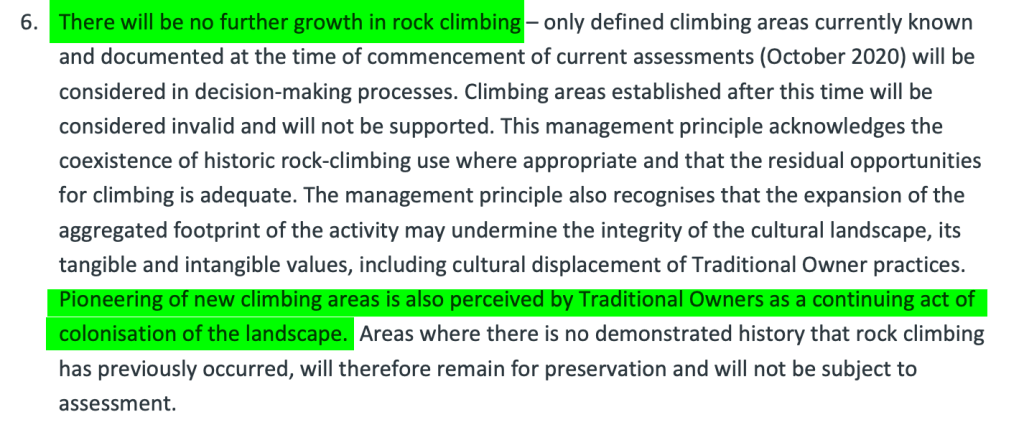
According to the Decision Framework – all new climbing post 2020 is considered invalid and will not be supported. Imagine if this principle was applied to bush walking, bike riding – or any other park development such as car parks, toilet blocks or signage? Imagine if the construction of the Grampians Peaks Trail was spoken off as an act of “colonialism”? No other activity in singled out in such a way as rock climbing. Remember that community net positive activities such as climbing festivals or events are not to be allowed either. In activist’s (sorry – “government employees”) eyes climbing is a colonial expansionist enterprise that needs to be quashed. Does such an extremist and partisan viewpoint have any place in what should be a boring piece of public service paperwork? The word colonialism is shorthand for “racist” – probably the harshest word that can be thrown at someone in these times. Language matters. In 2025 this is what the Allan Labor government supports.
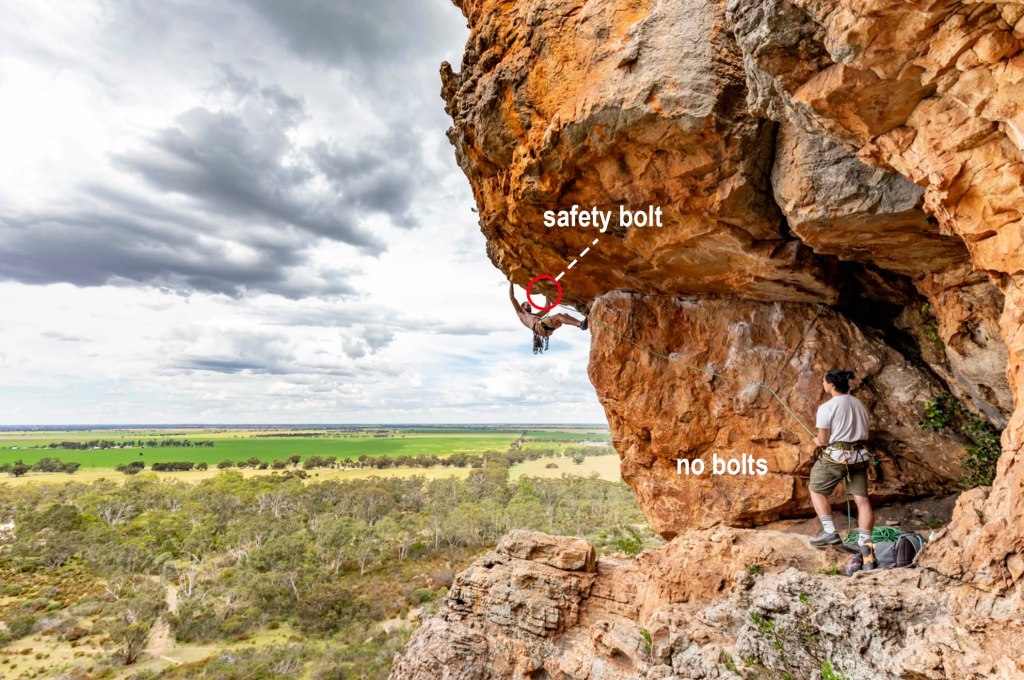
It’s interesting to see how this document is written – according to the document it’s not the potential opinion of a few individuals in the Aboriginal community that climbing growth is colonisation – it’s written as a given that it is ALL Traditional Owners who have this view point. We know that is simply not true – there are people within the climbing community with Aboriginal ancestry. How well informed were these Traditional Owners in making this decision? They “perceive” this as an issue but did anyone explain to them what it actually means? Do they realize that the vast majority of climbs at Arapiles involve no installation of safety bolts, no potential vegetation or heritage disturbance and “leave no trace” is often the end result? It is the act of hands and feet on rock – like their ancestors probably did for thousand of years without the aid of modern climbing equipment. Someone being present on a bit of rock is not “colonialism” unless you have a bias against that persons ancestors. Moving over rock is something enjoyable that comes naturally to all of humanity and is enjoyed all around the world. Defining when bush walking ends and climbing begins is actually incredibly hard. Just what was told to the Traditional Owners when they agreed with the principle of no new growth of rock climbing in this document?
And what research did Parks Victoria do to define what had been climbed up to 2020? We know they didn’t ask any of the current and past climbing guidebooks authors such as Glen Tempest, Simon Carter, Louise Shepherd or Gordon Poultney. They relied entirely on thecrag.com as their “definitive” list of what had been climbed. We have explained in detail the flaws of relying on such publicly created material – which is chock full of misidentified geographic areas, missing routes, duplication and such. Since the climbing bans started being rammed down the throats of Victorian climbers in 2018 the majority of new crag developers Australia wide have now refused to use thecrag due to the fear of the information being used against the climbing community. It’s a well founded fear. thecrag.com is not a source to be trusted about what has previously been climbed.
When they talk of colonisation do they consider what their heavy handed management plan is having on the free spirit of the rock climbing community? A government who has little understanding of what they plan to manage and even less willingness to incorporate it into decision making processes dares to “colonise” the rock climbing community. See we can also use that word way out of context.
Start again PV.
This document is a farce of navel gazing drivel driven by political views and does not match community expectations of fair access to public land. Let’s hope they take the data they have acquired through years of expensive surveys and rethink the whole management principle of “declared climbing areas” and instead consider closing smaller areas whilst allowing free and fair access to Arapiles and the Grampians wonderful natural environments for generations to come.
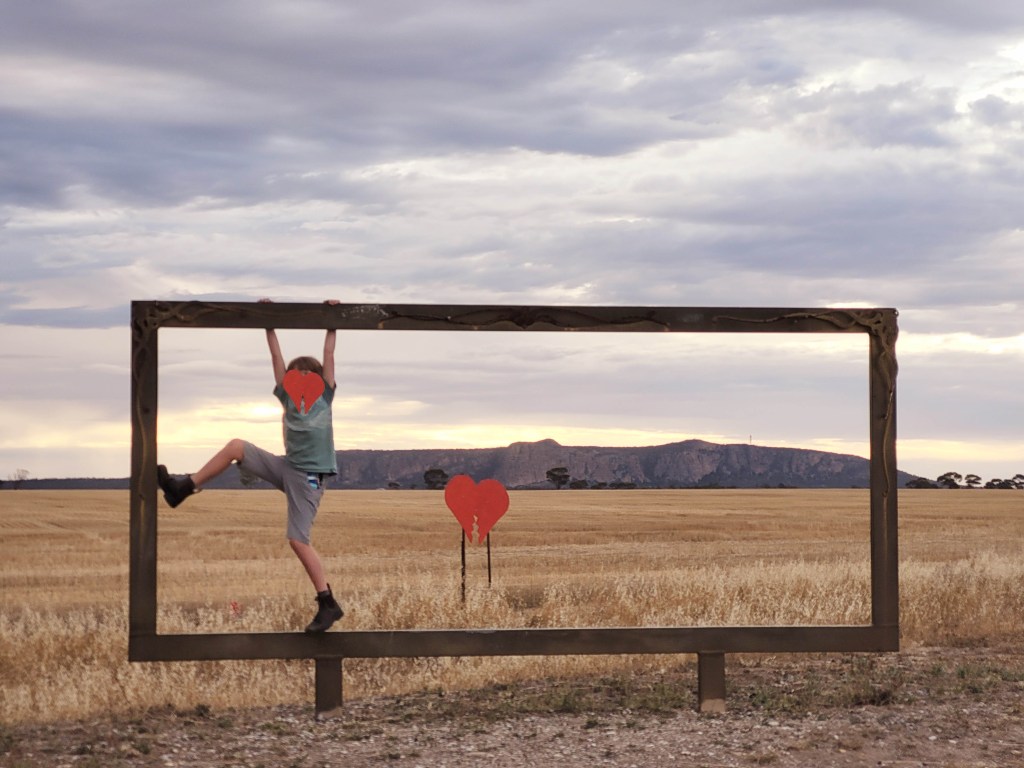



 Save Grampians Climbing