This is the second in a two part series where we explore the Northern Grampians and see the effects of the world’s largest climbing bans. You can read the first part about the Hollow Mountain area here. This second part deals with the Stapylton Amphitheater side, where there are currently no Special Protection Area restrictions on rock climbing (apart from Kindergarten & far left end of Northern Walls). We were particularly interested to see how the inevitable increased usage of these areas was effecting the condition of the crags. When half the sport climbing and bouldering in the Grampians was shut by Parks Victoria in February this year, it has meant some of the open areas are probably now seeing double the traffic they saw 12 months ago. This can only end badly without a conscious effort from the climbing community and PV to install erosion busting infrastructure (rock steps, belay platforms, fenced off rehab areas etc). It’s not rocket science.
Continue reading Stapylton First Hand
Hollow Mtn First Hand
We spent three days in the Northern Grampians last week to document some of the more popular climbing areas in and outside the banned Special Protection Areas and also re-visit some of the mainstream tourism walks and Aboriginal art sites. The aim was four-fold, 1) to record a snapshot in time of climbing & walking in the area, 2) try and document the condition of some of our favourite climbing areas through the eyes of a someone in government doing an “assessment”, 3) simulate the experience of a first time climbing visitor to the area who is not aware of the bans and lastly 4) to locate some of the Aboriginal cultural heritage in the area that has been mentioned in meetings with PV.
This will be a two part article, the first focuses on Hollow Mtn and the second will be on Stapylton. What he saw was good and bad, climbers impacts are certainly evident but not unique in their impacts. There is a long history of people visiting this area evident everywhere you look. What was clear is that, despite the bans, climbers are certainly the main users of the area during the week (when we visited). Tourists were few and far between compared to commercially led climbers in Summer Day Valley. This photo essay comes from 30th October to 1 November 2019.
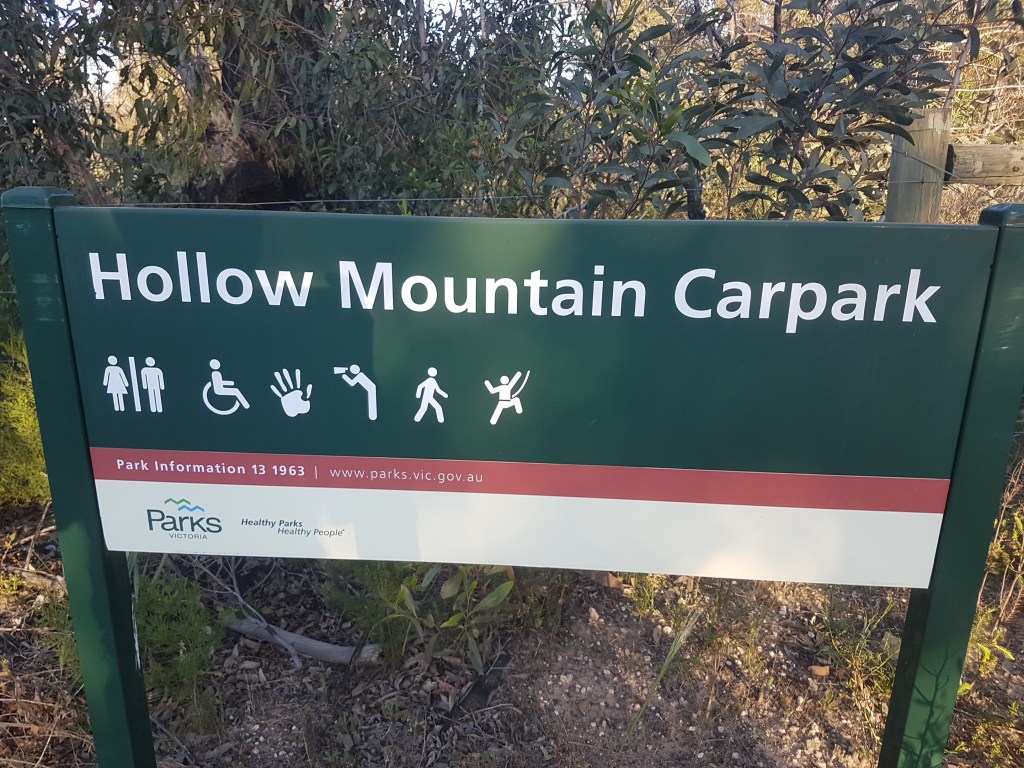
As most international or interstate climbers would do, we drove from Arapiles to the Grampians. It was hot, really hot. 36’C when we pulled into Hollow Mountain Carpark at 2pm on a Tuesday. It could easily fit 50 cars and several tour buses, but instead it was completely empty apart from one lone mini bus baking in the sun. A read of the glossy Parks Victoria interpretative signs didn’t reveal any messaging about the SPA climbing bans that cover the majority of climbing accessible from this carpark. If there were bans they certainly weren’t making an effort to advertise this. The only sign of trouble was an attempt to black-out the word Hollow Mountain with a Sharpie.
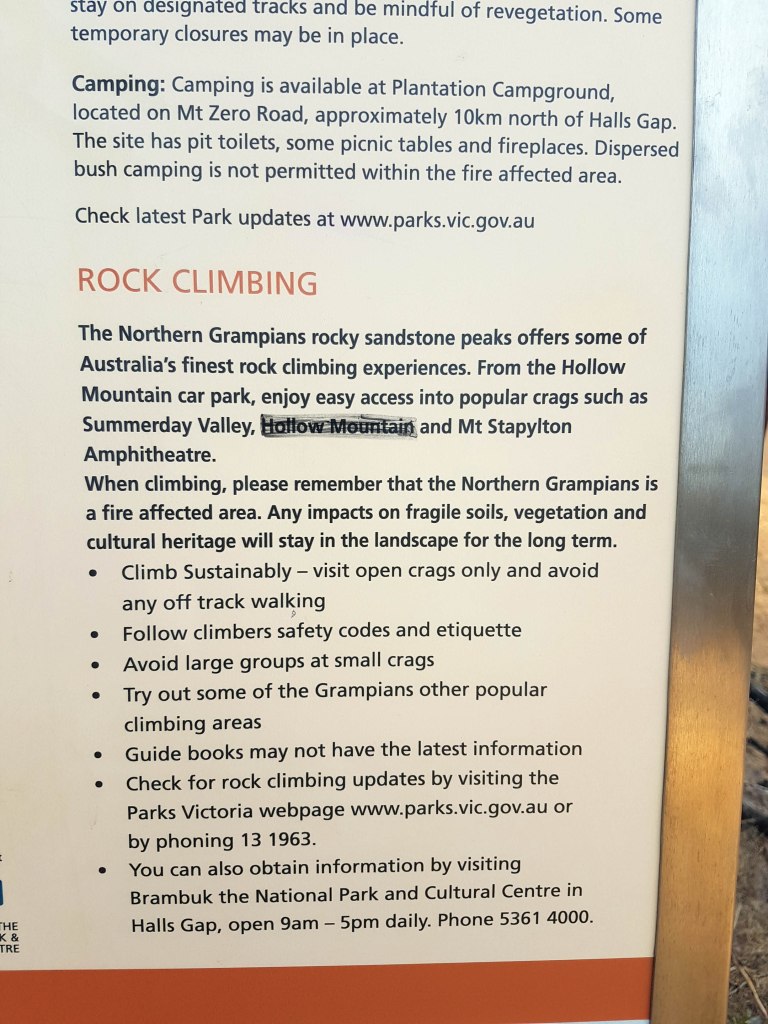
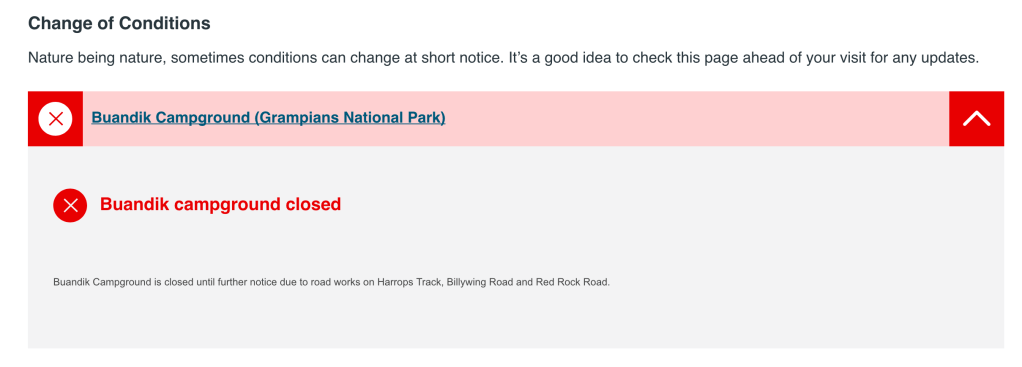
We did as their sign suggested and logged on to Parks Victoria’s website to see if there was any updates about climbing (a struggle with poor mobile reception). Again there was no information readily available. The only “need to know” they listed for the entire Grampians was the closure of Buandik Campground – entirely irrelevant. The dedicated Northern Grampians page doesn’t even mention rock-climbing despite it being home to Taipan Wall and numerous other world-famous climbing areas. It’s like they want to pretend climbing does not exist. Later in this article we will talk about our impression that the majority of people visiting this area mid-week were climbers, on the three day trip we were there it was easily a ratio of 10:1 climbers to non-climbers. So this lack of info was concerning.
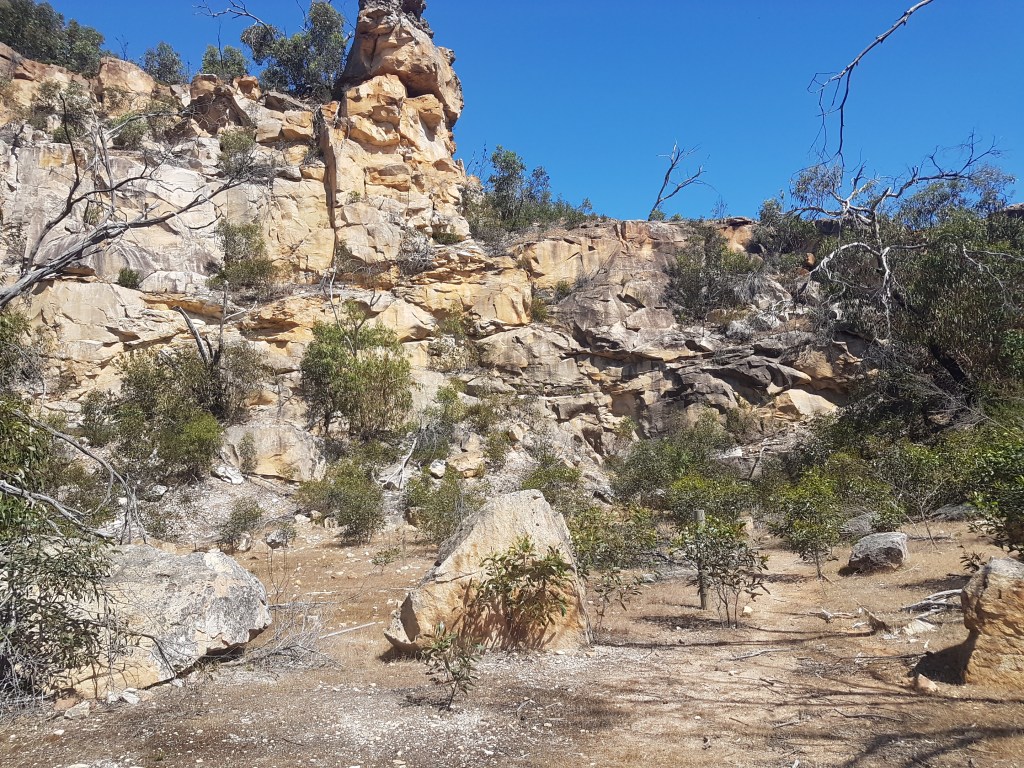
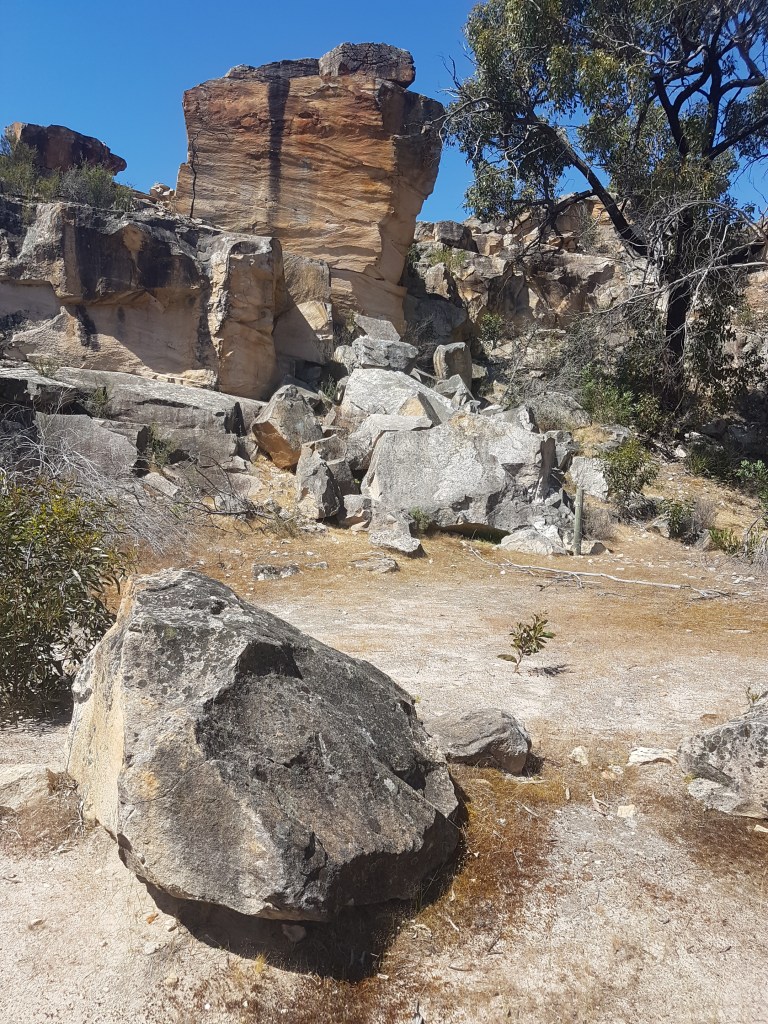
The planned first stop was a walk up to Gulgurn Manja rock art shelter, one of the six “caged” art shelters in the Grampians region. On the way up to this cave the tourist track passes an abandoned and unsignposted rock quarry that until 1998 was the main campground for climbers and bushwalkers in the Northern Grampians. This quarry was one of the major sources of stone used for important buildings in Melbourne last century. Presumably thousands of tonnes of stone were removed from this site to create the bowl that was the old campground. Of interest is the proximity to both the art site and Summer Day Valley – it would be less than 50m from each. It would be nice to have an official sign about the history of this quarry – it’s currently overgrown and hidden.
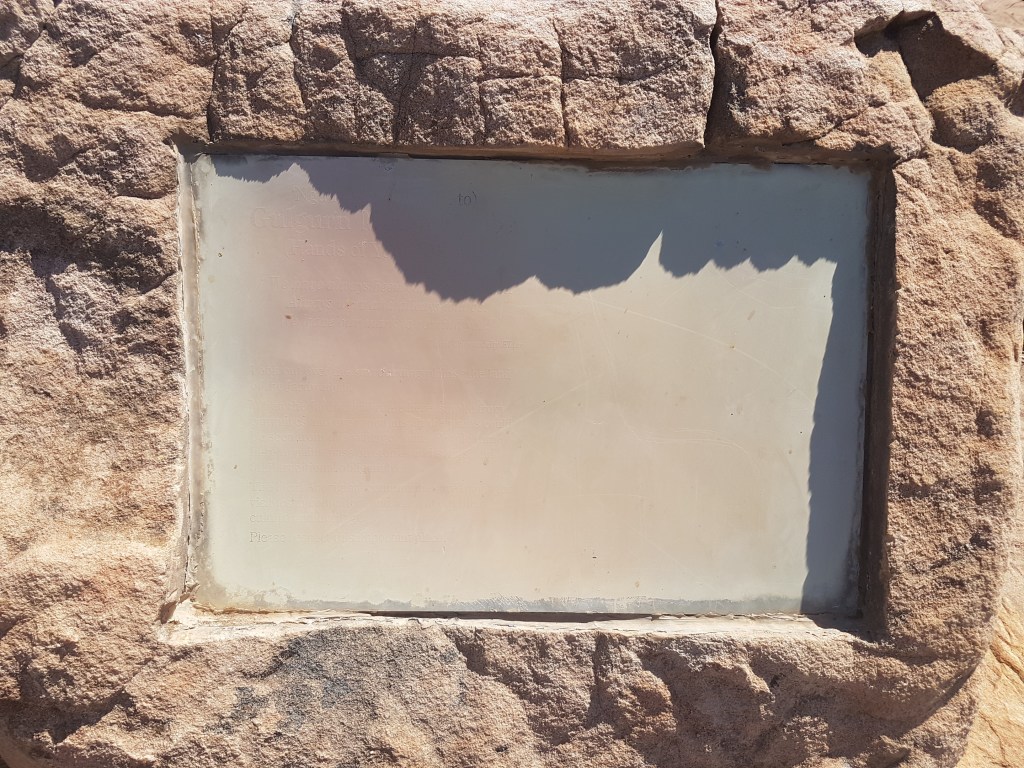
As we continued on the tourist track to the art-site it was clear any interpretative signage had been nuked in the 2014 fires but had not been replaced. This is a shameful state of affairs. We desperately wanted to learn more about the art-site and Aboriginal heritage but the signs were completely faded and unreadable. In the era of millions being spent on a Grampians Peaks Trail couldn’t they spare a few thousand to re-print these signs? Luckily we had purchased an excellent book “The People of Gariwerd” in advance which gave us some good background info and is highly recommended for anyone interested in Grampians history.
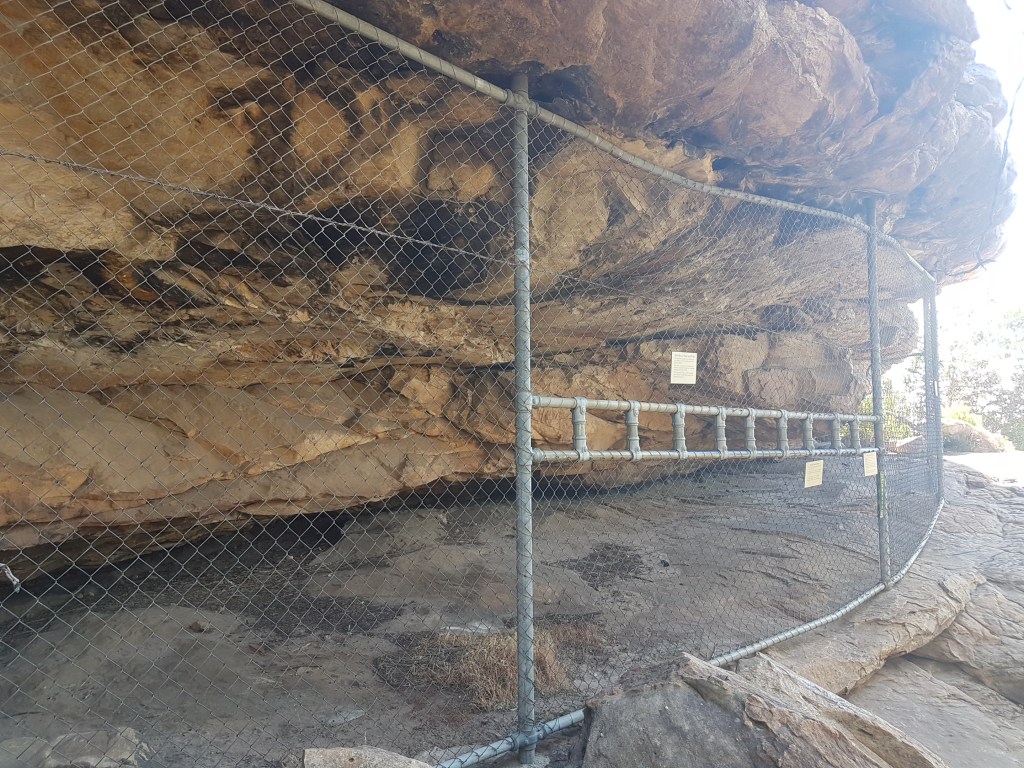
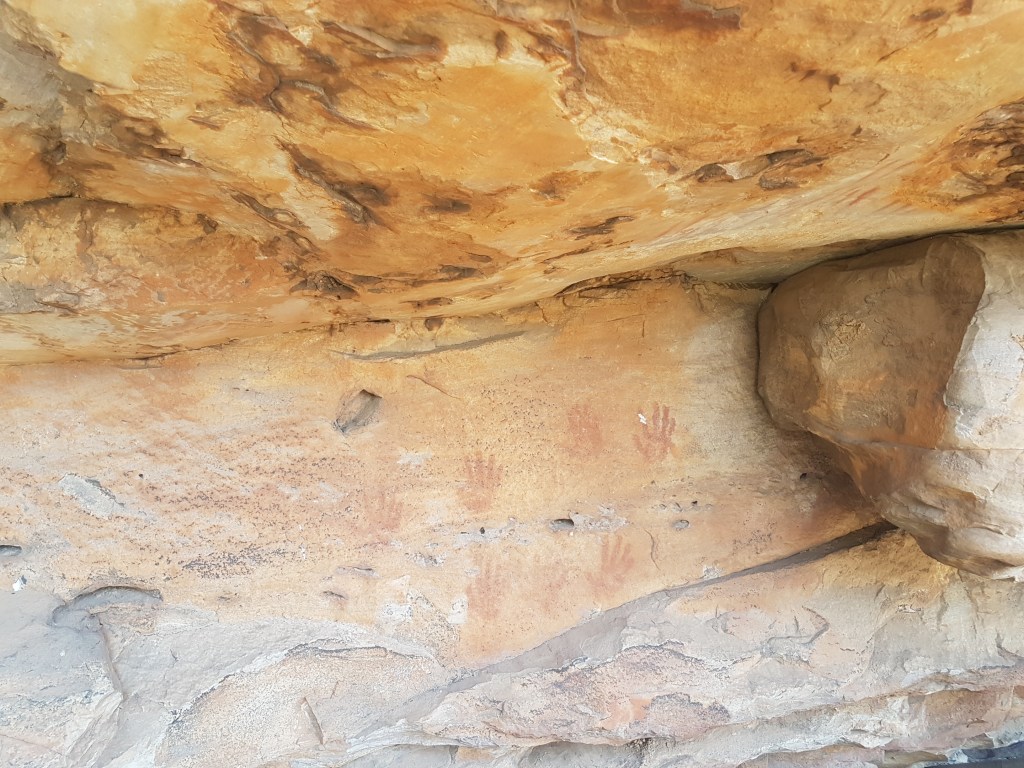
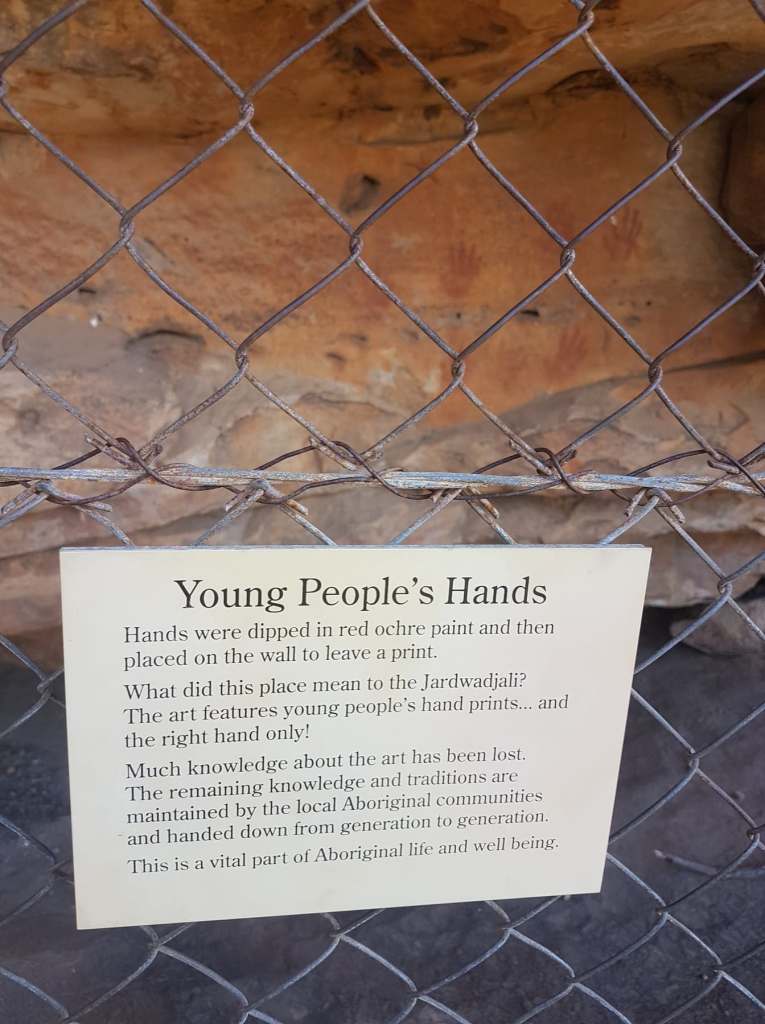
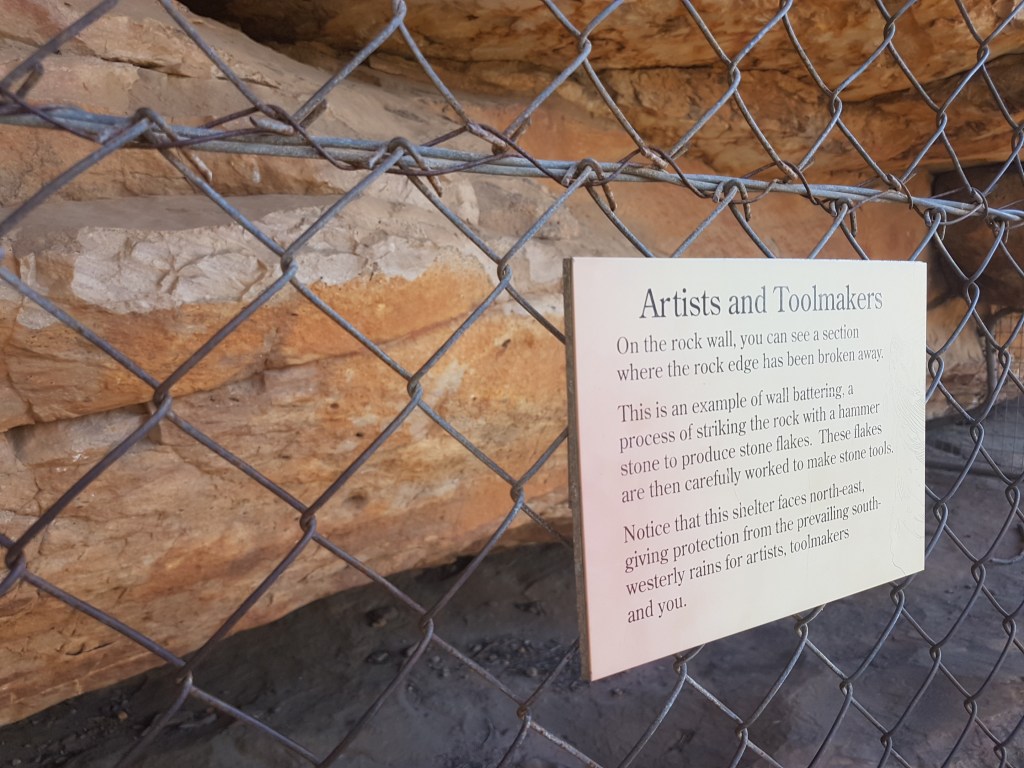
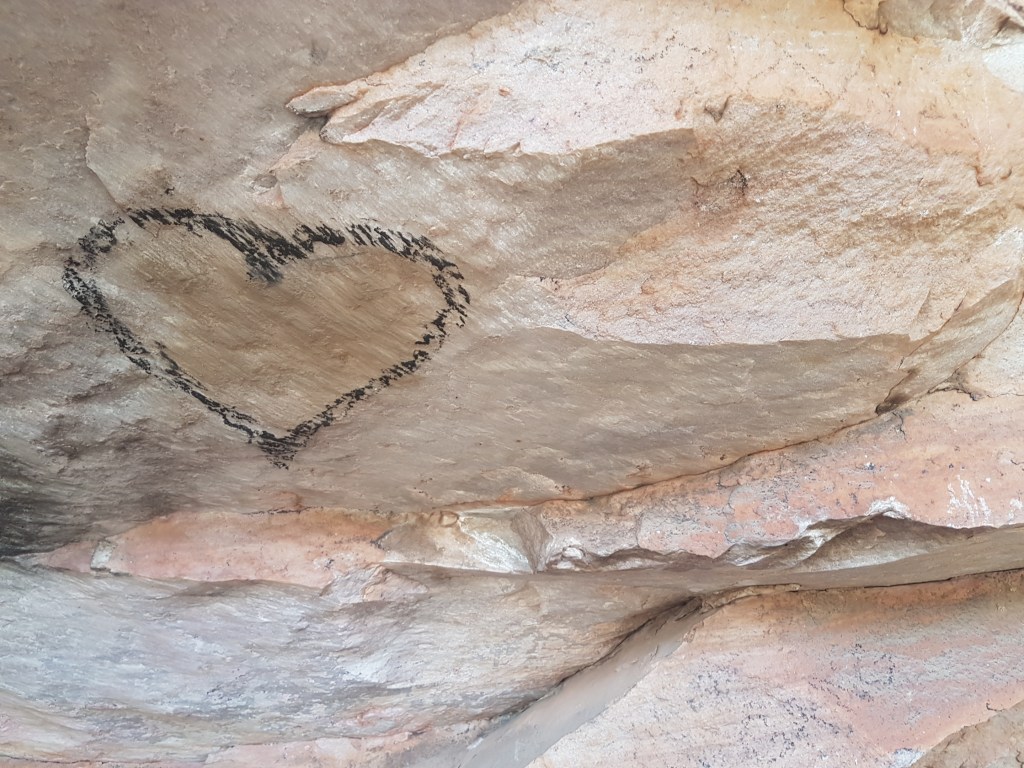
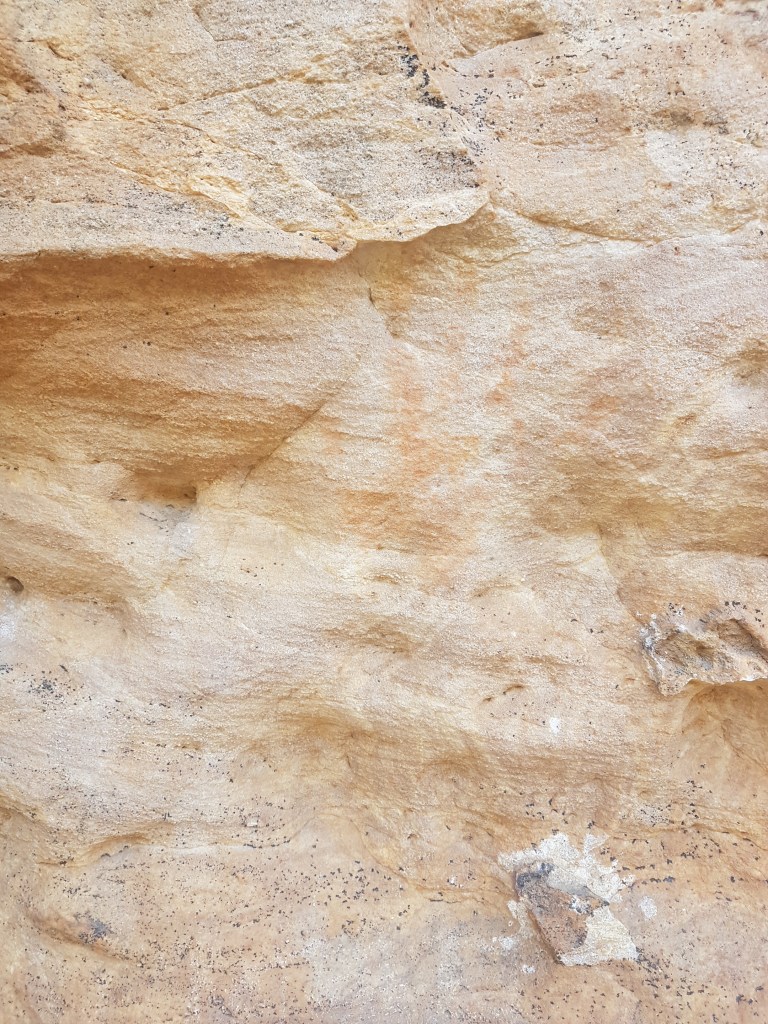
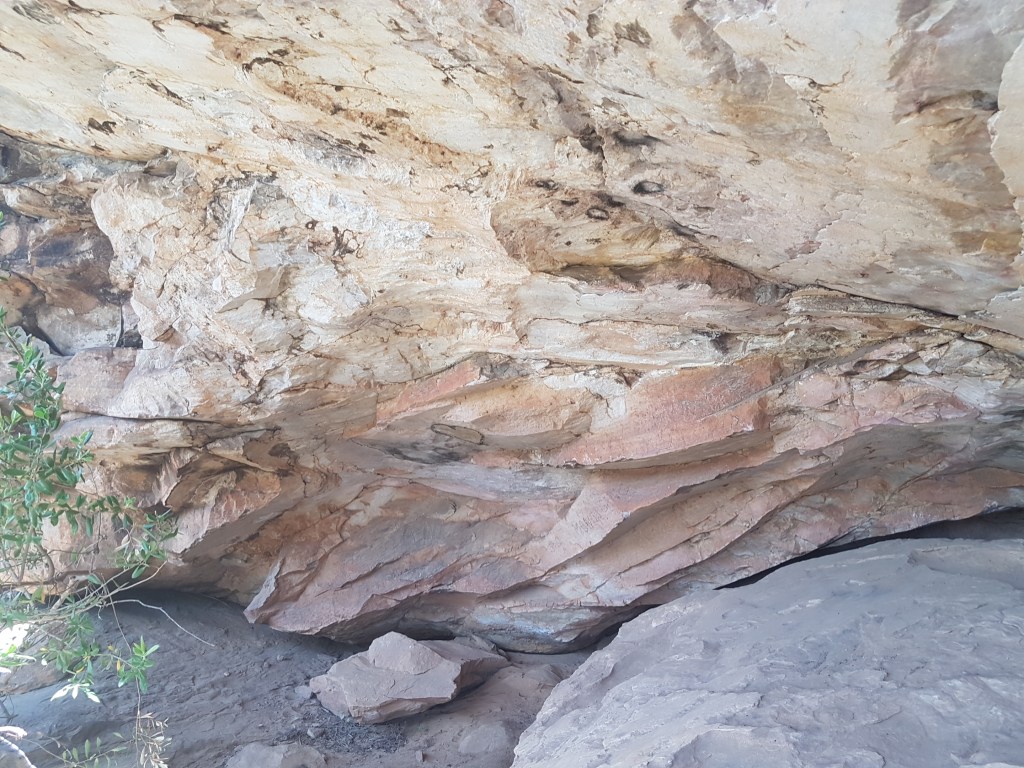
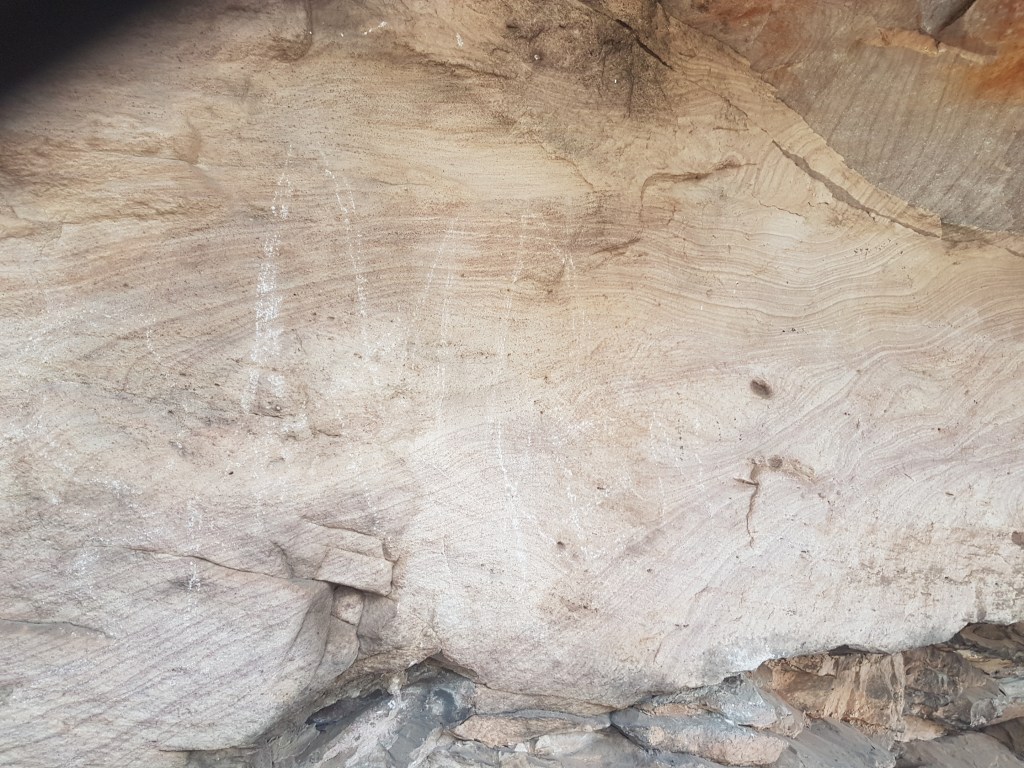
A visit to sites such as this is a valuable educational experience for climbers. It’s a shame this particular site doesn’t seem to be getting much love in recent years from Parks Victoria. The cage is an unappealing structure from the 70s that could well do with a refresh like the one at Stapylton Campground. New signage is certainly required.
Summer Day Valley
Next day was a visit to Summer Day Valley, an area at the heart of the climbing ban issues. For more than 40 years it was the Grampians most popular climbing area due to the very short approach, good trad protection, top-rope accessible and multiple wall directions allowing all day shade or sun as required. Since February 2019 it has been shut to recreational climbers because it is inside a Special Protection Area where climbing is prohibited according to PV. Summer Day has also been a popular commercial guiding venue over the last couple of decades, and these operators have been allowed to continue working in SDV despite the ban. To keep access they have to follow new strict requirements including pre-booking sections of the crag with PV, on site signage and cultural inductions. We were keen to check out these inductions in person but unfortunately, at the last minute, these inductions were cancelled so we can not report on them (which was the main reason we were visiting).
Summer Day Valley is approached by short 100m walk from the Hollow Mountain Carpark along a track built by Parks Victoria. The track was re-routed after the 2014 fires to keep it away from the creek-bed. The first thing you see is this sign chained to a tree explaining that “rock climbing and abseiling is only permitted with a licensed tour operator.”
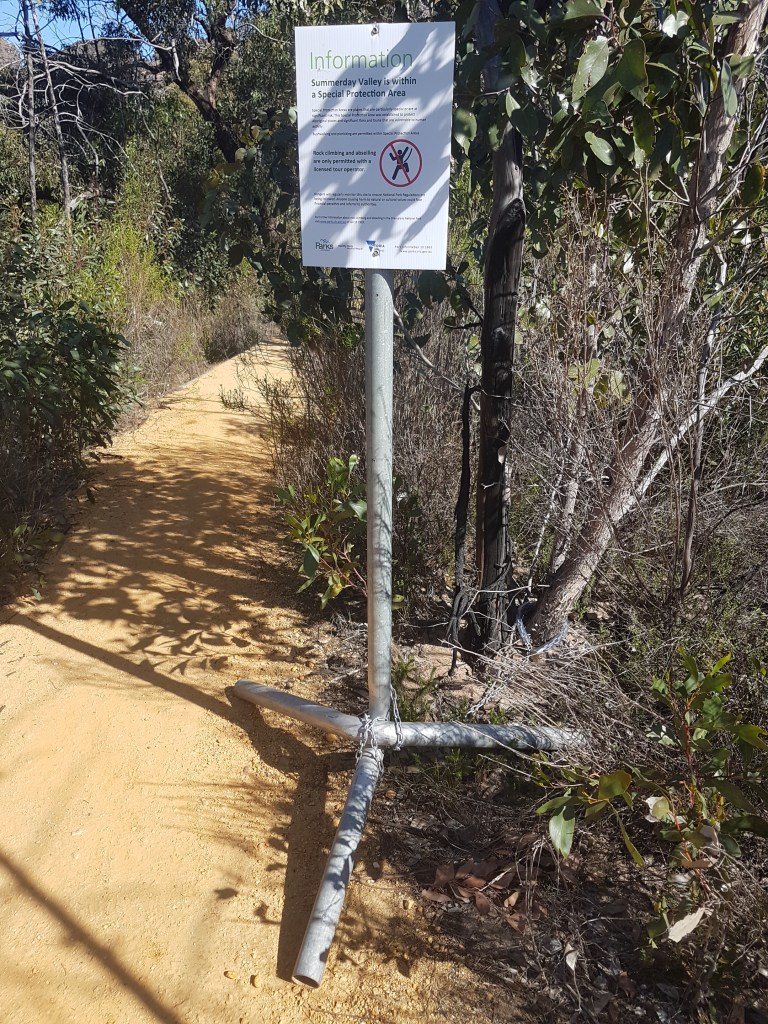
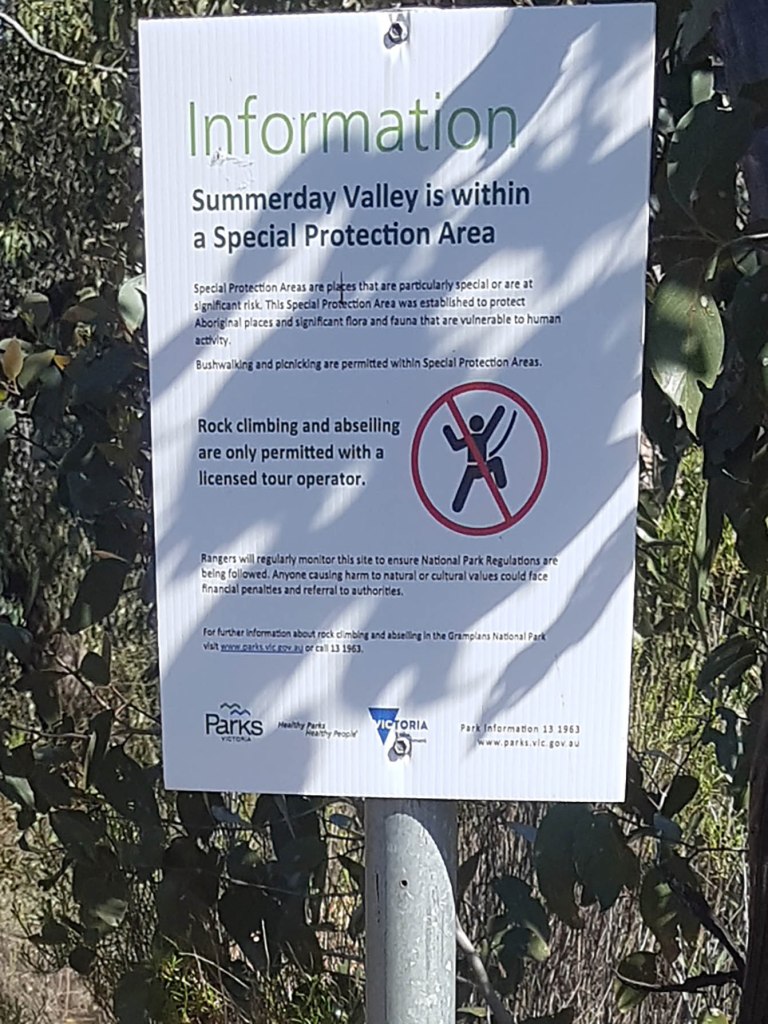
We were not part of a licensed tour – but it also says that “bushwalking and picnicking are permitted” so we made sure to pack our rug and breakfast.
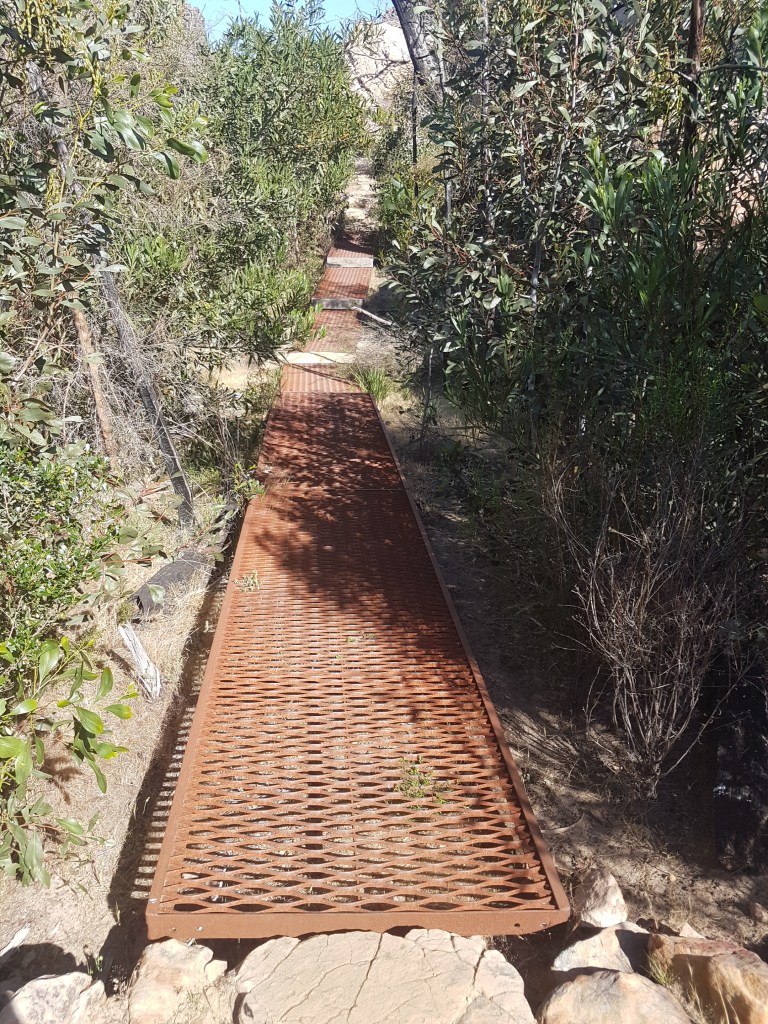
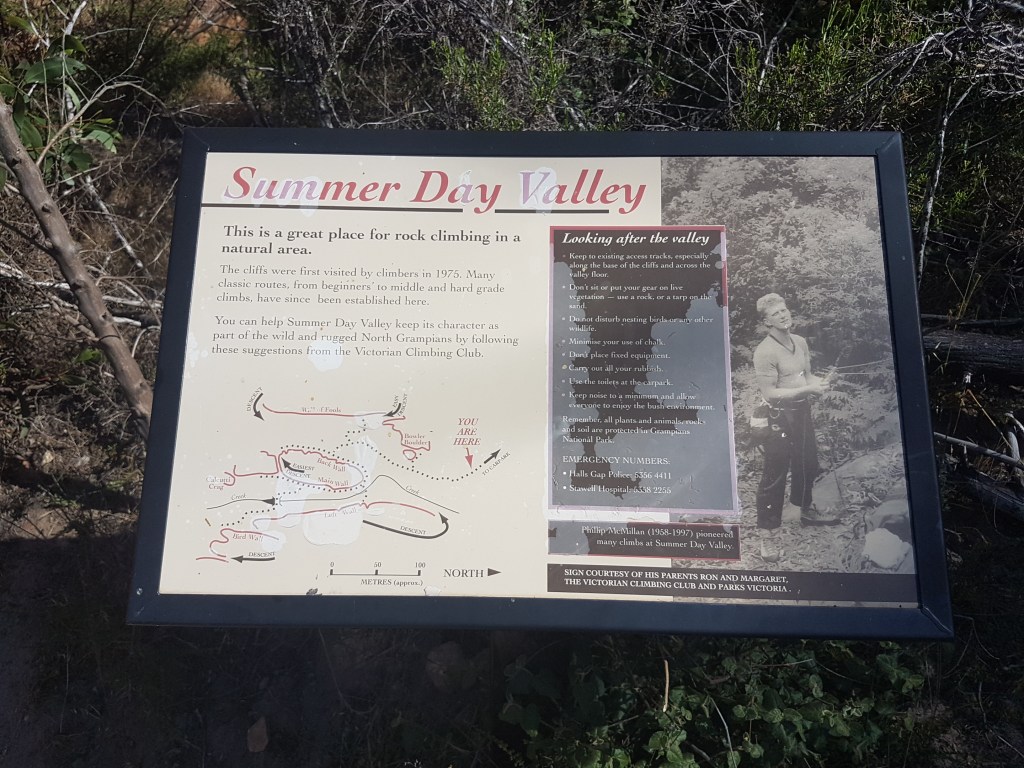
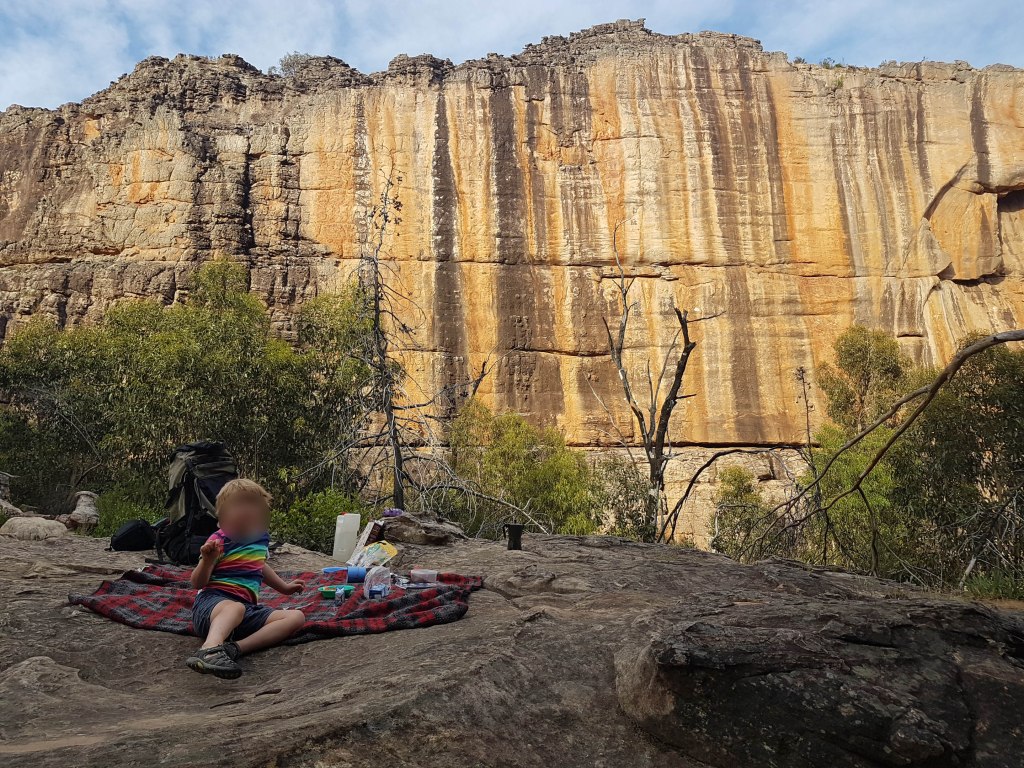
It was still early, so we unfolded the legislated* picnic blanket on a nice rock platform and ate breakfast with the local wallabies. (*joke)
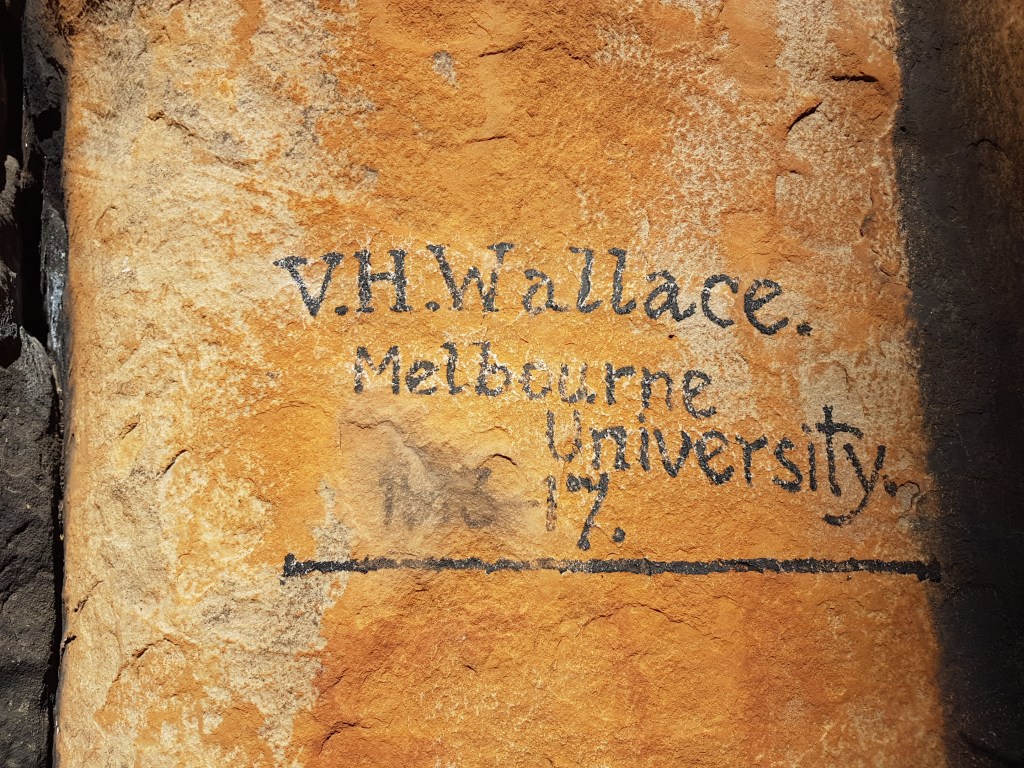
With time to kill we explored the complex area of SDV in detail as legislated* bushwalkers (*joke). We started with a walk around what is called Main Wall, which is confusing as it’s actually now on the backside of how you approach it – it was originally accessed by the quarry campground mentioned earlier. Climbing was actually shut on this wall way back in 2011 after large floods damaged the creek and allegedly exposed some cultural heritage items. This has never been confirmed by PV. For several years a flimsy laminated sign asked climbers to stay off the Main Wall routes but this sign disappeared a couple of years ago and has never been replaced. Many climbers presumed it had reopened when this sign went missing – and this led to much confusion. This was all prior to this years SPA ban announcements.
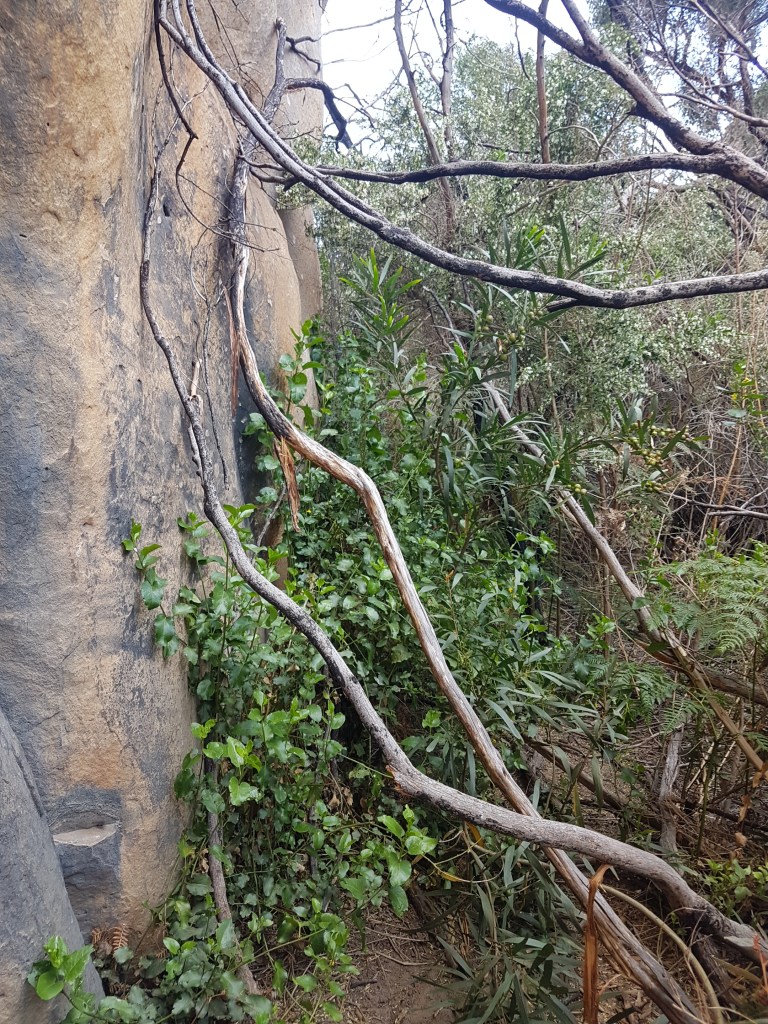
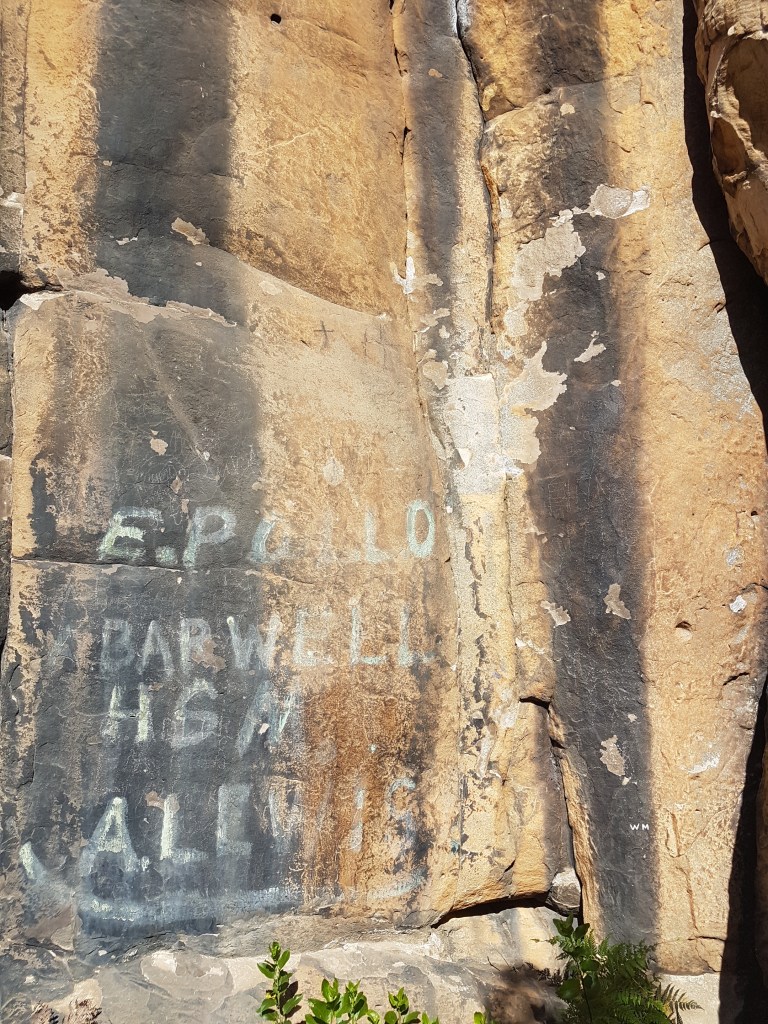
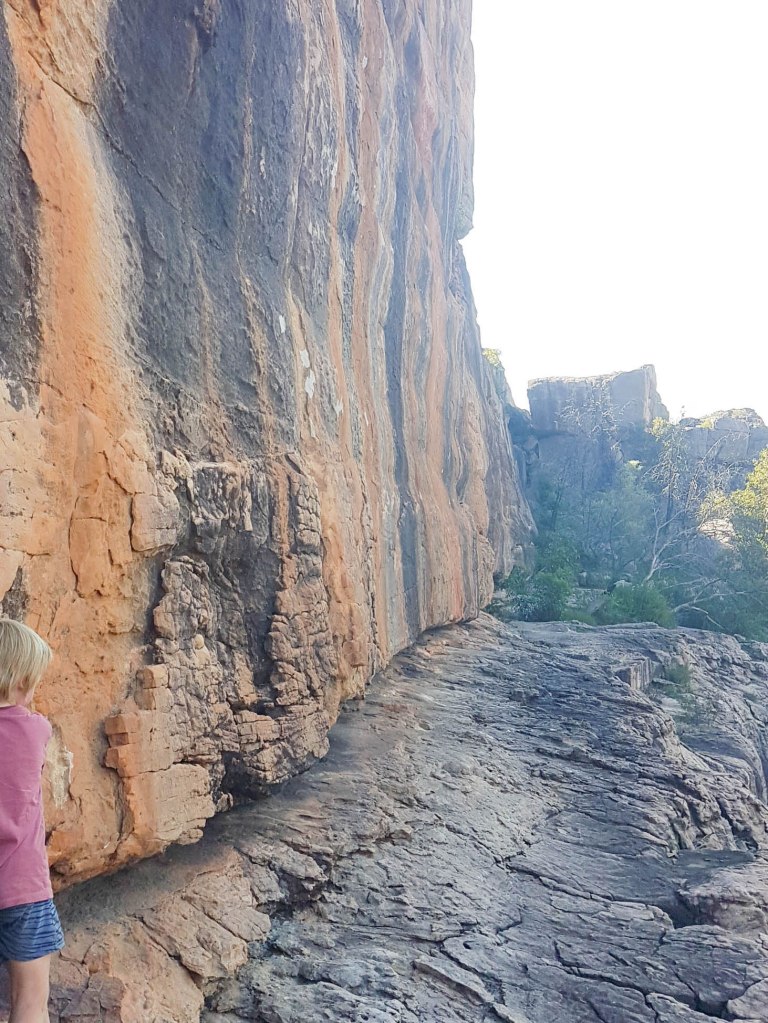
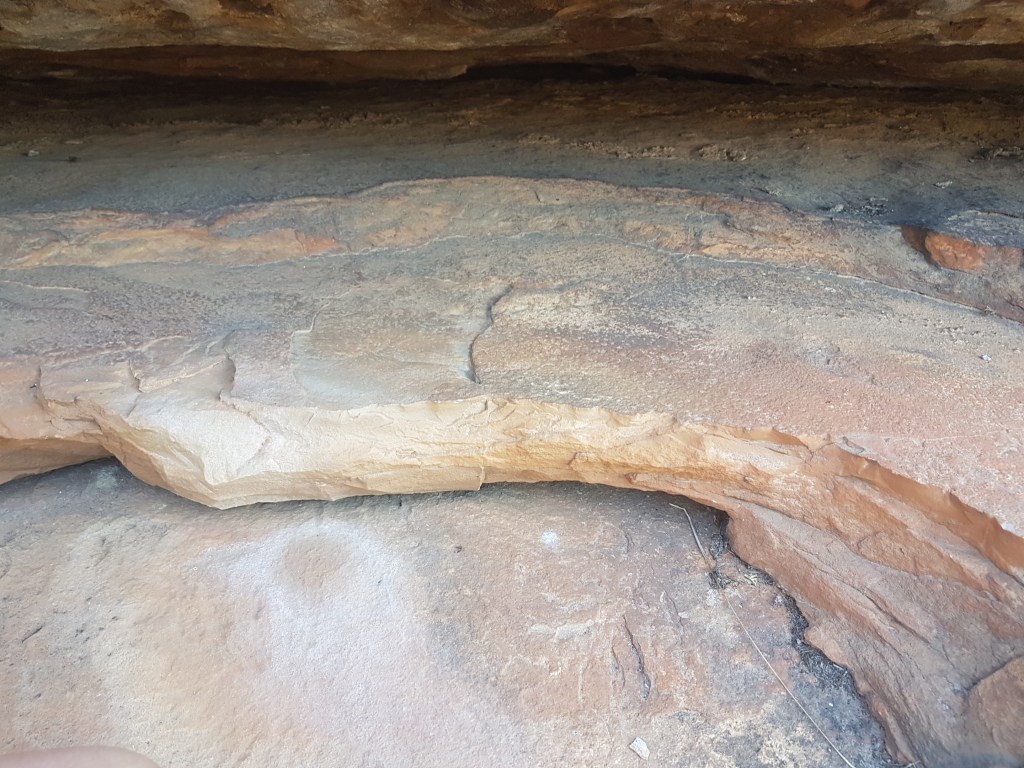
We then went for a walk to Wall of Fools to try and locate the Aboriginal stone tool quarry site that had been rumoured to exist there and has alledgely been one of the causes of the recent bans. None of the details are public knowledge and have ever been released officially. We only know about this from comments made by PV staff in meetings held in Halls Gap with tour guides. In general the rock on that wall is soft sandstone (thus the extreme weathering with the big jugs on the left and right sides) – but in the middle we did find some sections that appeared( to an untrained eye) to be the broken rock edges in question. There did not appear to have been directly impacted by climbers as they were at ground level and tucked under a small overhang.
School Groups Arrive
By 8am the first school groups started emerging into the valley, with guides starting to pop their heads over the cliff edge and throwing ropes down. There was a brief moment of yelling when one group was confused about who had booked which wall. The picnic book we were reading at the time summed it up rather well.
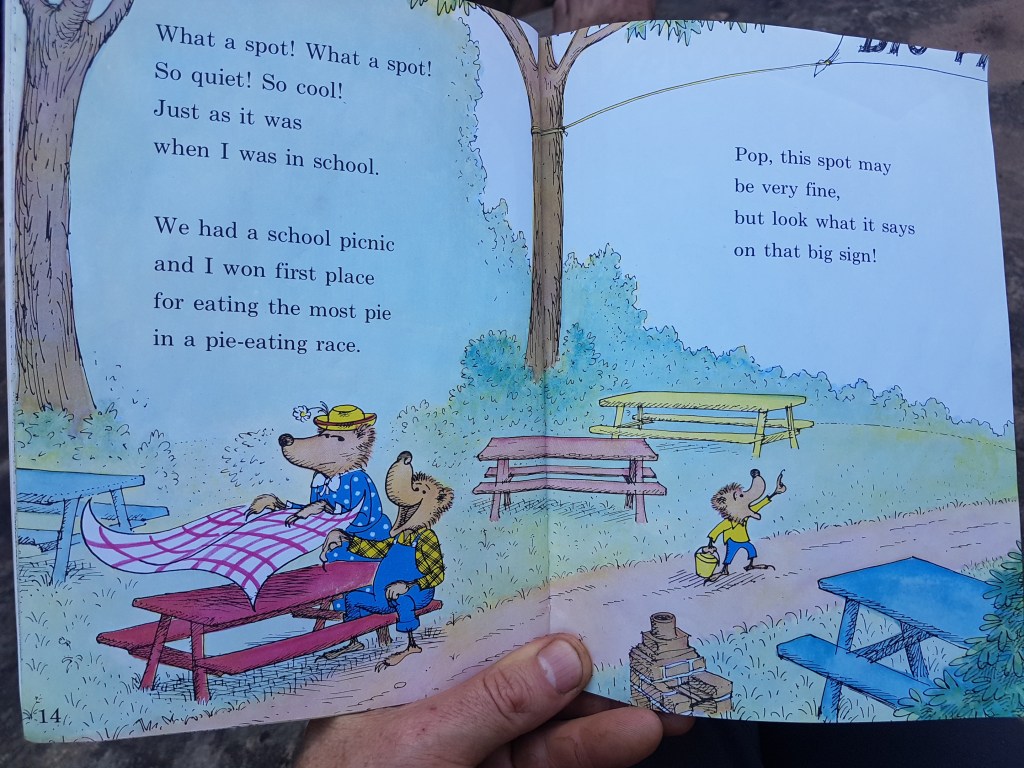
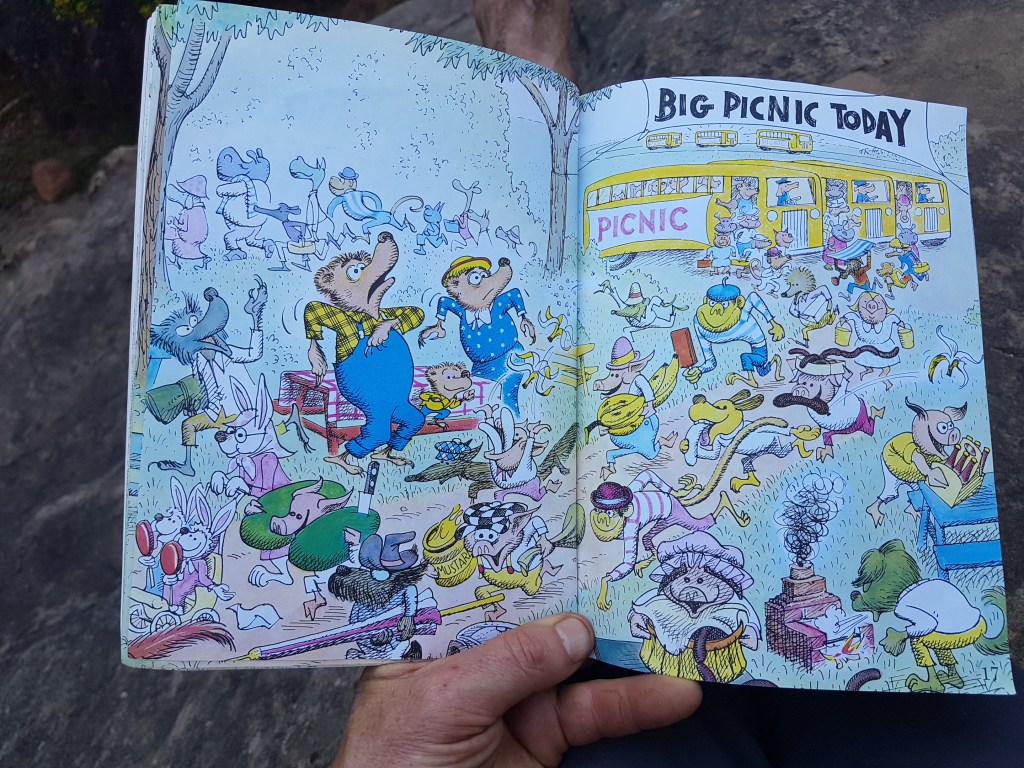
Jokes aside, there were three Licensed Tour Operator groups working inside the valley on Back Wall and left side of Wall of Fools, and apparently another group operating on the BARC cliff which we didn’t see. Each of these school groups consisted of 15 or so students and a couple of climbing guides. Doing a rough head count at lunch we think there was approximately 60 students and about 10 adults in total. At peak period there was about 15 top-ropes set-up on almost every available easy route.
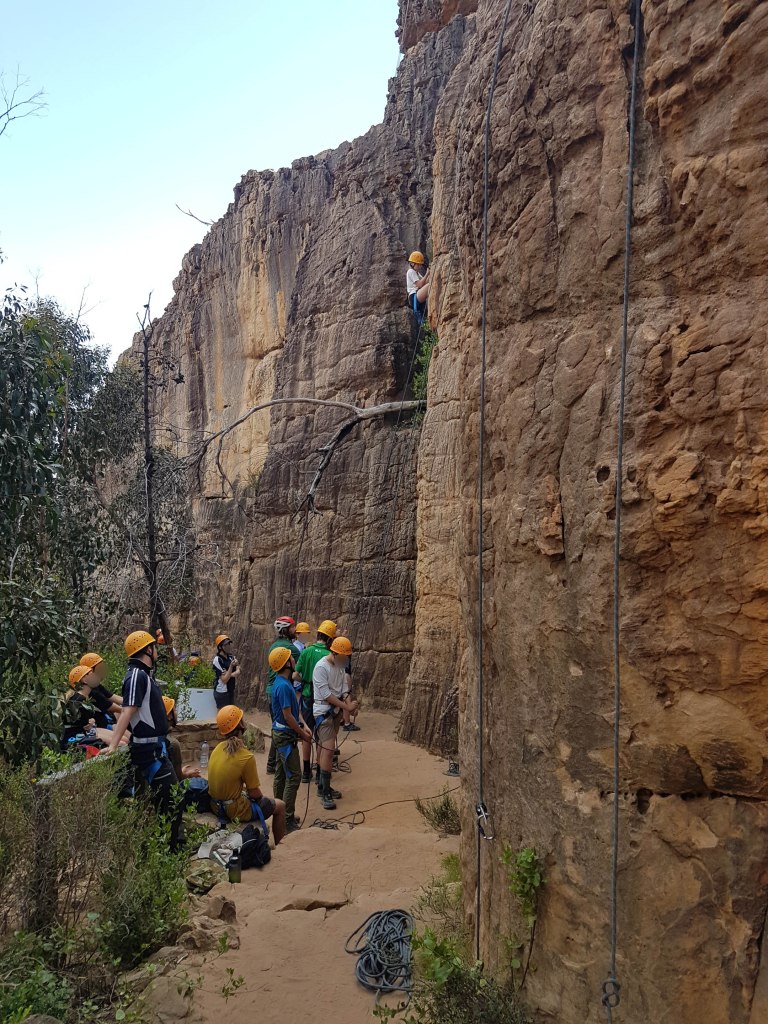
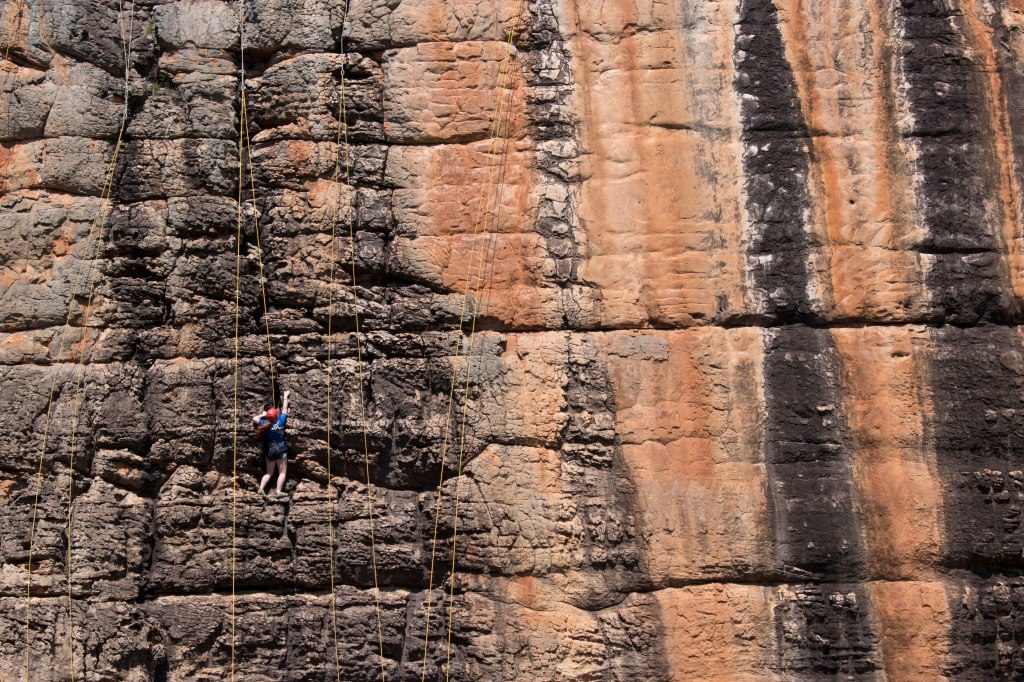
All the kids were well behaved and the stonework built by PV and CliffCare a decade ago really works to contain any erosion issues. As a beginner friendly place that can handle a lot of people Summer Day is hard to beat. We can see why the LTOs were desperate to keep access open at this area. When we asked one guide where was an equivalent place a “recreational” climber could go that had easy access for toproping they suggested Mountain Lion. We googled the distance – it is 85km away and more than an hours drive. Not exactly a solution. Another guide suggested The Watchtower near Halls Gap – but when we visited there it was a disaster of erosion and in our opinion should be shut to commercial groups until it recovers. Bushrangers Bluff at Arapiles is actually probably the best bet, but when went there the week before it was also busy with guiding companies. It is clear that there is now major pressure on limited climbing resources from the LTO industry.
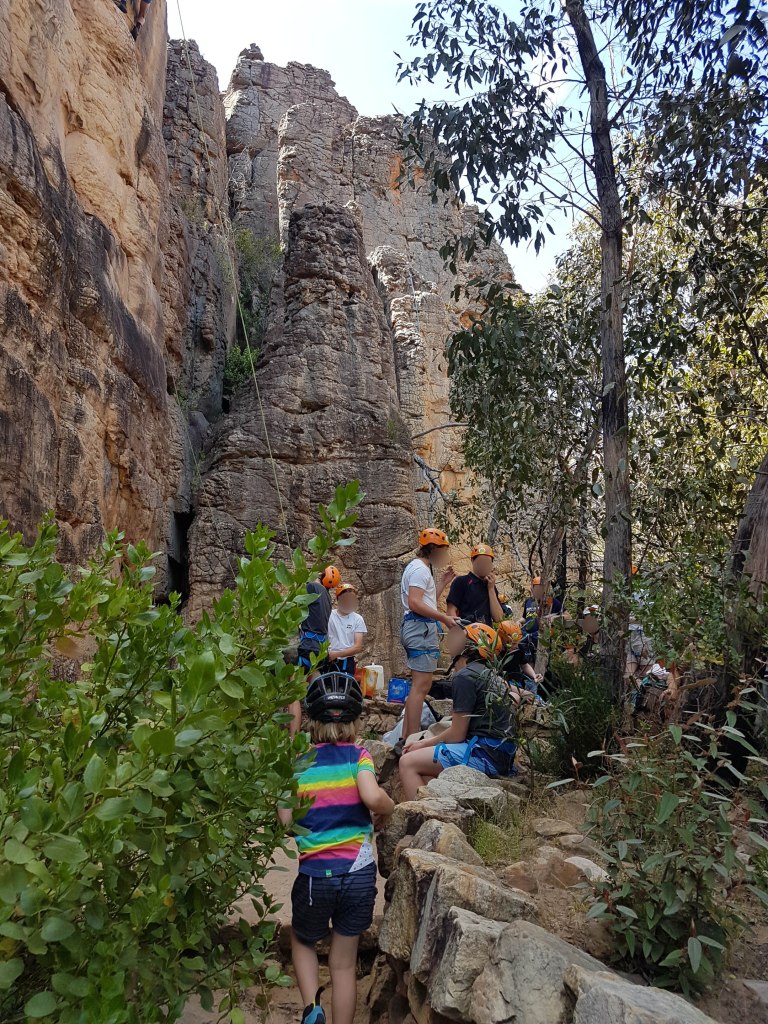
Even if recreational climbers were allowed back into SDV the commercial LTO’s had a total monopoly of the easy routes for most of the day. Each LTO books a certain wall so they put top-ropes on every route in their section. If any of these restrictions do get relaxed then it would be well worth establishing how it would work if someone just wanted to go climbing as a pair rather than a large group.
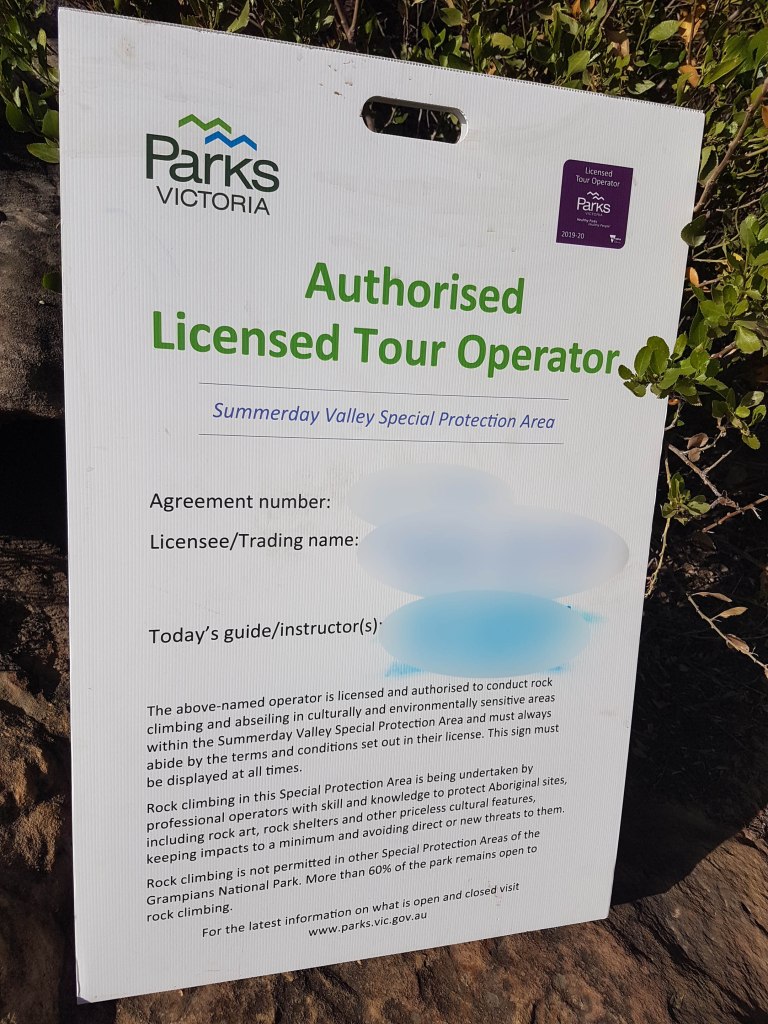
We have been told this whole LTO only system is a temporary solution to a) protect cultural heritage b) keep the LTO businesses functioning. So far there has been no information given from PV about future changes to this system.
In general Summer Day Valley is in remarkably good condition thanks to the early pre-emptive work done on trails and belay platforms with stonework. The fencing off of the centre of the valley has also allowed superb regrowth of plants and it’s now hard to imagine the burnt out wasteland of only a few years ago. Hopefully this area can be reopened to recreational climbers in the future.
As a side note we were coincidentally in Summer Day when it hit the national press after local guide Tori Dunn was apparently prohibited from working in the Valley by PV and TOs. Have a read of these two articles in the Australian. Article 1 and Article 2. And this more local article in the Wimmera Times. This is a complex story with legal ramifications which we hope to write about in the future.
Hollow Mountain Track
To finish the day we took a walk up the tourist track to Sandinista Wall, across to Amnesty and through to the Andersen’s bouldering area. All these climbing sectors are in an SPA where climbing is prohibited according to PV. It has been 9 months since the bans were announced so it would be interesting to see what these areas would look like with a bit of “time off”.
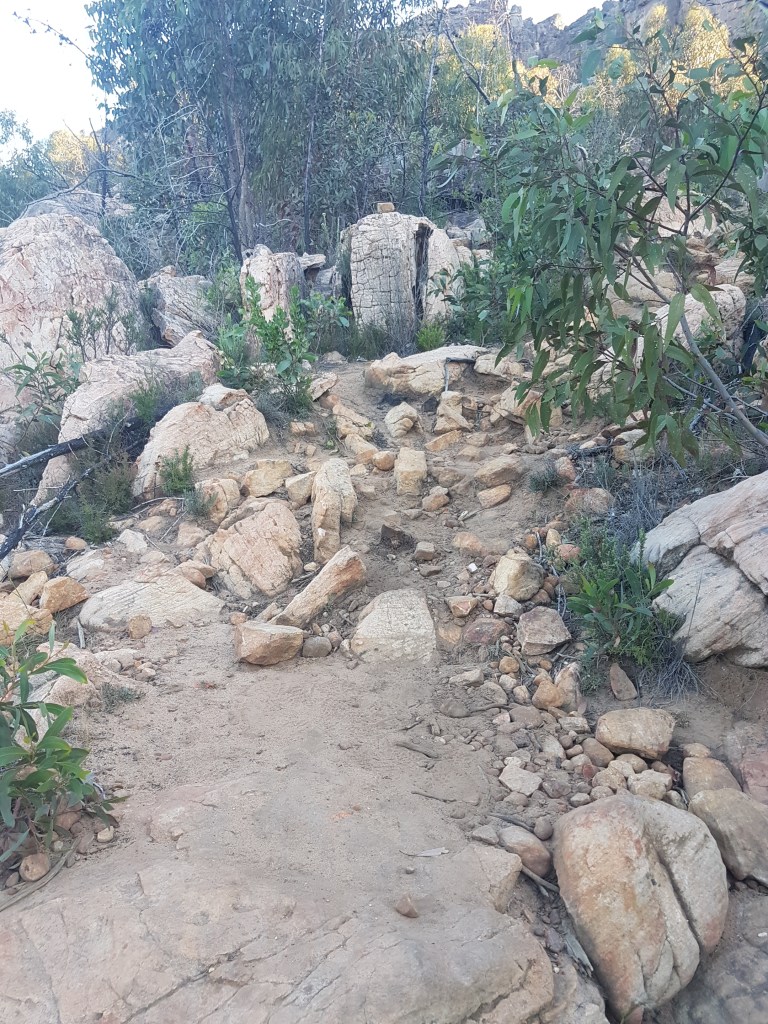
The tourist track was actually in poor condition once it starts heading steeply uphill. It was heavily eroded in places and braided into at least three independent tracks up near Sandanista Wall. This whole section was heavily damaged by the 2014 fires but PV has not made much of an effort to create or mark a proper path. The landscape was heavily damaged by the fires and lost tourists are certainly not adding to the rehabilitation of the area.
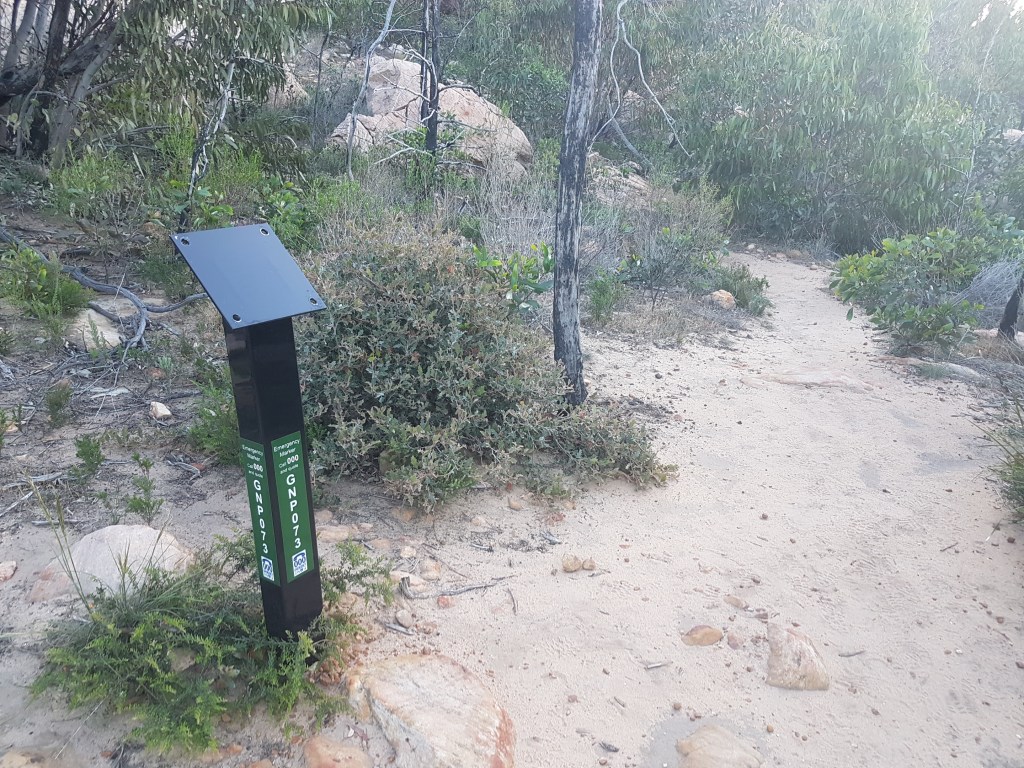
At the intersection of the tourist track and the climbers track to Andersens bouldering is the remains of the old official PV sign about bouldering. This was a positive and informative sign – now replaced with four empty bolt holes. If bouldering is indeed banned at Andersens – why have they not installed a replacement sign saying this? The climbers track is of equal size to the tourist track – it’s actually highly confusing about which way to walk for anyone just walking past.
Sandinista Wall
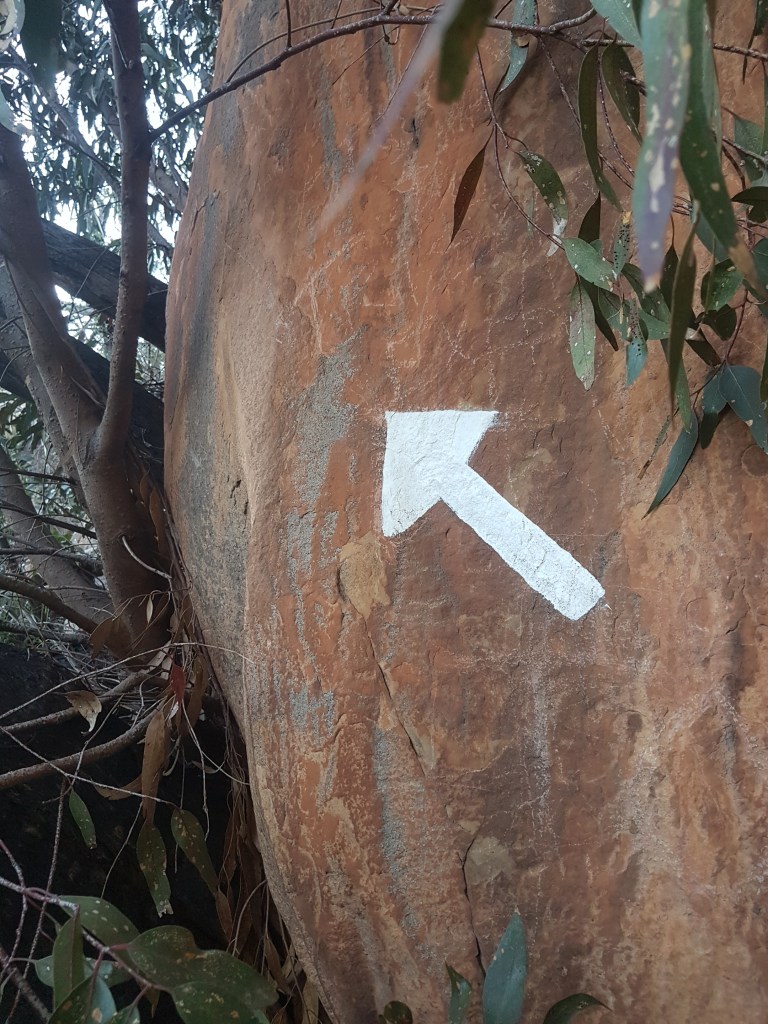
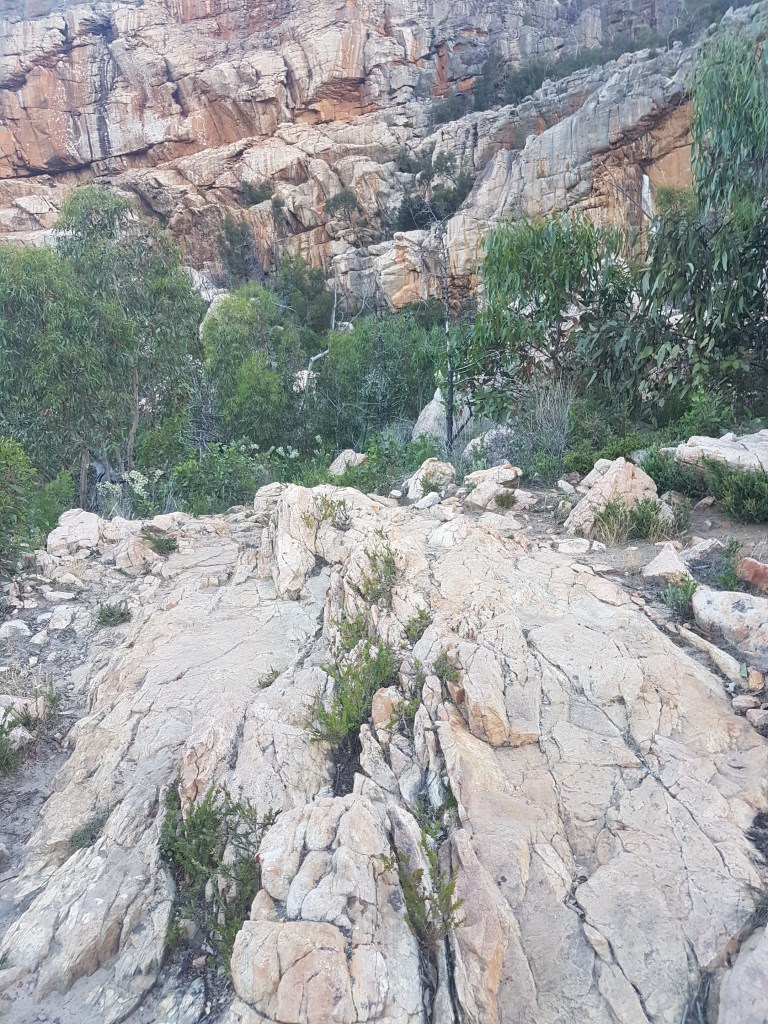
Sandinista Wall has always been the most public climbing area in the Grampians. The routes literally rise directly above the tourist track and half of them are safety bolt protected. Luckily for aesthetics the first bolts are quite high up and the wall is heavily featured so bolts are pretty invisible to the casual observer. Chalk is evident but it blends in with considerable bird poo streaks and leaching streaks of minerals on the wall. It is not an obvious eyesore. Along the base of the cliff, where the tourists congregate to catch their breath and look at the view, is potentially more Aboriginal quarry rock edges. Sandinista is home to several very famous routes – the first grade 30 in Australia outside of Arapiles for example. It will be an interesting test case if it could ever be reopened to climbing.
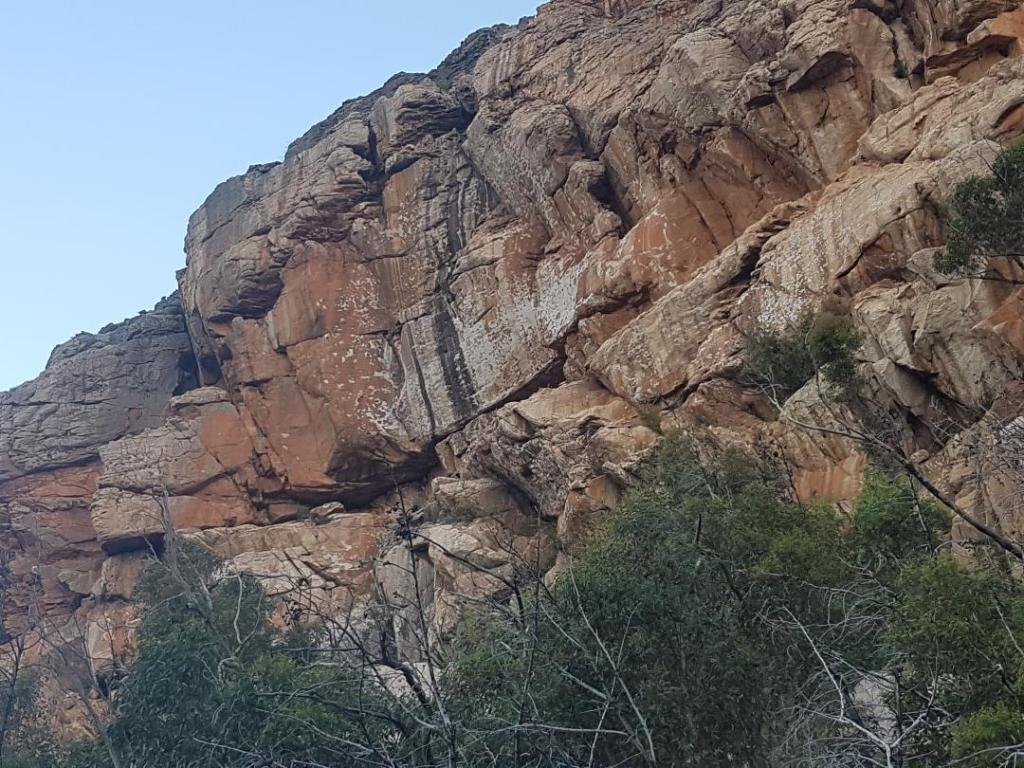
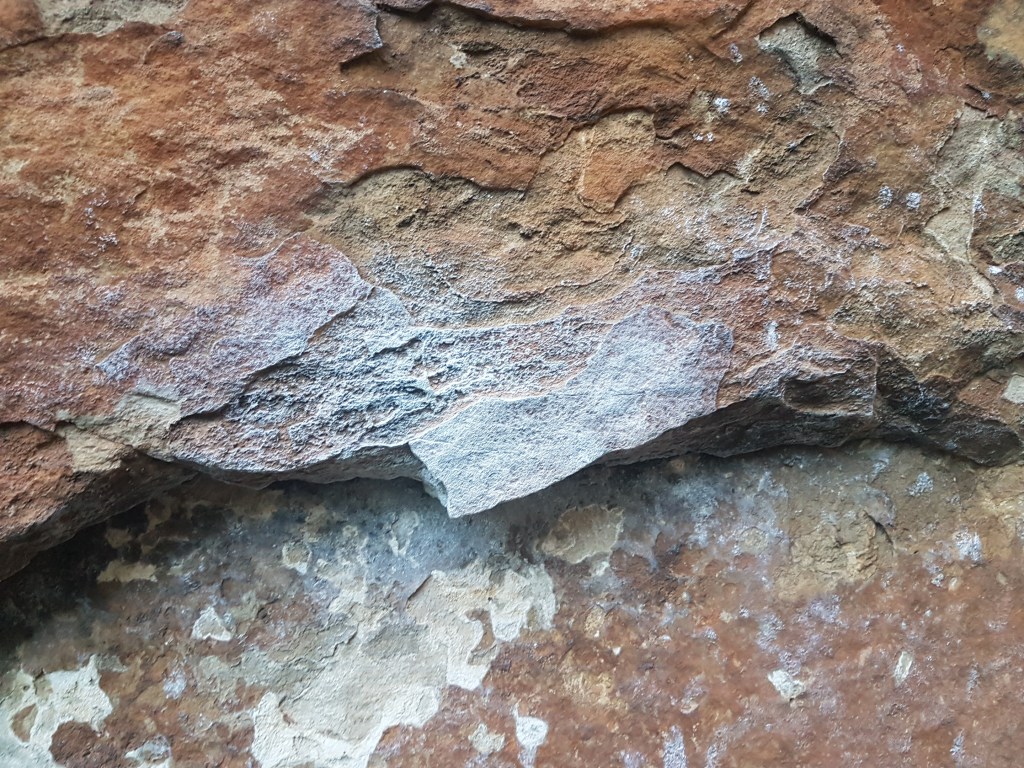
Amnesty Wall
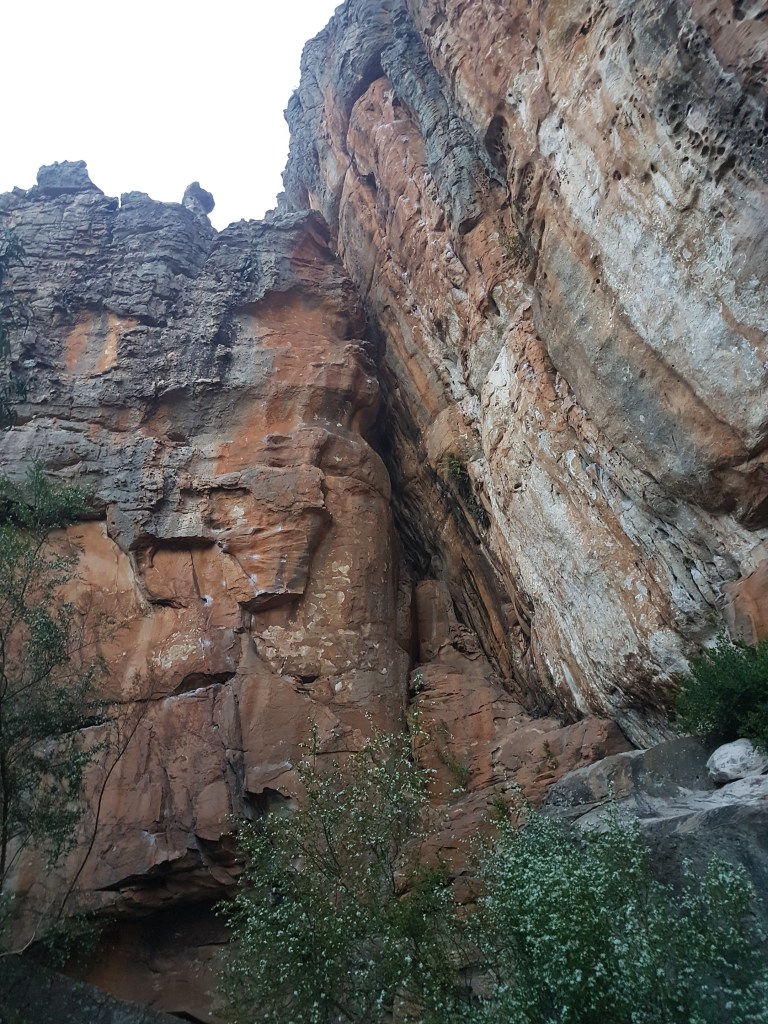
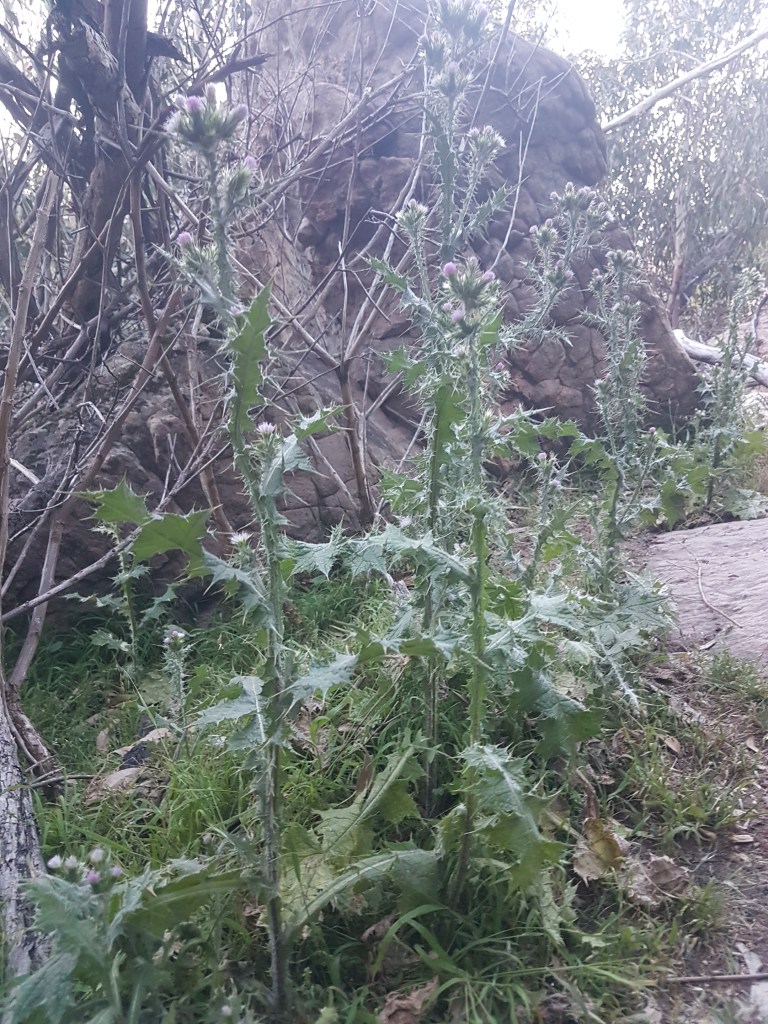
Andersens
At this point the camera phone ran out of batteries, but we continued on to the Andersens boulder field in the dying light. It appeared to be in pretty good condition in general. Minimal erosion, just a few spots of bare dirt around the base of the major boulders. There was still quite a bit of chalk on the overhung problems that would be relatively easy to remove. Lots of greenery – the track was hard to follow in spots because it was so thick. In general we saw that Andersens seems to be able to handle quite heavy climbing traffic better than the nearby (open) Trackside. We will cover that area in part B. No sign of rubbish or toilet waste was evident.
Wrap Up
We have so many good memories spent on these cliffs with family and friends over the last few decades. Now the climbers are gone it has an almost eery museum like quality to the place. There are the remains of climbing still present, bolts and chalk stained rock, but not the people out enjoying themselves. It was hard to resist stepping off the ground and onto the rock. Where bushwalking ends and bouldering begins is an odd line to define in a place covered in rock like the Grampians.
In the two days we spent on the Hollow Mtn side of Stapylton we saw almost no tourists at all. It was a hot couple of days but we expected to see at least equal numbers of tourists to climbers. But this was not the case. By a huge majority the greatest number of visitors were climbing students in SDV. The rest of the place was seemingly abandoned with all but a handful of tourists slogging up to Hollow Mountain. We saw a couple of climbers returning from Van Diemen’s Land late one arvo but no sign of climbers in any of the SPA regions. It was midweek – the following Melb Cup long weekend was reportedly the inverse – no climbers present, and lots of tourists.
It was apparent that maintenance of the Hollow Mtn tourist track and informing climbers of the climbing “bans” is not the priority of PV at the moment – head office is 30km down south and they have a lot more tourists to deal with closer to Halls Gap perhaps? It would be good at least for them to update some of the signage if indeed there really is a ban. At the moment a visiting climber could go climbing anywhere in the Hollow Mtn SPA (outside of Summer Day) and be totally unaware of any problems.
We highly recommend all the keyboard warriors get out and about and have a look at these SPA areas in person. You don’t have to climb – just pack a picnic blanket and sense of adventure.
Part B of this series will cover the Stapylton Amphitheater and Campground area and will hopefully be published in the next week.
No More Summer Days
Imagine, without warning, the government prohibits all swimmers and surfers at Bells Beach and then shortly after announces that only commercial groups with paying clients are allowed to surf there. Of course – standing on the beach and looking at the people who paid money to surf is OK though.
Continue reading No More Summer Days
PV Demands 10 Crags for Assessment
This month in Grampians climbing news… Climbers asked to supply list of priority 10 crags for PV assessments, paradoxical signs at Summer Day Valley, PV’s commercial and growth mentality exposed and more anti-climber “facts” published by another lobby group. There is a lot to cover – let’s go!
Continue reading PV Demands 10 Crags for Assessment
Off Track – Fact checking VNPA’s Fiction
Victorian National Park Association are claiming that climbers have created 1000km of un-offical tracks in the Grampians. We believe the figure is closer to 15km. Let’s dive in!
Continue reading Off Track – Fact checking VNPA’s Fiction
A Short Poop in the Woods*
The following is a public submission to Save Grampians Climbing from a local Grampians climber who has spent the last 40+ years establishing many of the climbing areas we all love. They have seen immense change in the landscape during this time, some positive and some negative. It’s an interesting perspective on where Park Victorias’ priorities lie in the 21st century and how millions are being spent upgrading parts of the park to attract bulk tourism at the expense of the environment. For those attending the new management plan meetings in the next few weeks this is what the future is looking like for the rest of the Grampians if the current plans are continued. Big dollars spent on building showpiece infrastructure but no money being spent maintaining the people that come with this infrastructure. We have long argued on this blog that government money should be spent managing the current users (like climbers) rather than attracting new users with schemes like the Grampians Peaks Trail. Do you like our header image? That’s PV’s own Simon Talbot lording over his infrastructure empire…
Continue reading A Short Poop in the Woods*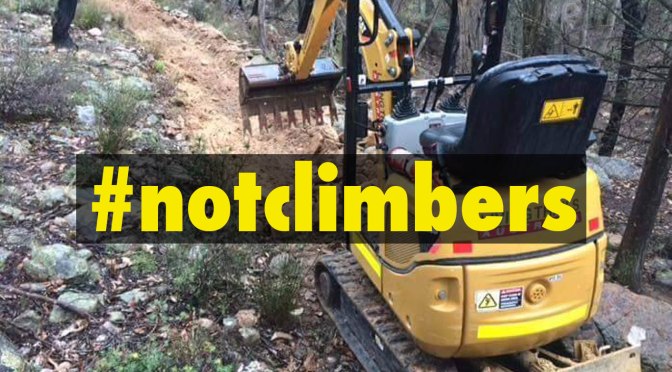
#notclimbers – PV’s Double Standards for Environmental Destruction
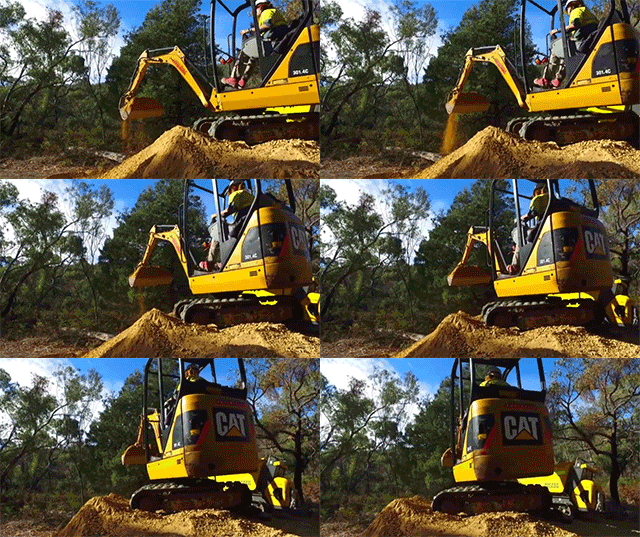
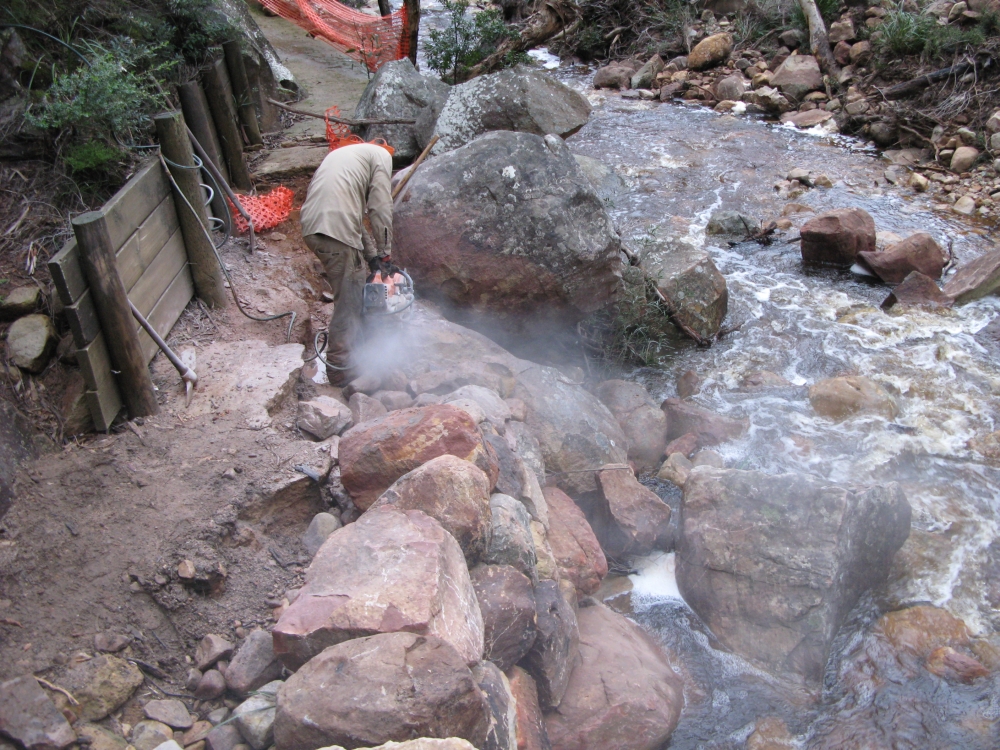
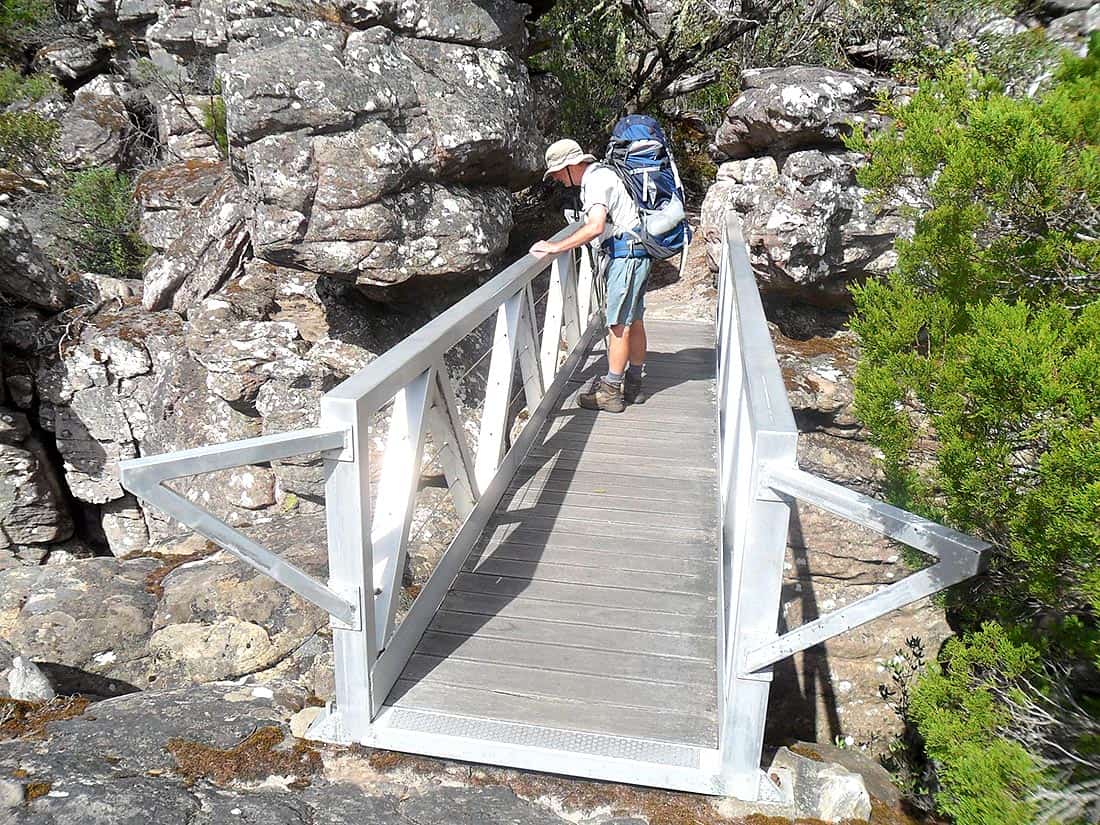
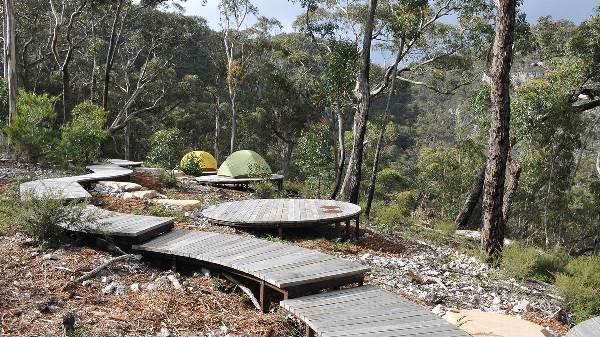
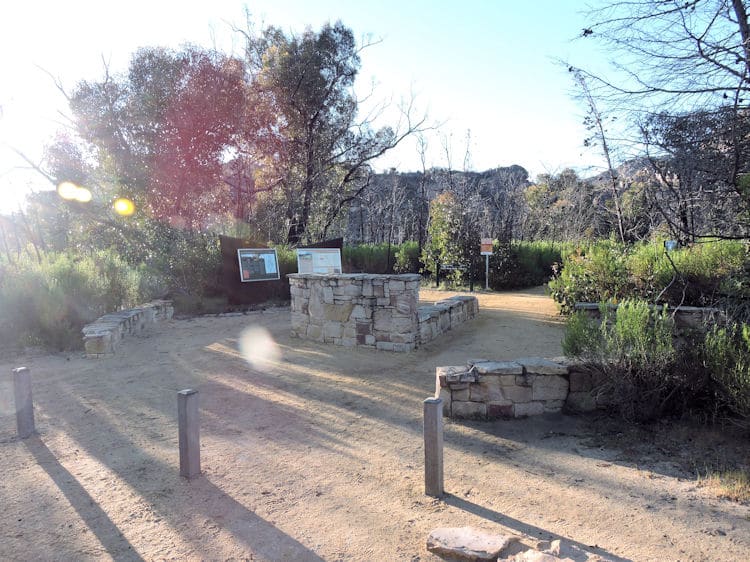
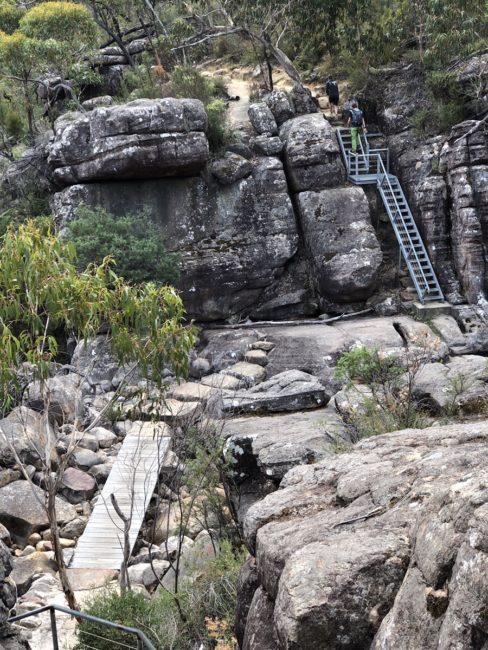
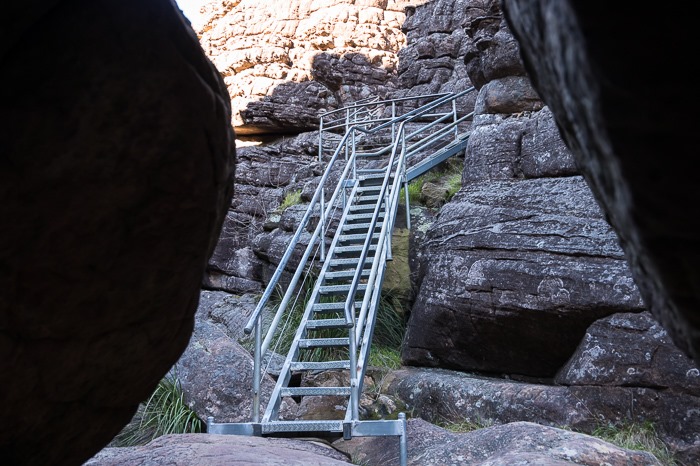
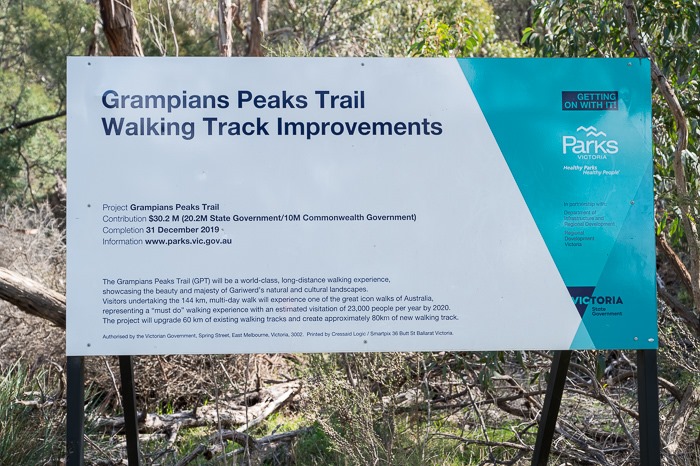
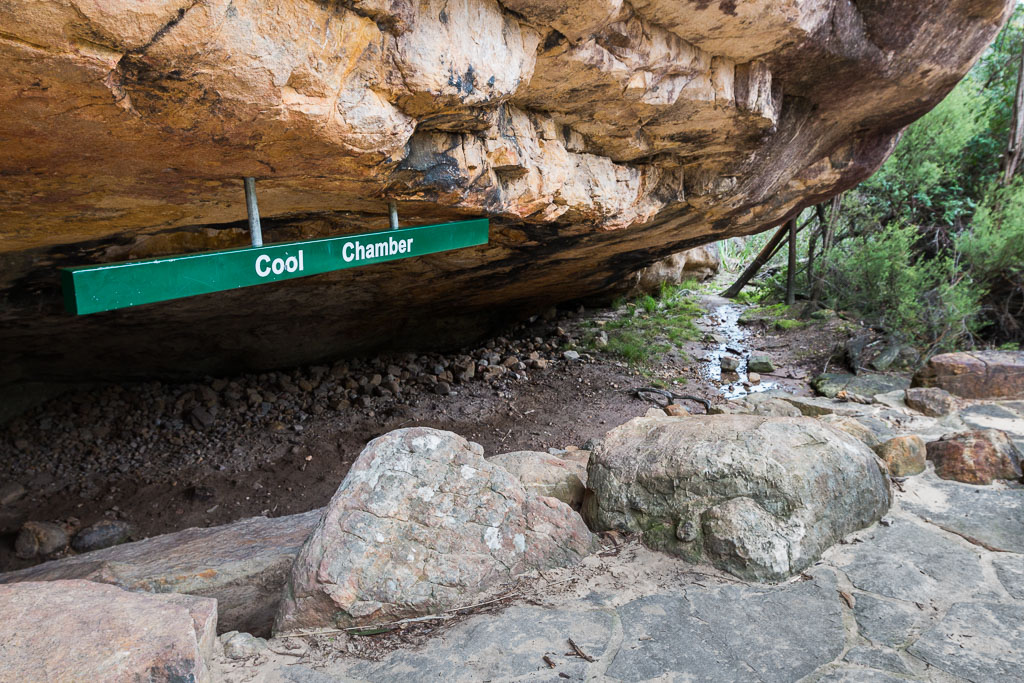
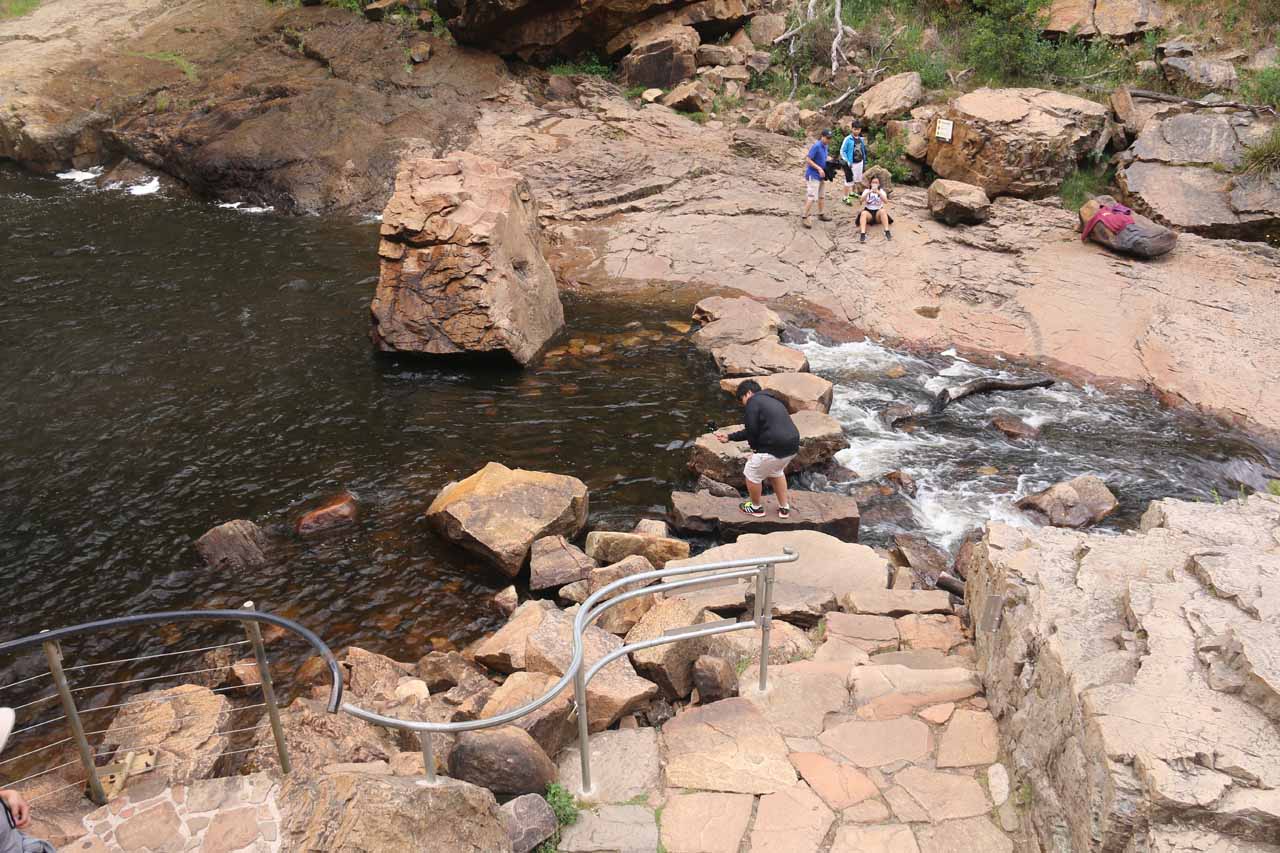
Parks Victoria’s claim that climbing should be banned because of environmental impact flies in the face of their own actions. The biggest group damaging the Grampians is Parks Victoria. It’s all part of a push from the government and commercial tourism groups to attract more visitors and thus more dollars. As Kevin Costner so famously said “if you build it they will come”. A bigger carpark attracts more cars. Make it easier to walk to somewhere by installing a paved track and ladders and more people will walk there. The following photo essay is snapshot of the kind of damage PV is routinely allowing in the name of “progress” and “growth”. Much of the recent damage they so proudly promote is from the Grampians Peaks Trail® – a 144km walking track being constructed over the next few years – with attached luxury lodges. This isn’t just connecting old walking trails together – over 83km of new track is being cut, bulldozed and jack hammered through virgin bush to attract more tourists and their $$$. You can watch some of the private contractors working on the Peaks Trail in this promotional video:
This is the ugly truth behind how supposed low impact bushwalking tracks are created. So when someone complains about some climbers chalk, safety bolts or a foot pad – show them this. #notclimbers

“the team is clearing at a rate of 120 meters per day in dense sections and up to 600 meters per day in lighter sections. Clearing typically involves carving a path through foliage, removing bushes and, where necessary, trees to create a navigable path for the track construction.”
Grampians Peak Trail Community Update April 2019

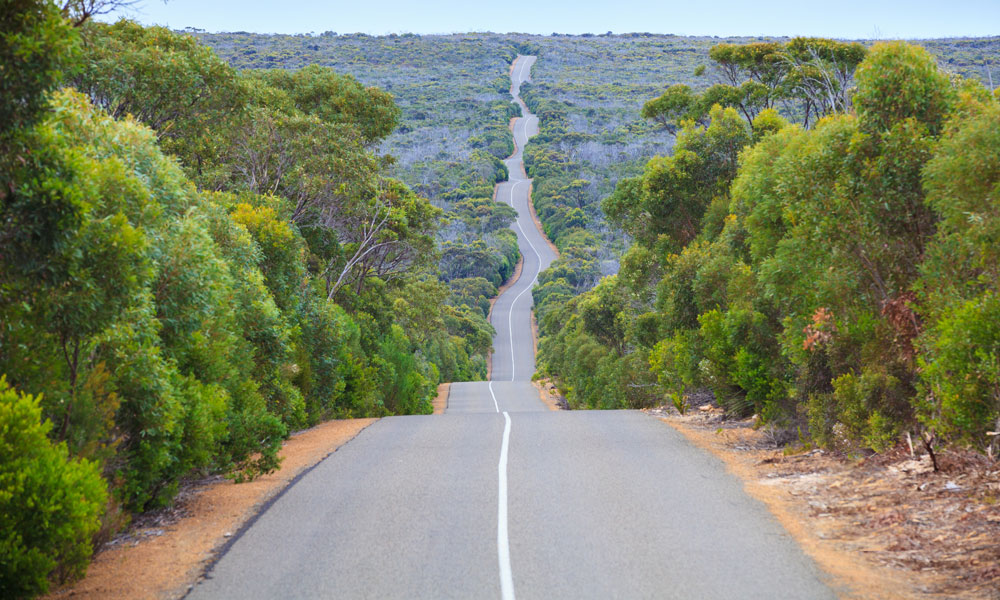
“We also expect an additional 35,000 visitors to the region annually…”
Simon Talbot – Parks Victoria
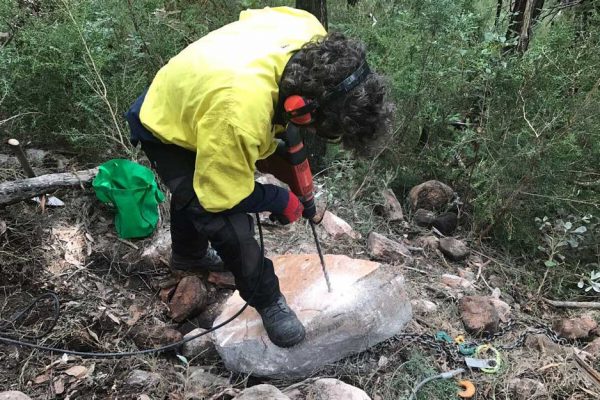
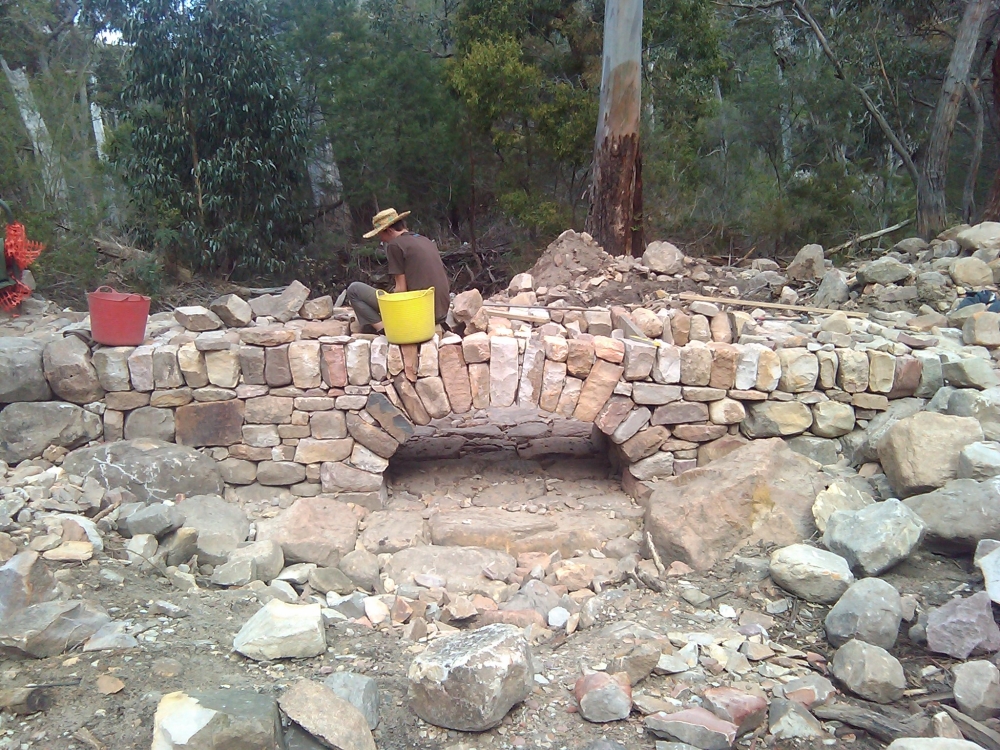
“Construction will involve stone masonry techniques to install hundreds of rock steps ensuring the path is ecologically sensitive and sympathetic to the landscape”
Parks Victoria – April 2019
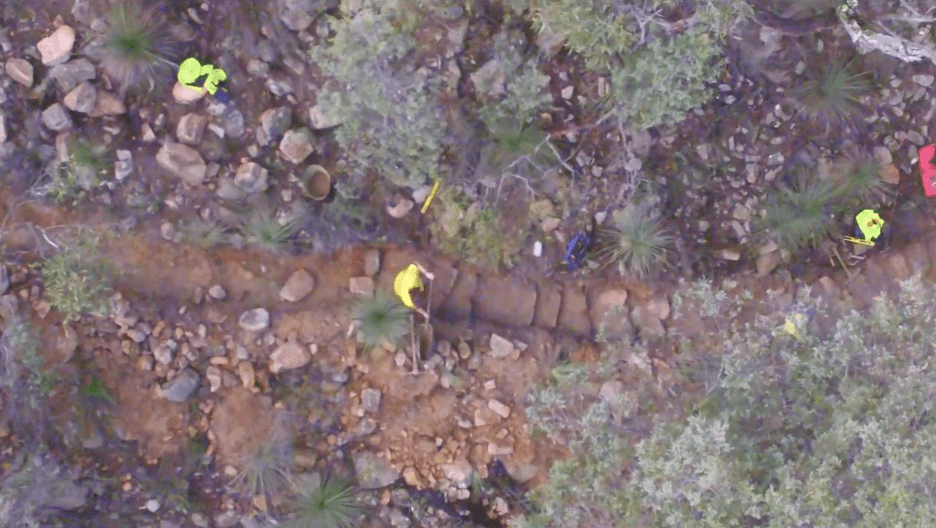
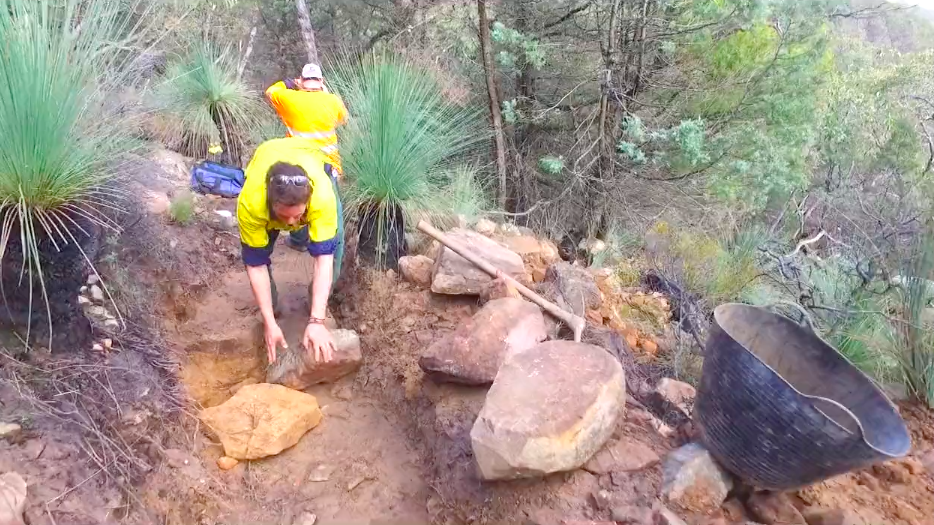

“Thousands of hand-built steps are being shaped from sandstone which has been mainly sourced on-site.”
Grampians Peak Trail Community Update March 2018
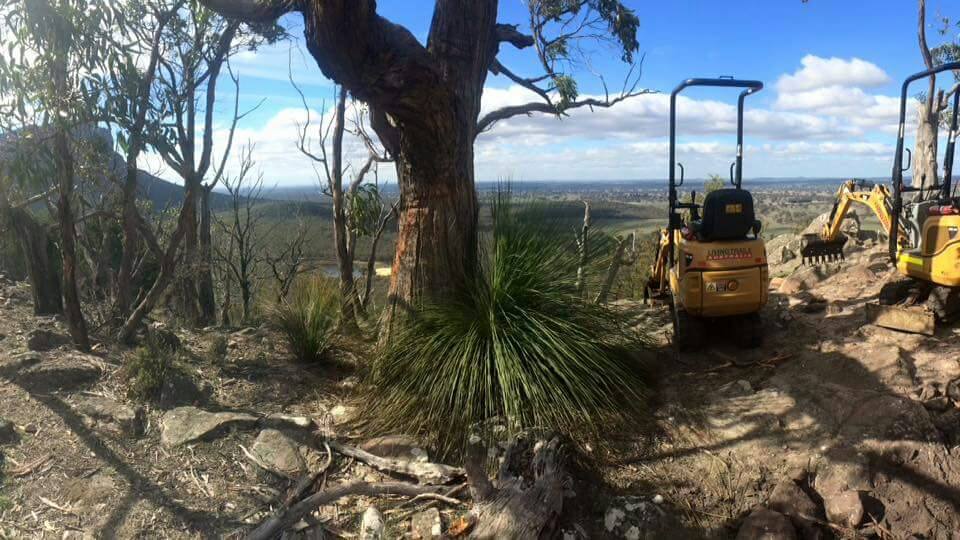
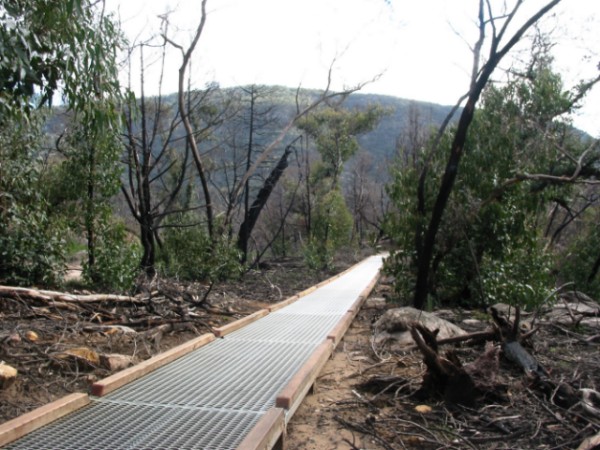
“This year, Dirt Art will construct 35 kilometres in the north, from Roses Gap to Halls Gap, and 22 kilometres in the south, from Cassidy Gap to Dunkeld. The remaining 45 kilometres in the central section will be completed by the end of 2020.”
Stanwell Times – April 2019
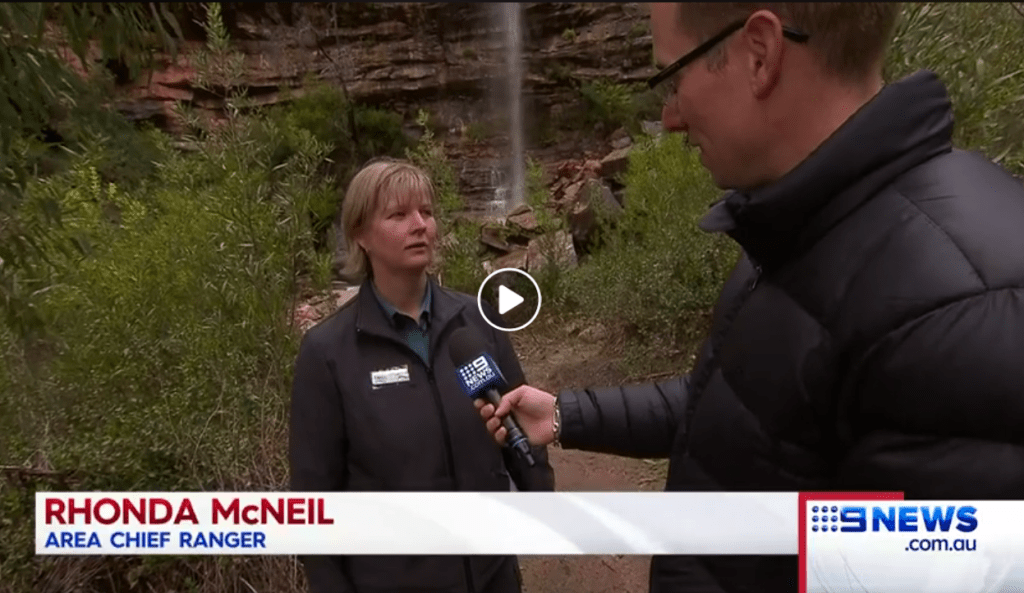
Watch this Ch9 video where PV talks up their environmental destruction.
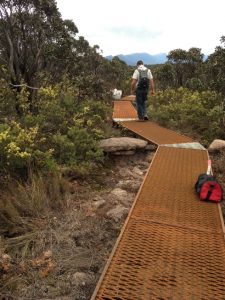
“Contractors have completed work on over 1.5km of steel walkway on the remote Major Mitchell Plateau”
Friends of the Grampians April 2019
“the concerns remain about where the money for the upkeep of the trail will come from, and whether that money will come at the expense of other pressing needs of our Park.”
Friend of Grampians July 2015

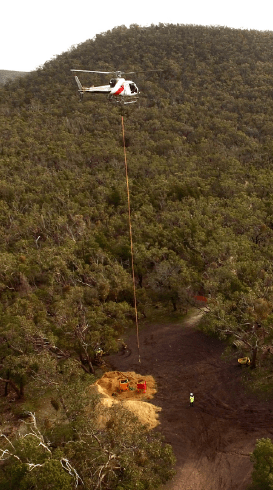

“These works involve the pruning and removal of trees and vegetation and are carried out to ensure the corridor is cleared for construction of the walking track. Track clearing requires contractors the most efficient access points and the most effective means of removing all vegetation from the alignment”
Grampians Peak Trail Community Update November 2018


“there is significant harm… because you’ll end up with these private enclaves within what is essentially publicly-owned land. Ninety-nine years is essentially private ownership in a sense. We also know that if something starts small, even if it starts environmental friendly, it inevitably grows.”
Matt Ruchel, Victorian National Parks Association
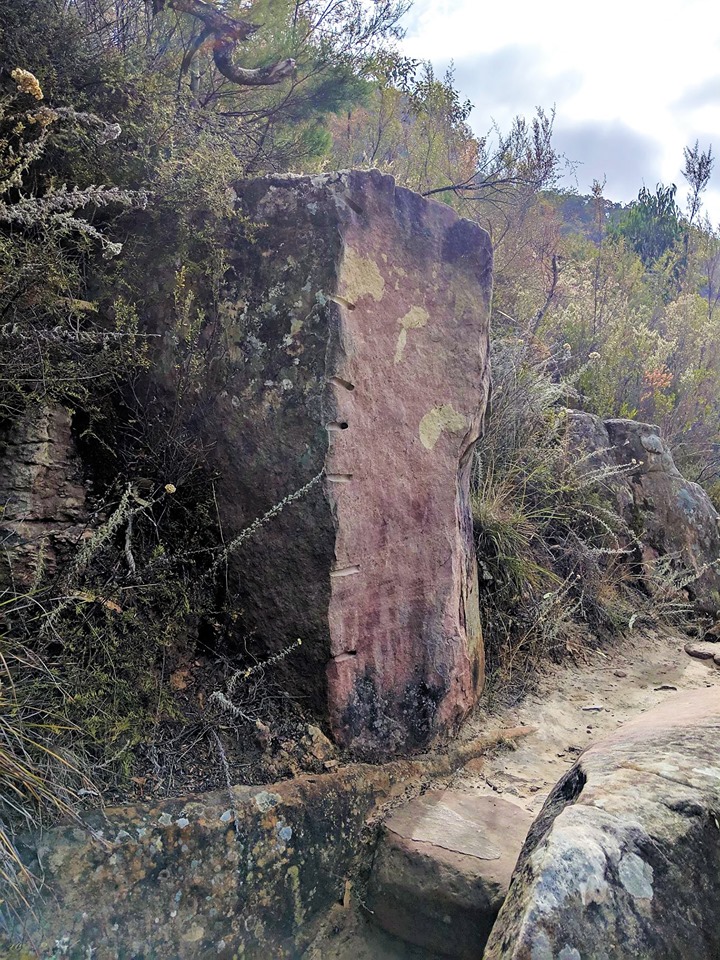
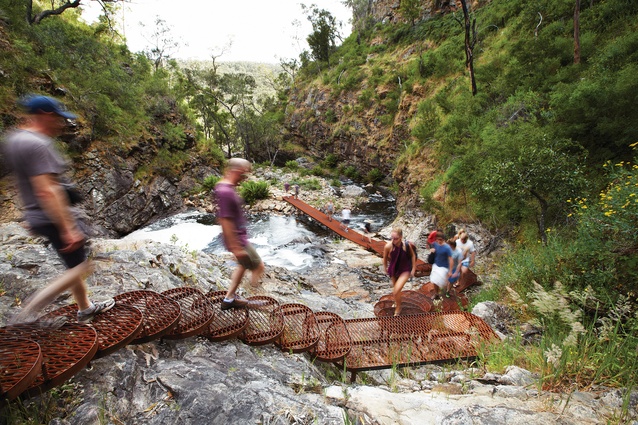
“Parks Victoria is looking at how the fully facilitated walks can include accommodation, food, beverage and landscape interpretation.”
Grampians Peak Trail Community Update July 2018

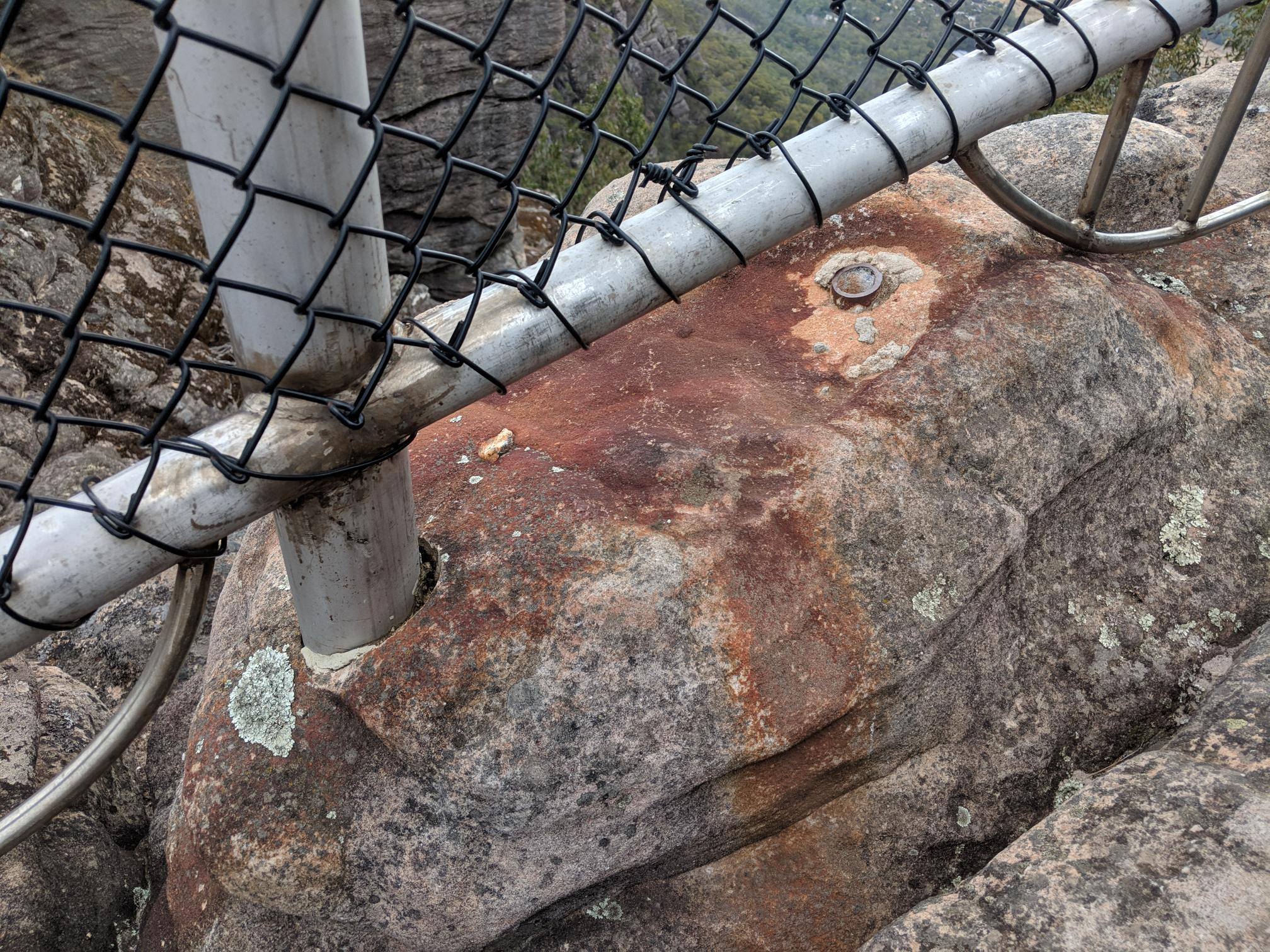
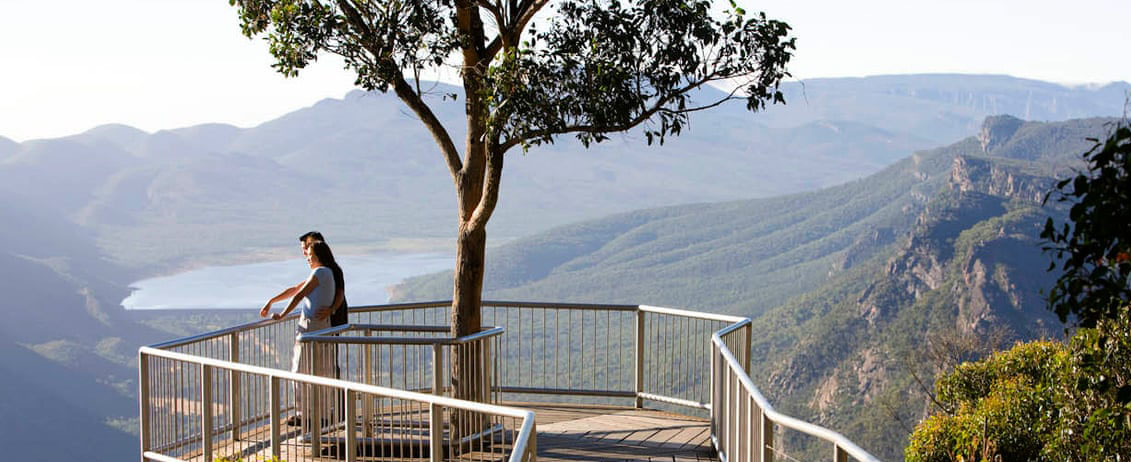
“Mt Stapylton and Mt Abrupt walking tracks continue to be upgraded with the addition of over 500 new hand-built rock steps, flagstone paving, new drainage, a retaining wall, removal of trip hazards and track resurfacing.”
Grampians Peak Trail Community Update July 2018

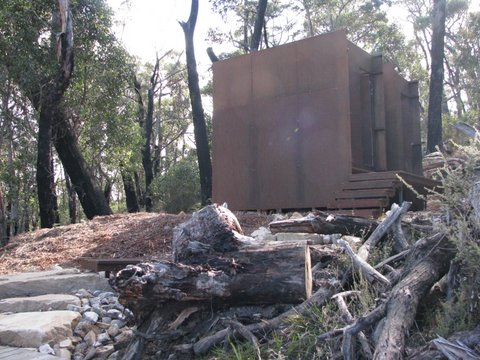
“The Grampians Peaks Trail is a walking experience and does not offer rock climbing tours.”
Parks Victoria
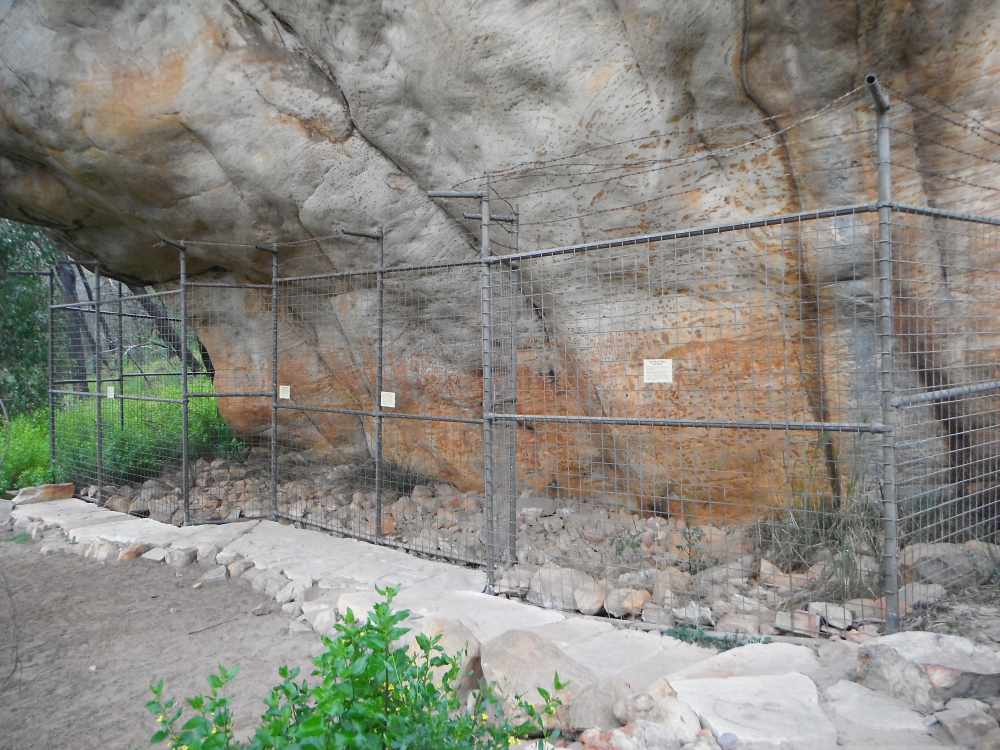
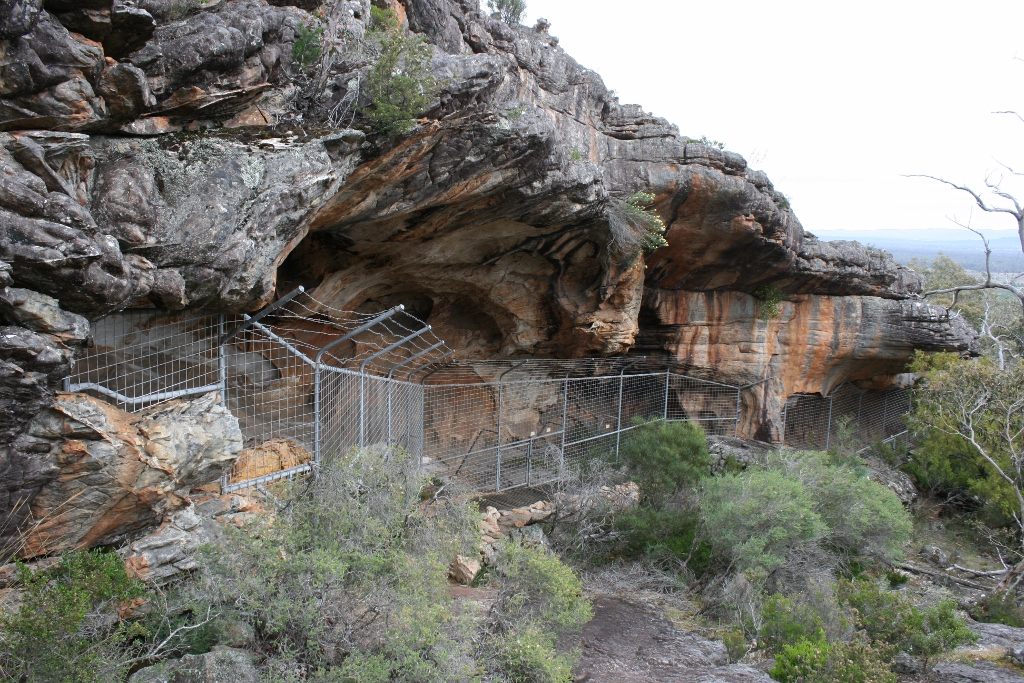
“The areas, some of the
Grampians Peak Trail Community Update September 2017
most spectacular locations in the park, have
provided evidence of people camping on
or near the peaks for thousands of years.
Previously unknown occupation sites, scar
trees, surface scatters, greenstone originally
from the Lancefield area nearly 250km away
and rock art have all been rediscovered.”


“Any new trail to be constructed as part of the Grampians Peaks Trail should be offset by closures of trails, tracks and/ or roads elsewhere in the park if possible. “
Grampians Peak Trail Master Plan 2014



Risky Business – Legal Action Begins
This week it’s legal letters – both from ACAV and from Parks Victoria. In a potential bombshell, internal PV documents suggest the bans could only be valid for 12 months. It finally seems this issue is coming into the court of law – not just the court of public opinion.
Continue reading Risky Business – Legal Action Begins
ACT NOW – SIGN UP FOR MANAGEMENT PLAN WORKSHOPS
You have probably signed the petitions, sent letters to State and Local Government, joined an access organization and donated to various funds. Now is your chance to have your say on the new Grampians Landscape Management Plan. PV have announced workshops open to the public at various locations in the Grampians district and North Melbourne next month.
Continue reading ACT NOW – SIGN UP FOR MANAGEMENT PLAN WORKSHOPS
Disengage Victoria – Will climbers get a real say?
Next Wednesday is a new beginning for the future of rock climbing in the Grampians. Or is it?
A lot of climbers have expressed frustration with the lack of progress in the Grampians climbing situation. This angst has been brought about especially by the replies many of us have received to our letters of concern directed to State Ministers and Parks Victoria. Almost without fail these replies have come straight from the public relations textbook – a couple of nice platitudes about rock climbing and then cookie cutter mention of a new Grampians National Park management plan that is in the process of being created as the “solution” to any concerns from climbers.
Continue reading Disengage Victoria – Will climbers get a real say? Save Grampians Climbing